Hey guys, let’s cut to the chase—if you’re here, you’re either an aging room manager looking to fix your budget, a startup trying to set up your first facility, or maybe someone just dipping their toes into what actually goes into running these rooms. I’m the guy who sells aging room gear—you know, the temperature and humidity controllers, chamber liners, those little sensors that don’t break unless you skip maintenance. And for way too long, I’ve heard customers get sticker shock when I tell them the real cost isn’t just the equipment, it’s the stuff after you hit “power on.” No, I’m not gonna throw out random numbers like “$10k” or “$50k” without breaking it down like I chat with my buddies over coffee. Aging Room

First, let’s get the basics out of the way: an aging room isn’t just a closet with a space heater. It’s a controlled environment where materials (think electronics parts, rubber hoses, solar panel coatings, even medical device plastic) sit for weeks or months to test how they hold up over time. The cost splits into two big buckets: upfront costs to set it up, and recurring costs to keep it running month after month. And here’s the thing—most people only factor in the upfront equipment, then wonder why their utility bill doubled three months in.
Let’s start with upfront costs, because that’s where people usually start. First, do you need a custom chamber or a modular one? Modular is the way to go for most small to mid-sized operations—they’re built to fit your space, no construction mess, and you can expand later if you need. A basic 100 sq ft modular chamber (that’s enough for most R&D teams or small manufacturing lines) runs me (and my competitors) around $15k to $35k, depending on the specs. If you need super precise temp control (like ±0.5°F instead of ±2°F) or humidity that bounces between 10% and 95%, that’s gonna push you to the higher end. And wait—don’t forget the sensors. You need redundant ones, right? Because if one fails mid-test, you can’t just pick up a new one at Home Depot. Those cost $200 to $500 each, and you need at least four per chamber. Add $1k to $2k for sensors, easy.
Then there’s installation. If you’re handy, you might be able to set up a small chamber yourself, but for anything over 200 sq ft? You’re gonna need a pro. Wiring a dedicated 240V circuit (standard for these rooms) isn’t like plugging in a fridge—if you skimp, you’ll blow a fuse and lose a $50k test run. Electrical installation runs $2k to $5k, plus maybe $1k for ventilation, because these rooms pull a lot of power and you don’t want heat building up in your warehouse. Oh, and compliance! If you’re testing parts for FDA or automotive standards, you need calibration certificates. Calibration of your chamber gets done twice a year, costs $800 to $1,500 each time, but you have to pay for initial calibration before you even turn it on. That’s a non-negotiable if you wanna sell the parts you’re aging to big clients.
Now the part no one talks about: recurring costs. This is where the budget really hits you. Let’s take a mid-sized chamber (200 sq ft, 10ft tall) that runs 24/7, 365 days a year. Most operations run them nonstop, honestly—you’re testing parts in batches, so shutting down to save a buck means you’re wasting setup time. So let’s break down monthly costs here. First, utilities. These chambers are big energy hogs. Heating a chamber to 150°F in winter, cooling it to -20°F for cold aging, maintaining humidity? That’ll run you $500 to $1,200 a month, depending on your local electricity and gas rates. I’ve had clients in Alaska pay twice as much as ones in Florida, just because heating costs are higher.
Then there’s maintenance. You can’t just set it and forget it. Every month, you gotta check the filters—dirty filters make the unit work harder, so replacing them every 3 months is $50 to $150 a pop. Every 6 months, you need a technician to come tune the compressors, check the humidity sensors, make sure the seal on the door isn’t leaking. That service call is $300 to $700, plus parts if something’s worn out. Last year, a client of mine had a leaky door seal that let humidity drop 10% mid-test. It cost him $1,200 to fix, plus he had to redo a 6-week test that he’d already spent $8k on materials for. Ouch. Materials! Don’t forget the test parts themselves. If you’re aging rubber hoses for a car company, each test batch is $2k to $10k, depending on how many hoses you’re testing. If you’re testing solar panels, that’s $1k to $5k per panel. That’s a hidden cost that a lot of new facilities miss—if your chamber is down for a week, you’re not just losing maintenance money, you’re losing those materials too.
Wait, let’s talk about the “hidden” costs that no one puts in spreadsheets. Downtime. How much is a day of downtime costing you? If you’re a manufacturer that has to deliver parts to a client in 2 months, and your aging room is broken for 5 days, you might miss the deadline and get a penalty fee of $10k or more. I had a client in electronics who had a compressor fail right before a big order. They paid a technician $1,500 to come out on a Sunday, plus overtime to their team to rework the test schedule, and ended up losing a $50k client because of the delay. That’s way more than the cost of a preventative maintenance plan, which would’ve caught the compressor issue before it died.
Also, compliance fines. If you’re testing parts for aerospace or medical devices, you have to keep logs of every run, every calibration, every sensor check. The FDA, ISO, whoever comes to audit you—if your logs are missing or your chamber isn’t calibrated, you can get a fine of up to $100k, or even get barred from selling parts. That’s a cost that’s way bigger than any equipment or maintenance fee.
Let’s put this all together for a real example, okay? Let’s say a small manufacturing team that’s just starting out: they need one 100 sq ft modular chamber, specs for ±1°F temp control, 30% to 90% humidity. Upfront costs: chamber ($22k), sensors ($1.2k), electrical installation ($3k), initial calibration ($1k) — total upfront: $27,200. Then monthly recurring costs: utilities ($700), filters and small parts ($100), preventative maintenance every 6 months (split over 6 months: $400) — that’s $1,200 a month. Add materials: let’s say $2,500 a month for test parts. So total first-year cost: upfront $27,200 + (12 months * $1,200) + (12 * $2,500) = $27,200 + $14,400 + $30,000 = $71,600. That’s not a small number, right? A lot of new clients come to me thinking it’s $20k total for the first year, not $70k.
Now, can you cut costs? Yeah, but not by cutting corners on the stuff that matters. Don’t buy a used chamber from a random guy on Craigslist—most used units haven’t been calibrated, have hidden leaks, and will break down in 6 months. Don’t skip calibration—even if you think your chamber is working, a drift of 1°F can make your test results useless. The big ways to save: run your chamber during off-peak utility hours, if your area has that. Group test batches so you’re not running the chamber for half a day then shutting it down. Get a preventative maintenance plan—most vendors like me offer a yearly plan for $1,500 to $2,500 a year, which is way cheaper than emergency service calls and downtime.
Here’s the thing I always tell customers: the cost of running an aging room isn’t just about money. It’s about reliability. If your test results are off, you’re gonna have bad parts on the market, which costs you way more in returns and bad reputation. I’ve seen clients cut $500 on a cheap sensor, only to have a test fail, lose a client, and spend $5k fixing the mess.
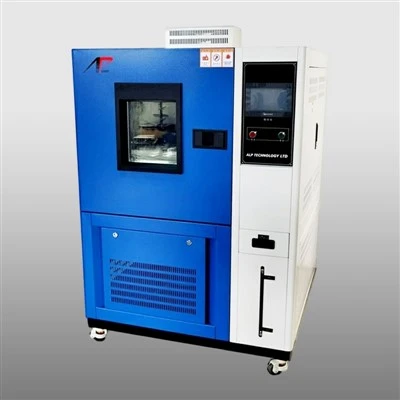
If you’re setting up an aging room for the first time, or if your current budget is out of whack, I’m here to help. I’ve worked with startups and big manufacturers, so I can help you pick the right chamber, avoid the hidden costs, and build a plan that fits your budget. Hit me up to chat through what you need, no pressure, no confusing sales jargon.
Stability Chamber References:
- International Organization for Standardization. (2022). ISO 17025: General requirements for the competence of testing and calibration laboratories.
- U.S. Energy Information Administration. (2023). Commercial Energy Consumption by End Use.
- Society of Automotive Engineers. (2021). SAE J1941: Environmental endurance testing for automotive components.
- Food and Drug Administration. (2022). Quality System Regulation (21 CFR Part 820).
Address: No.19, Mingde Road, Xi’an, China
E-mail: info@alp-environment.com
WebSite: https://www.alp-environment.com/
