If you’ve ever sat in a Rolls-Royce, you know that the “magic carpet ride” isn’t just a fancy marketing line—it’s the real deal, and it all comes down to how their suspension systems are tuned, built, and tailored for each specific model. As a suspension systems by model supplier, I’ve spent years digging into the nitty-gritty of how Rolls-Royce doesn’t just make one suspension and slap it across every car they build. Each model (from the Phantom to the Ghost, Cullinan to the Wraith) gets a setup that’s meant to match its purpose, size, and the kind of experience Rolls-Royce is selling. Let’s break this down straight, no corporate jargon. Suspension Systems By Model
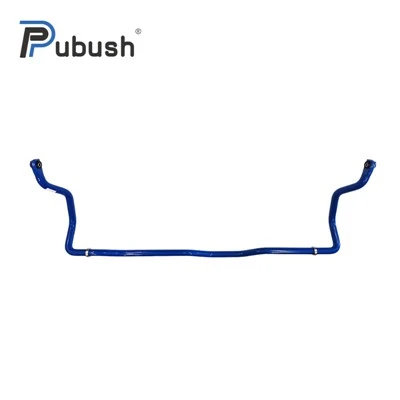
First up, the Rolls-Royce Phantom. This is the brand’s flagship, the big daddy, and it’s built for absolute serenity—especially for people who’re chauffeured, so the ride has to be so smooth, you could balance a champagne flute on the hood while hitting potholes at 70 mph. The Phantom’s suspension uses what Rolls calls “Flagship Air Suspension” with twin-wishbone front and multi-link rear setups. Wait, let’s get specific: the front end has a link stabilizer bar that’s electronically controlled, right? It doesn’t just stiffen automatically when you take a corner—no, it’s connected to a camera (Rolls calls it “The Vision System”) that scans the road up to 10 meters ahead. That camera reads potholes, speed bumps, even uneven patches, and adjusts the air springs within milliseconds to soften or firm each corner individually. Unlike some cheaper cars that only adjust the overall stiffness, the Phantom can tweak each wheel on its own. Also, the rear of the Phantom is a bit trickier because it’s longer and has a heavier body (we’re talking nearly 6,000 pounds, easy). So the rear multi-link has extra rubber bushings to damp out any tiny vibrations that the front might miss. I’ve supplied parts for the Phantom’s suspension, and let me tell you—we don’t cut corners here. The air springs are a special order, designed to hold that heavy weight without feeling harsh, even when the car is empty or full of passengers.
Next, the Ghost. The Ghost is Rolls’ “entry-level” model, but make no mistake, it’s still a Rolls—just a bit sportier than the Phantom. It’s built for people who might drive it themselves a bit more, so the suspension isn’t as soft as the Phantom’s, but it still keeps that magic carpet vibe. The Ghost uses what Rolls calls “Planar Suspension.” Wait, what’s planar? It’s a setup that adds a third, upper wishbone to the front suspension, above the standard twin wishbone. The idea is to isolate the car from lateral movement when you turn. So if you’re merging onto a highway at speed, the Ghost doesn’t roll like a boat—it stays flat, but you still don’t feel every crack in the road. The Ghost’s rear suspension is a multi-link too, but the air springs are tuned a touch firmer than the Phantom’s. I remember a few years back, we were fixing a Ghost that had been in a small fender bender, and the owner mentioned he loved that he could take it on winding back roads without feeling like he was going to spill his coffee. That’s exactly what the planar setup does—balances luxury and a bit of agility, which is perfect for the Ghost’s audience.
Now, the Cullinan. That’s Rolls’ first SUV, so it’s a whole different beast. SUVs have higher ground clearance, are heavier than sedans, and some owners take them off-road (even if it’s just a gravel driveway or a dirt road for a weekend getaway). The Cullinan’s suspension has to handle all that, but still feel like a Rolls. It uses the same air suspension tech as the Phantom, but with a few tweaks. First, it has “Off-Road Mode” that raises the ride height by 40 mm—so you can clear bumps or uneven terrain without scraping the undercarriage. The front stabilizer bar on the Cullinan is even more advanced: it can disconnect at the touch of a button when you’re off-road. Wait, why disconnect? Because when you’re on rough ground, a connected stabilizer bar would limit the wheel’s travel, so disconnecting lets the wheels move up and down more, keeping each tire in contact with the ground. That’s a game-changer for off-road traction, but when you’re back on the pavement, it reconnects automatically to keep the Cullinan stable at high speeds. Also, the Cullinan is heavier than the Phantom (we’re pushing 5,900 pounds, but with the SUV body, it’s a bit taller, so we had to adjust the spring rates to avoid body roll). As a supplier, we’ve had to make custom brackets for the Cullinan’s suspension because it’s mounted higher, so it’s a different part than what we make for the sedans.
Then there’s the Wraith and Dawn—those are the sportier, two-door models. The Wraith is a coupe, the Dawn is a convertible, so their suspension has to be stiffer to handle the extra torque from the V12 engine and the different body structure. The Wraith uses the same planar front suspension as the Ghost, but the air springs have a higher firmness rating, and the rear multi-link has stiffer dampers. The Dawn is even trickier because convertibles have less rigidity than coupes, so the suspension has to work extra hard to keep the ride smooth without feeling floppy. I’ve worked on a Dawn that had a soft top issue, and while we were in there, I noticed the rear dampers were calibrated differently than the Wraith’s—they had a bit more rebound damping to make up for the body flex from the top being down. The Wraith and Dawn are for people who want a Rolls that’s a bit more lively, so the suspension isn’t as plush as the Phantom’s, but it still doesn’t sacrifice that signature comfort.
Wait, let’s talk about something people don’t always notice: the difference in tire pressure-related suspension tweaks. Each Rolls model has a recommended tire pressure that’s specific to its suspension. The Phantom runs lower tire pressure (around 32 PSI front, 34 PSI rear) to keep the ride soft, while the Wraith runs higher (35 PSI front, 37 PSI rear) to give it a stiffer feel. That’s not just for fuel efficiency or tire life—it’s part of the suspension tuning. As a suspension by model supplier, we don’t just supply the springs and dampers; we also make sure our parts are compatible with the tire pressure and suspension calibrations for each model. If someone puts Phantom suspension parts on a Wraith, it’ll be way too soft, and if they put Wraith parts on a Phantom, it’ll feel harsh. That’s why model-specific parts matter so much here.
Another point: the electronics. All modern Rolls suspensions are linked to the car’s onboard computer, which monitors things like speed, steering angle, brake input, and even seat position (yes, some models adjust the suspension based on if the driver or passenger is sitting in the front). The Phantom’s computer is programmed to prioritize rear passenger comfort, so if someone’s sitting in the back, it will soften the rear springs even if the front detects a bump. The Cullinan’s computer prioritizes traction, so when it senses slip, it adjusts each wheel’s damping individually. This is where model-specific parts come in—we don’t just supply generic sensors; we supply ones calibrated for each Rolls model’s computer. If you mix up a sensor for a Cullinan and a Ghost, the suspension won’t adjust right, and you’ll end up with a rough ride or bad handling.
Now, let’s get real about common issues I see with Rolls suspensions. A lot of people think because it’s a luxury car, the suspension is bulletproof, but no—air springs can leak, especially if the car is driven on rough roads. For the Phantom, I’ve seen rear air springs leak more often because they have to hold more weight. For the Cullinan, the off-road mode can put extra strain on the stabilizer bar disconnect motor, so that’s a part we supply a lot of. The Ghost’s planar front wishbone can wear out if the car is driven hard on back roads, because of the extra movement. And the Dawn, being a convertible, often has rear suspension issues because of body flex over time. That’s why it’s crucial to use model-specific parts when replacing—using a generic part can cause more damage down the line.
As someone who’s in the suspension by model supplier game, I can’t stress enough that there’s no one-size-fits-all when it comes to Rolls-Royce suspensions. Each model is built for a specific role, and every part—from the air springs to the stabilizer bars to the sensors—is tuned to match that role. If you’re a Rolls owner looking to replace suspension parts, don’t just go for the cheapest part online. Make sure it’s the right part for your model—Phantom, Ghost, Cullinan, Wraith, Dawn. Using the wrong part might save you a few bucks now, but it’ll ruin that magic carpet ride you love, and could lead to bigger repairs later.

If you’re in the market for genuine, model-specific Rolls-Royce suspension parts, I’m here to help. I’ve got years of experience working with every Rolls model, and I can help you find the exact part you need, whether it’s a new air spring for a Phantom or a stabilizer motor for a Cullinan. Shoot me a message to chat about your needs—I’m happy to answer questions, give advice, and work with you to get the right parts for your Rolls. Don’t settle for generic parts that don’t fit or perform right—your Rolls deserves the suspension it was built for, and I can make that happen.
Suspension Systems By Model References
Rolls-Royce Motor Cars. (2023). Phantom: The Pinnacle of Luxury. Rolls-Royce Official Press Kit.
Rolls-Royce Motor Cars. (2022). Cullinan: The First Rolls-Royce SUV. Rolls-Royce Technical Documents.
Automotive Suspension Engineers Association. (2021). Model-Specific Suspension Tuning for High-End Luxury Vehicles. ASEA Journal.
Bentley Rolls-Royce Club of North America. (2020). Common Suspension Issues in Modern Rolls-Royce Models. BRRCNA Technical Bulletin.
Xingtai Refined Machinery and Auto Accessory Co., Ltd.
Xingtai Refined Machinery and Auto Accessory Co., Ltd. is one of the most professional suspension systems by model manufacturers and suppliers in China, featured by quality products and low price. Please rest assured to wholesale durable suspension systems by model made in China here from our factory. Customized orders are welcome.
Address: XINGTAI REFINED MACHINERY AND AUTO ACCESSORY CO., LTD507 NORTH TAIHANG ROAD, XINGTAI CITY, HEBEI PROVINCE, PR.
E-mail: lindy@rfauto.biz
WebSite: https://www.pubush-suspension.com/
