If you’ve ever stopped to look at the crisp, detailed graphics on custom t-shirts, hoodies, or even small batch promotional products, you’ve probably wondered how that design stays vibrant wash, after wash. As a DTF printer supplier who’s spent years troubleshooting, testing, and refining equipment for small print shops, custom apparel brands, and even home-based entrepreneurs, one question comes up more than any other: “What type of ink do DTF printers use?” It’s not a trivial question—pick the wrong ink, and even a top-of-the-line DTF printer will crack, fade, or peel after just a few washes. Get the ink right, and you’ll have customers coming back for more repeat orders. DTF Printer
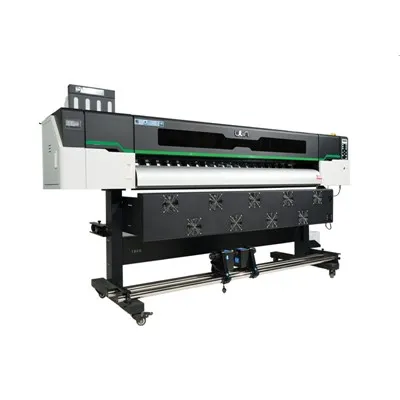
First, let’s clear up a common misconception: DTF (Direct to Film) ink isn’t the same as the inks used for screen printing, sublimation, or even other digital garment printing methods. Screen printing uses plastisol or water-based inks applied directly to fabric, while sublimation works only on polyester and requires heat to bond with synthetic fibers. DTF is a two-step process—you print the design onto a special PET film first, then use a heat press to transfer the ink onto the fabric. That means the ink has to work with both the smooth surface of the PET film and the porous, often uneven surface of cotton, polyester, or blends.
The core ink type for DTF printers is water-based pigment ink—but it’s not the same water-based ink you’d use for an inkjet home printer. Regular home inkjet water-based inks are designed for paper, not for adhering to film and then bonding to fabric. DTF-specific pigment inks are formulated with three key components that set them apart: pigments, a bonding agent, and a leveling agent. The pigments are the color particles that give the design its brightness—unlike dye inks, which fade over time, pigment particles sit on top of the fabric, making the design more resistant to washing and UV light. The bonding agent is a polymer that melts when heat is applied, sticking the pigment to both the PET film temporarily and the fabric permanently. The leveling agent ensures the ink spreads evenly across the film, so you don’t get blurry edges or uneven color, which is critical for detailed designs like small text or gradient graphics.
But not all DTF ink is created equal. As a supplier, I’ve seen too many shop owners cut corners on ink to save a few dollars, only to end up with rejected orders. There are two main categories of DTF pigment ink: standard ink and high-density (HD) ink. Standard DTF ink works for most everyday projects—like custom team shirts, basic logo tees, or small batch promotional wear. It produces a flat, flexible design that feels almost like part of the fabric, even after multiple washes. But if a customer wants a bold, raised design that stands out, like a 3D logo, a graphic with texture, or a statement hoodie, standard ink won’t cut it. That’s where HD DTF ink comes in. HD ink has a higher pigment load, so when you print it onto the film, it creates a thicker layer. Then, when you apply the adhesive powder (another key part of the DTF process, more on that in a minute), the powder sticks to the raised ink layer, and the heat press melts it into a soft, tactile design that doesn’t crack. I always tell new customers: save the HD ink for projects where texture matters—for basic orders, standard ink is more cost-effective and works perfectly.
Wait, I mentioned adhesive powder—why is that part of the ink conversation? Because in DTF printing, the ink isn’t a standalone component. The process works like this: you print your design on PET film with DTF pigment ink, then immediately sprinkle a hot-melt adhesive powder over the wet ink. The powder sticks only to the inked areas, not the blank parts of the film, and acts as a glue when you heat-press the design to the fabric. Some lower-quality DTF inks aren’t formulated to work with all adhesive powders. If you mix a cheap ink that doesn’t bond well with a generic powder, your design will peel off after one wash, even if the printer is top-tier. That’s why as a supplier, we test every ink we sell with our DTF printers to ensure compatibility. We’ve seen shop owners buy a “universal” ink online, only to find it doesn’t adhere to the adhesive powder we recommend, leading to hundreds of dollars in wasted film, ink, and time. It’s a small detail, but it’s one that makes a huge difference in quality.
Another point to consider: compatibility with different fabric types. DTF ink works on more fabrics than most other digital printing methods—cotton, polyester, blends, even nylon or spandex. But the ink formulation adjusts slightly depending on the fabric? No, wait—the ink is the same, but the heat press settings change. The ink’s bonding agent is designed to melt at a specific temperature, usually around 300-320°F (149-160°C), which is high enough to stick to cotton without burning the fabric, and gentle enough for stretchy materials like spandex. Some specialty inks, like stretch DTF ink, are formulated for use on athletic wear that bends a lot—like leggings or compression shirts. Regular DTF ink might crack when stretched, but stretch ink has a more flexible polymer in its formula, so it moves with the fabric without peeling. We recommend stretch ink for any project that needs flexibility, and we stock it as a standard option for our customers who print athletic gear.
What about the myths out there about DTF ink? I hear a lot of people say “DTF ink is toxic” or “it’s the same as screen printing ink,” and that’s just not true. Modern DTF inks are formulated to be water-based, low-VOC (volatile organic compound), and safe for direct contact with skin—important for apparel, especially for kids’ clothing or items that go next to the skin. The EPA even regulates DTF ink for safety, so reputable suppliers only sell inks that meet those standards. I’ve tested dozens of off-brand inks, and many of them have higher VOC levels, which not only smell bad during printing but can be harmful if you’re working in a small space without proper ventilation. That’s why we only partner with ink manufacturers that source their pigments and bonding agents from reputable suppliers, and we provide safety data sheets for every ink we sell to our customers.
Another common question: can I use other inks in a DTF printer? The short answer is no, not safely or effectively. Sublimation ink, for example, is designed to turn into gas when heated, so it won’t stick to PET film or fabric. Screen printing plastisol ink is too thick for DTF print heads, which are designed for thin, liquid ink layers. Even other digital inks, like UV ink, cure with UV light instead of heat, so they won’t bond properly in a DTF transfer. Trying to use the wrong ink won’t just ruin your printer’s print heads (which are expensive to replace—we’ve seen customers burn out a $1,000 print head trying to use sublimation ink) and will result in unusable designs. It’s always better to stick to DTF-specific pigment ink for best results.
As a DTF printer supplier, we don’t just sell equipment—we help our customers make money. That means we tell them the truth about ink, not just what’s cheapest. For a small shop printing 50 t-shirts a week, standard DTF ink is perfect—it balances quality and cost. For a custom brand printing 100 hoodies a month, HD ink will help them charge more for premium designs. For anyone printing athletic wear, stretch ink is worth the extra cost to avoid returns. We also provide ongoing support for our customers, so if they ever have an issue with ink, we troubleshoot it with them to make sure it’s not a compatibility issue between their printer and the ink they’re using.

If you’re in the market for a DTF printer, don’t overlook the importance of ink compatibility. A $5,000 printer is only as good as the ink you put through it. That’s why we design our DTF printers to work seamlessly with the inks we recommend, and we offer bulk ink packages at a discount to help our customers save money without sacrificing quality. We also host workshops for new users, where we walk them through how to test ink compatibility, how to store ink properly (by the way, ink storage matters—keep it in a cool, dry place, away from direct sunlight, to keep the pigments from separating), and how to troubleshoot common issues like clogging print heads or peeling designs.
Sublimation Printer If you’re ready to invest in a DTF printer or stock the right ink for your existing equipment, we’d love to talk. Our team has years of experience in the industry, and we can help you choose the right printer and ink for your specific needs, whether you’re a new startup or an established apparel brand. We don’t push one-size-fits-all solutions—instead, we listen to what you’re printing, how much you’re printing, and what your goals are, then give you recommendations that will help you succeed.
References
- Textile Ink and Coloration Technology, 4th Edition. Society of Dyers and Colourists, 2021.
- Direct to Garment and Digital Textile Printing: Fundamentals and Applications. Woodhead Publishing, 2019.
- EPA Guidelines for Low-VOC Ink Formulations, 2022. U.S. Environmental Protection Agency.
- DTF Printing Best Practices for Apparel Manufacturers. Fespa Global Print Expo, 2023.
Hangzhou Yulan Technology Co., Ltd.
Hangzhou Yulan Technology Co., Ltd. is one of the most professional DTF printer manufacturers and suppliers in China. With abundant experience, we warmly welcome you to wholesale the newest DTF printer in stock here from our factory. Good service and quality products are available.
Address: Building, No.128 Rihui Road, Linping District, Hangzhou, China.
E-mail: ulinprint@gmail.com
WebSite: https://www.ulinprinter.com/
