Hey there, I’m Jake, and if you’ve ever walked through a fire house, stood on a fire scene, or even just watched a show where first responders are working to save a home, you’ve probably seen a specialty fire hose. But if you’ve ever stopped to think about how much goes into making those hoses work—especially the ones that don’t weigh a ton even when they’re charged—then let’s talk about lightweight supply specialty hoses. As someone who’s spent the last 18 years sourcing and supplying these exact hoses for fire departments, industrial sites, and emergency response teams across the region, I’m here to break down what they are, why they matter, and how they’ve changed the game for first responders. Specialty Fire Hoses

First off, let’s get one thing straight: a lightweight supply specialty hose isn’t just a “lighter version” of a regular fire hose. I’ve seen guys in the trade brush off lightweight hoses as a gimmick back in the early 2000s, when these first started hitting the market. Trust me, that changed fast. Back then, fire departments were running with heavy cotton-lined rubber hoses that weighed 15 to 20 pounds per 50-foot section—wait, that’s before they even fill with water. Once you add 50 gallons of water (about 417 pounds) to that 50-foot section, you’re looking at 437 pounds of gear to drag up a flight of stairs, over a fallen wall, or through a smoke-filled hallway. No wonder first responders were dealing with so many strains and sprains on the job. That’s where the lightweight supply specialty hose comes in, and it’s all about material science.
Let’s get technical for a second, but I’ll keep it real, no boring jargon. The core of a standard fire hose is usually a heavy rubber liner, wrapped in a thick synthetic weave, often polyester or nylon. Lightweight supply specialty hoses swap out that thick rubber liner for a thermoplastic polyurethane (TPU) or polyurethane (PU) liner, and the outer jacket is a high-tenacity aramid fiber—think Kevlar, but formulated specifically for hose applications, not just bulletproof vests. What does that mean in plain terms? A 50-foot section of lightweight supply hose weighs between 8 and 12 pounds dry. When it’s charged? That same 50-foot section is around 120 to 150 pounds. That’s less than a third of the weight of a traditional supply hose of the same length and flow capacity. I’ve carried both side by side at training drills, and the difference is night and day. I once watched a rookie fireman who’d been on the job for 6 months struggle to drag a 50-foot traditional hose up a 3-story parking garage ramp, and 10 minutes later, he had a lightweight supply hose section slung over one shoulder and was jogging up the same ramp like it was nothing. That’s the impact right there.
But here’s the part that makes them “specialty” instead of just a regular lightweight hose: they’re built for supply line duty, not attack line duty. A lot of people mix up supply hoses and attack hoses, and that’s a critical mistake. Attack hoses are the ones the firefighters hold directly on the fire—they need to be flexible, maneuverable, and built for high pressure (usually 200 psi or higher). Supply hoses are the ones that connect the fire pump on the truck to the attack lines, or to a water source like a hydrant or a portable tank. They carry a lot more volume, usually 500 to 1500 gallons per minute, and operate at lower pressures, around 100 to 150 psi. So a lightweight supply specialty hose has to hold up to that constant, high-volume flow, resist abrasion from being dragged over pavement, gravel, or concrete, and handle being connected and disconnected hundreds of times a year without leaking. I’ve tested hoses from a dozen different manufacturers over the years, and the best lightweight supply specialty hoses I carry don’t kink even when they’re twisted tight around a tree, and they don’t develop pinholes from being rubbed against a sharp curb—something cheap, lightweight rubber hoses will do within a month of use.
Another key feature of these hoses is their compact size when rolled up. Traditional supply hoses take up a ton of space on the fire truck—your average 50-foot traditional hose roll is about 18 inches in diameter. A lightweight supply hose roll? That’s 10 to 12 inches. For fire trucks, space is at a premium. Every square inch saved on hose storage can be used for extra tools, gear, or even another crew’s equipment. I’ve had captains tell me that switching to lightweight supply hoses let them fit an extra 200 feet of hose on their engine, which meant they didn’t have to carry multiple short sections during a structure fire—something that used to waste precious time when they had to connect multiple hoses just to reach the fire seat. That extra time could mean the difference between saving a house and losing it, or getting to a trapped civilian 30 seconds faster.
Now, let’s talk about who benefits from lightweight supply specialty hoses. It’s not just big, urban fire departments. Small rural fire departments, volunteer crews, and even industrial facilities have seen huge gains from switching. I work with a volunteer fire department in a small town about an hour outside the city, where most of the crew is made up of teachers, mechanics, and part-time workers who don’t have a lot of time to train, let alone deal with heavy gear. Last year, they switched to 500 feet of lightweight supply hoses, and their lieutenant told me that at their last structure fire, the crew got the supply line set up in half the time it used to take, and no one had to call for a buddy to help drag the hose. Even industrial sites, like chemical plants or refineries, use lightweight supply specialty hoses for emergency response. Those sites have restricted access and tight spaces, so being able to maneuver a hose through a narrow alley or around a piece of heavy machinery is a big deal. Plus, the abrasion resistance of these hoses is perfect for industrial sites where there’s sharp metal, concrete, and heavy equipment moving around.
Wait, but I should address the common concerns I hear about lightweight hoses. A lot of older firefighters, the ones who’ve been around for 30+ years, will say, “They’re not as durable as the rubber hoses we’ve always used.” Let’s set the record straight: good quality lightweight supply specialty hoses are tested to meet the same industry standards as traditional fire hoses—NFPA 1962, to be exact. That’s the National Fire Protection Association standard for fire hose care, service, and testing. We’re talking about burst pressure tests, abrasion resistance tests, pressure cycle tests, and even cold weather tests. I’ve had hoses I supplied go through 500 pressure cycles (that’s charging and discharging 500 times) without a single leak. I’ve also had crews use these hoses in temperatures down to 10 degrees Fahrenheit, and they didn’t crack or become brittle like some rubber hoses do in the cold. Do cheap, off-brand lightweight hoses fall apart? Absolutely. But that’s why you need to work with a reputable supplier who sources hoses that actually meet the standards, not just hoses that look light. I turn away a lot of manufacturers who try to sell me “lightweight hoses” made with cheap liners that will fail after a few months of use. My job isn’t to just sell a hose—it’s to supply a product that first responders can trust with their lives.
Another common question: how long do lightweight supply specialty hoses last? I tell departments that a well-maintained lightweight supply hose will last 7 to 10 years, which is about the same as a traditional rubber hose. The key here is maintenance, just like any fire hose. You can’t just leave a hose rolled up on the truck for years and expect it to work. You have to flush it after every use, let it dry completely before rolling it back up, and inspect it for cuts, abrasions, or leaks every 6 months. I offer a free inspection service for all the hoses I supply, because I want my customers to get the most out of their gear. I’ve seen departments cut the lifespan of their hoses in half because they skipped maintenance, regardless of whether it’s lightweight or traditional.
Let me share a story that stuck with me from a few years back. I was at a training session with a fire department in a suburb that had a lot of old, narrow homes built in the 1950s. The firefighters were practicing advancing lines through a 3-foot wide hallway, which is tight even with attack lines. When they tried to use their traditional supply hose to connect their pump to the attack line, they got stuck three times in 10 minutes—they had to work the hose around door frames and furniture, and it was taking forever. Then we brought out a set of lightweight supply specialty hoses, rolled them up tight, and ran them through the same drill. The crew got through the hallway on their first try, no stuck hose, no wasted time. The captain pulled me aside after and said, “That’s the difference between a small fire and a total loss. If we’d had to deal with that during a real fire, we would’ve been there an extra 15 minutes, and that house would be gone.” That’s the kind of impact these hoses have, and it’s not just about weight—it’s about maneuverability, space, and speed when every second counts.
Now, I want to make it clear that lightweight supply specialty hoses aren’t for every job. If you’re dealing with a large industrial fire that needs a 1000-foot supply line, or if you’re operating in a rocky area where abrasion is extreme, traditional heavy hoses still have their place. But for the vast majority of structure fires, vehicle accidents, and emergency responses, lightweight supply hoses are the superior choice for supply line duty. They reduce firefighter fatigue, save space on trucks, speed up setup time, and meet all the safety standards we need to keep first responders and civilians safe.
If you’re someone who’s in charge of purchasing for a fire department, industrial facility, or emergency response team, I know you have a lot on your plate. You need gear that’s reliable, cost-effective, and that your crew can actually use without frustration. A lightweight supply specialty hose isn’t just an upgrade—it’s an investment in your crew’s safety and your department’s efficiency. I’ve worked with small volunteer groups and big city fire departments, and I can tell you that every single one that switched to these hoses saw a measurable difference in their response time and crew morale. The guys don’t come home sore from dragging heavy hoses anymore, and that’s priceless.
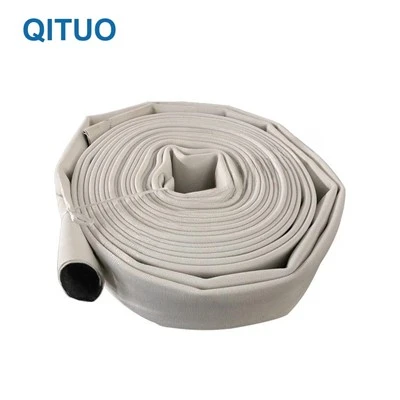
If you’re ready to talk about upgrading your supply hoses, or if you have questions about which lightweight supply specialty hose is right for your specific needs, feel free to reach out to connect for a procurement consultation. I’m here to help, and I’ll give you the straight truth, no sales pitch, no fancy jargon—just what works for your team.
References
Specialty Fire Hoses National Fire Protection Association. (2020). NFPA 1962: Standard for the Care, Use, Inspection, Service Testing, and Replacement of Fire Hoses, Couplings, Nozzles, and Water Supplies. National Fire Protection Association.
Fire Protection Association. (2018). Fire Hose Technology: Advances in Materials and Design for Modern Emergency Response. Fire Protection Handbook, 20th Edition.
Underwriters Laboratories Inc. (2021). UL 1947: Standard for Safety for Fire Hoses for Fire Department Use. Underwriters Laboratories.
Taizhou Qituo Fire Fighting Equipment Co., Ltd.
As one of the most professional specialty fire hoses manufacturers and suppliers in China, we also support customized service. We warmly welcome you to wholesale bulk advanced specialty fire hoses made in China here from our factory. If you have any enquiry about quotation, please feel free to email us.
Address: Room 401, Unit 1, Building 4, Jinhua Garden, Sanshui Avenue, Tianmushan Subdistrict, Jiangyan District, Taizhou City, Jiangsu Province
E-mail: sales@qtfire.com
WebSite: https://www.qtfire.com/
