Hey there! I’m a supplier of manual surface grinders, and I often get asked, "What is the grinding roughness that a manual surface grinder can achieve?" Well, let’s dive right into it. Manual Surface Grinder
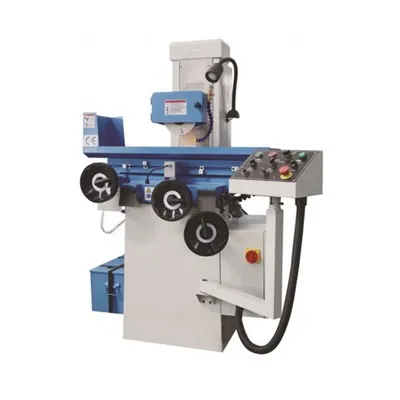
First off, grinding roughness is a big deal in the machining world. It refers to the small, uneven deviations in the surface of a workpiece after it’s been ground. These deviations can affect how the part functions, how it fits with other components, and even its overall appearance. So, getting the right grinding roughness is crucial for a lot of applications.
When it comes to manual surface grinders, the grinding roughness they can achieve depends on a bunch of factors. One of the most important ones is the type of grinding wheel you use. Different wheels have different grit sizes, and this grit size plays a major role in determining the surface finish. A wheel with a coarse grit, like 24 or 36, is going to remove material quickly, but it’ll leave a rougher surface. On the other hand, a wheel with a fine grit, say 100 or 220, will take longer to remove material, but it’ll give you a smoother finish.
Let’s talk about some real – world numbers. In general, with a manual surface grinder, you can achieve a surface roughness ranging from about 0.8 micrometers (μm) to 6.3 μm. This is measured using a parameter called Ra, which is the arithmetic average of the surface height deviations from the mean line.
If you’re using a coarse – grit wheel for rough grinding, you might end up with an Ra value closer to 6.3 μm. This kind of finish is okay for parts where the surface finish isn’t super critical, like some basic structural components. For example, if you’re grinding a bracket that’s just going to hold something in place and doesn’t need to be in contact with other precision parts, a rougher finish is acceptable.
But if you switch to a fine – grit wheel and do some finishing passes, you can get that Ra value down to around 0.8 μm or even lower in some cases. This smooth finish is great for parts that need to have a good seal or low friction, like the surfaces of pistons in an engine or the mating surfaces of precision gears.
Another factor that affects grinding roughness is the grinding parameters you set. The speed of the grinding wheel, the feed rate of the workpiece, and the depth of cut all make a difference. If you run the wheel too fast or feed the workpiece too quickly, you’re more likely to end up with a rougher surface. On the flip side, if you take very light cuts and go slow, you can improve the finish.
For example, when I’m working with customers who need a really fine surface finish, I usually recommend a lower wheel speed and a slower feed rate. It might take a bit longer to grind the part, but the result is worth it. You might have to make multiple finishing passes to get that smooth surface you’re after.
The material of the workpiece also matters. Softer materials, like aluminum, are generally easier to grind to a smooth finish compared to harder materials like stainless steel or hardened tool steels. Harder materials can cause more wear on the grinding wheel and might require more careful selection of the wheel and grinding parameters.
What I’ve noticed in my experience as a manual surface grinder supplier is that a lot of beginners struggle to get the right grinding roughness. They might not understand how to choose the right wheel or set the right parameters. That’s why I’m always here to offer advice. I’ve seen so many customers who were initially frustrated with their results but were able to achieve great finishes once they got the hang of it.
Let me give you an example. I had a customer who was making custom – made molds. They were using a manual surface grinder but couldn’t get the surface of the molds smooth enough. The parts were coming out with visible scratches and an uneven finish. After talking to them, I found out they were using a too – coarse wheel for the finishing operation. I recommended they switch to a finer – grit wheel and adjust their grinding speed and feed rate. They followed my advice, and the next batch of molds came out looking amazing. The surface roughness was within the required tolerance, and the customer was really happy.
Now, I know that not everyone has the same requirements when it comes to grinding roughness. Some industries, like aerospace and medical, have very strict standards. In aerospace, parts need to have extremely smooth surfaces to ensure proper aerodynamics and low friction. In the medical field, implants and surgical tools need to be polished to a high degree to prevent tissue damage and infection.
If you’re in one of these high – precision industries, our manual surface grinders can still be a great option. With the right setup and some practice, you can get close to the demanding surface roughness requirements. And if you run into any problems, I’m just a call or a message away.
On the other hand, if you’re in a more general machining shop, you’ll probably find that our manual surface grinders can handle a wide range of surface finish needs. Whether you’re making custom parts for local customers or small – batch production, you can expect consistent and good results.
I also want to mention that the condition of the manual surface grinder itself matters. Regular maintenance is key. If the grinder isn’t properly calibrated or if the spindle is worn, it can affect the grinding roughness. That’s why I always recommend that my customers keep up with the maintenance schedule. Check the lubrication, clean the machine regularly, and make sure all the components are in good working order.
In conclusion, a manual surface grinder can achieve a decent range of grinding roughness, from relatively rough for general – use parts to very smooth for high – precision applications. It all comes down to choosing the right grinding wheel, setting the right parameters, and taking care of the machine.

If you’re in the market for a manual surface grinder or if you have any questions about achieving the right grinding roughness for your specific application, don’t hesitate to reach out. I’m here to help you get the best results with your grinding operations. Whether you’re new to grinding or an experienced machinist, I’m confident that our manual surface grinders can meet your needs. So, let’s have a chat and see how we can work together to improve your production process.
Hydraulic Surface Grinder References
- "Modern Grinding Technology" by Malkin, S.
- "Machining Handbook" published by Industrial Press Inc.
Wuxi Mingxu Machinery Equipment Co., Ltd.
As one of the most professional manual surface grinder manufacturers and suppliers in China, we’re featured by quality products and good price. Please rest assured to buy the best manual surface grinder for sale here from our factory. Also, custom service is available.
Address: No. 5-5 Jinke Wealth Plaza, Changjiang North Road, Xinwu District, Wuxi City, Jiangsu Province
E-mail: yingyingmxjd@163.com
WebSite: https://www.mingxu-china.com/
