Hey everyone, thanks for swinging by my little corner of the grid today. I’m Jake, and let’s cut to the chase—if you’re here wondering “what’s the deal with current ratings for special transformers right now,” you’re probably not just a hobbyist googling for fun. Maybe you’re a plant manager who’s been troubleshooting their custom power setup, or an engineer sizing equipment for a new factory wing, or maybe you’re just tired of generic transformer info that doesn’t apply to your weird, one-of-a-kind project. Full disclosure: I run a small but hard-nosed special transformer supply shop, so this isn’t just textbook stuff I’m regurgitating—this is what we’re seeing day to day with the current ratings we stock, test, and ship out week in and week out. Special Transformer
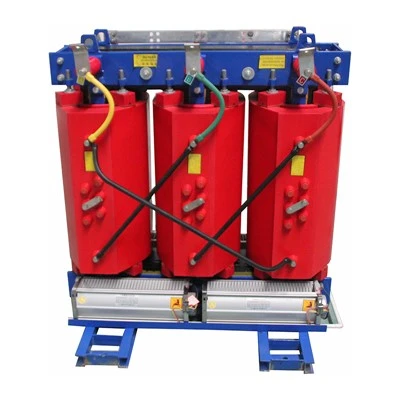
First, let’s get the basics out of the way so we’re all on the same page. A regular distribution transformer is like a workhorse for your neighborhood—standard voltage, standard load, boringly predictable. Special transformers? They’re the oddballs. The ones built for mining sites that run 24/7 in dust and heat, the ones that power specialized medical equipment like MRI machines (those bad boys need super clean, stable power), the ones for offshore wind farms that have to handle salt spray and variable loads, or even the custom units for a research lab testing next-gen battery tech. Their current ratings aren’t just random numbers on a spec sheet—they’re tailored to a job, and right now, the ratings landscape is shifting hard because of two big things: industries pushing for more power efficiency, and supply chain bumps that forced manufacturers to adapt their testing and ratings standards over the last 3 years.
Let’s start with the most common category we deal with: medium-voltage (MV) special transformers, the ones that power most industrial facilities. 3 years ago, the sweet spot for these was current ratings from 100A to 2,500A—most of our clients needed that range for assembly lines, food processing plants, or construction sites with temporary power. But right now? We’re seeing way more requests for both lower and higher ends of that range, because industries are either scaling back their load to hit net-zero goals or cranking up automation that needs way more consistent power. Wait, but what’s the current rating actually mean here? For special transformers, we don’t use the standard “nameplate rating” that’s common for off-the-shelf units. Special transformers have two key current ratings: continuous current (the steady load they can handle 24/7 without overheating) and short-time current (the max they can take for a few seconds during a surge or fault). Right now, the average continuous current rating for our most popular MV units is around 1,800A—up about 15% from pre-pandemic. Why? Because factories added more robotics and HVAC systems that run nonstop, and they can’t afford downtime. The short-time rating? That’s gone up even more—most of our newer units can handle 25,000A for 2 seconds, which is a 20% jump from 2021. Plants don’t want their transformer tripping every time a welder kicks on or a motor starts, so that extra buffer is non-negotiable now.
Now, the wild card category: low-voltage (LV) special transformers, the ones that power small, niche equipment. Think of the transformers for EV charging stations (Level 3, the fast ones that charge a car in 20 minutes) or data center backup systems. These have always had crazy current ratings because they cram a lot of power into a tiny space, but right now, the numbers here are mind-blowing. Pre-2020, a typical LV special transformer for a fast charger had a max current rating of around 500A. Now? We’re installing units that hit 1,200A on the secondary side, and that’s not even the top end. For data centers, which are basically just walls of servers sucking power 24/7, we’ve got custom LV transformers with continuous current ratings up to 3,000A. The reason? EV adoption exploded over the last 2 years, and municipalities and charging network companies are scrambling to build chargers that can handle 10 cars at once, not just one. Data centers? They’re fighting to stay competitive, so they can’t have a transformer that limits how many servers they can run. The catch with these LV units, though? You can’t just look at the nameplate number. These transformers are liquid-cooled usually, so their current rating depends on the cooling system. If a client skimps on the cooling setup to save a buck, that 1,200A rating drops to 800A real fast. That’s one mistake we see all the time with new clients—they see the big number and assume it works for their space, not realizing it’s tied to a specific setup.
Then there’s the super high-voltage (HV) side, for offshore wind and mining. These are the transformers that sit on wind turbines 100 miles out in the ocean, or at the entrance to a copper mine where it’s 110 degrees and dusty 10 months a year. For these, current ratings are measured in kiloamps, not amps, so we’re talking numbers way bigger than anything you’d see for a residential transformer. Right now, the standard continuous current rating for offshore wind step-up transformers is 1,200A on the low side and 500A on the high side—wait, no, that’s still amps, sorry, I meant the fault current rating. The short-time current rating for these units is around 65kA for 3 seconds, and that’s gone up 10% since 2022. Why? Wind farms are getting bigger, with turbines that generate more power, so the transformer has to handle more load if one turbine goes down or a grid surge hits. For mining, we’re seeing a shift towards lower current ratings, actually—most mining companies used to run transformers at 90% of max current 24/7, but now they’re at 70% max to extend the life of the unit, since downtime in a mine is way more expensive than a slightly larger transformer. So for mining special transformers, the average current rating is now around 1,500A continuous, down from 2,000A pre-2021. That’s a good example of how different industries’ needs are shifting the ratings across the board—one size definitely doesn’t fit here.
But wait, I can’t talk about current ratings without addressing the elephant in the room: how supply chain issues have messed with these numbers over the last few years. Back in 2020, a lot of transformer manufacturers started cutting corners on insulation and core materials to get units out faster, which meant they had to lower their current ratings to avoid overheating. Then, when demand blew up in 2021 and 2022, they couldn’t get enough high-grade steel for cores, so they had to adjust ratings again. Now, most reputable special transformer suppliers—like mine, hello—are back to using the correct materials, but a lot of the old “discount” units still have lower ratings than advertised, or their ratings are only valid for a year or two before the insulation breaks down. That’s why it’s super important to work with a supplier that tests every unit’s current rating themselves, not just relies on the factory spec sheet. We test every single transformer that leaves our shop at full load for 72 hours straight, then run fault tests to make sure it can handle the short-time current, and we update the spec sheet with our own tested ratings. A lot of small suppliers skip that step to save time, and their clients end up with a transformer that can’t handle the job it’s supposed to do.
Another thing that’s changing current ratings: the push for smart transformers. A lot of new special transformers have built-in sensors that monitor load, temperature, and power quality, which means their current ratings can adjust in real time. For example, a transformer for a solar farm might run at 1,000A continuous on a cloudy day, but crank up to 1,500A when the sun is shining bright, as long as the cooling system can keep up. That’s a game-changer for industries with variable loads, because they don’t have to oversize their transformer to handle peak load anymore. Right now, about 20% of the special transformers we sell have that smart adjustability, and we expect that number to hit 50% by 2026. It’s not just a fancy feature—its changes the actual current ratings from fixed numbers to dynamic ranges, which is a huge shift from how transformers have worked for the last 100 years.
But let’s get real—ratings are useless if you don’t know how to pick the right one for your project. I’ve had clients come to me saying “I need a 2,000A transformer” and then when I ask what it’s powering, they say “a new assembly line with 10 motors.” That’s not enough info. We don’t just go by the current number—we look at voltage, environment (dust, temperature, moisture), load type (constant, variable, surges), and how often the transformer will run. For example, a transformer for a food processing plant that runs 24/7 needs a higher continuous current rating than one for a construction site that only runs during the day. A transformer for a coastal area needs a lower short-time fault current rating because salt water can cause corrosion that weakens insulation faster. We always tell clients to bring us their full load calculation, or at least a rough idea of what they’re powering, because guessing at the current rating is the quickest way to end up with a transformer that’s too big (wastes money) or too small (blows up or causes downtime).
Now, let’s talk about what’s on the horizon for current ratings over the next couple of years. EV charging is going to keep driving higher LV current ratings—we’re already talking to charging network companies about custom units that hit 1,500A to handle 10 Level 3 chargers at a single location. Data centers will keep pushing for higher HV/LV hybrid current ratings to support more servers, and offshore wind will go even higher with fault current ratings to match bigger turbines. The only area where ratings might go down is in industrial facilities that are switching to renewable power and reducing their overall load to meet net-zero goals—we’ve already had a few automotive plants downsize their transformers from 2,500A to 1,800A because they added solar panels and cut back on energy use.
But here’s the thing I want to make sure you take away from this: current ratings for special transformers aren’t static, one-size-fits-all numbers. They’re tailored to the job, and right now, they’re evolving faster than ever because of technology shifts and industry needs. If you’re looking for a new special transformer, or you’re troubleshooting an old one that can’t handle the current load, don’t just pick a unit based on the highest number you can find. Talk to someone who actually knows what they’re doing, who tests their units, who can walk you through what ratings make sense for your specific setup.
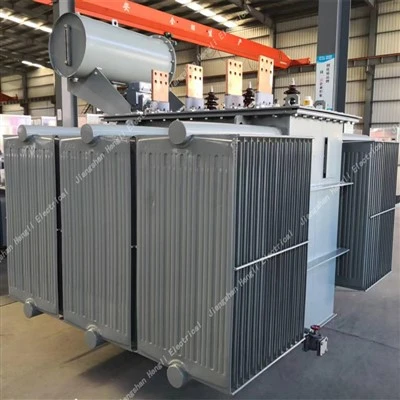
Hey, if you’ve got questions about current ratings for your project—whether you’re a plant manager, engineer, or just someone who’s curious—hit us up. We don’t do pushy sales stuff, we just help you find the right transformer for your needs without all the jargon. No generic quotes, no hidden fees, just real info and a unit that works when you need it to.
Power Transformer References:
- Institute of Electrical and Electronics Engineers. IEEE Standard for Transformers, Regulators, and Reactors, 2020 Edition.
- International Electrotechnical Commission. IEC 60076-1: Power Transformers – Part 1: General Requirements, 2021.
- U.S. Department of Energy. Special Transformer Market Assessment: Trends and Performance Standards, 2023.
- International Council on Large Electric Systems. Current Ratings for Special Purpose Transformers in Renewable Energy Applications, 2022.
- National Fire Protection Association. NFPA 70: National Electrical Code, Article 450 for Transformers, 2023.
Zhejiang Jiangshan Hengli Electrical Co., Ltd.
Zhejiang Jiangshan Hengli Electrical Co., Ltd. is one of the most professional special transformer manufacturers and suppliers in China, featured by quality products and low price. Please rest assured to wholesale cheap special transformer in stock here and get pricelist from our factory. Customized orders are welcome.
Address: 212 Fuzhu Street Sidu Town, Jiangshan, Zhejiang, China
E-mail: henglijs@foxmail.com
WebSite: https://www.henlypower.com/
