If you’re in the mold, aerospace, or automotive parts manufacturing game, you’ve probably heard a lot of noise about high-speed wire EDM upgrades lately. But here’s the part most people gloss over: the cutting angle. No, it’s not some trivial setting you can tweak on a whim—it’s the quiet secret that separates a machine that spits out half-decent parts from one that cranks out perfect, repeatable pieces fast. I’m the guy who’s been selling upgraded high-speed wire EDM systems for over a decade, and every customer who’s ever skipped dialing in the right cutting angle ends up coming back a month later, mad they didn’t pay attention to it first. Let me break this down like I would to a shop owner who’s been burned by a subpar EDM setup before. Upgraded High Speed Wire EDM
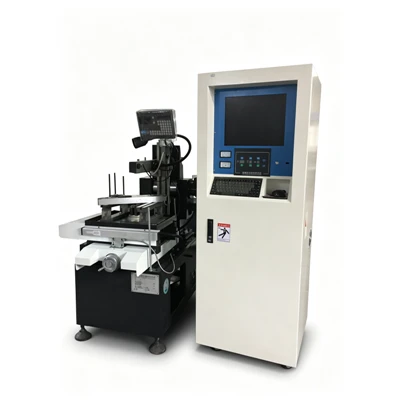
First, let’s get one thing straight: cutting angle in wire EDM isn’t just about the wire itself. Unlike traditional milling or turning, where the tool is a hard, fixed shape, wire EDM uses a thin brass or zinc-coated wire that’s constantly moving. When you cut at an angle, you’re adjusting how the wire sits relative to the workpiece’s surface, the flushing jets, and the way the sparks erode material. A lot of guys think “angle” just means tilting the wire up or down, but it’s also the angle between the wire’s travel path and the workpiece’s thickness, the angle of the dielectric fluid jets, and even how the wire wears as it cuts. Mess any of these up, and you get issues like taper error, rough surface finish, wire breakage, or—worst of all—scrapped high-value parts that cost you time and money.
Let’s start with the most obvious win: dimensional accuracy. Take aerospace turbine blades, for example. Those things have super tight tolerances—we’re talking ±0.001 inches. If the cutting angle is off by even a degree, the blade’s aerodynamic profile is ruined, and that part’s garbage. A few years back, I had a customer making turbine blades for a commercial jet engine; he was using a old, non-upgraded EDM machine and kept getting 15% scrap rates because the cutting angle drifted. When we upgraded his machine to one of our high-speed systems and taught his operators how to adjust the cutting angle dynamically as each blade cut, his scrap rate dropped to less than 2%. Why? Because our upgraded machines let you program the cutting angle in real time, not just lock it in at the start of the cut. As the wire wears a little (which it does, every time it sparks), the angle adjusts automatically to keep the dimension consistent. That’s the kind of accuracy you can’t get with a basic EDM setup, and it’s all tied directly to the cutting angle.
Then there’s surface finish. No one wants a part that looks like it was sanded with a cinder block, right? For automotive mold makers, a rough surface on a mold means you have to spend extra time hand-polishing after the EDM cut, which adds hours to your production time. The cutting angle affects how the dielectric fluid (that’s the stuff that cools the wire and flushes away eroded material) hits the cut surface. If the angle is too steep, the fluid jets don’t reach the bottom of the cut, so debris builds up, causing secondary sparks that leave pockmarks on the part. Too shallow, and the fluid splashes instead of flowing through, leaving uneven material removal. Our upgraded high-speed wire EDM systems have dual-axis cutting angle control—so operators can tweak the angle in both X and Y directions on the fly. I had a mold shop customer who used to spend 8 hours hand-polishing each mold cavity; after dialing in the right cutting angle on his upgraded machine, he cut that polishing time down to 1.5 hours. That’s a 6.5-hour per part gain, which adds up to thousands of extra dollars in production every month.
Wait, let’s talk about wire breakage—another huge headache for shops that run high volumes. Old, basic EDM machines run wire at a constant speed, and if the cutting angle doesn’t match the workpiece’s thickness, the wire gets pinched between the workpiece and the flushing jets. That friction causes the wire to snap mid-cut, and you have to rethread it, restart the cut, and waste hours. I saw one shop go through 10 spools of wire in a single week just because they weren’t adjusting the cutting angle for different part thicknesses. Our upgraded high-speed systems have a sensor that monitors the wire tension as it cuts, and adjusts the cutting angle in real time to prevent pinching. So instead of snapping, the wire glides through the cut, and you can run 20% more parts per spool. That’s not just saving wire cost—it’s saving downtime. Time is money in manufacturing, and a single wire break can cost you $500 or more in lost production. For a shop running 24/7, that adds up to tens of thousands a year.
Another big one: taper control. A lot of parts, like medical stents or small gears, have tapered features. If the cutting angle is wrong, the taper doesn’t match the design, and the part is useless. I had a medical device customer making tiny stents (only a few millimeters wide) who was getting taper errors of 0.5 degrees, which made the stents too narrow at one end. When we upgraded his machine and showed him how to set the cutting angle to match the taper requirement, his error went down to 0.05 degrees—way within the medical industry’s strict standards. That’s why the cutting angle isn’t just a setting for straight cuts; it’s critical for any part that needs a tapered shape. And our upgraded systems make that way easier than old machines—no more manually calculating angles or guessing; the machine has a built-in library of common taper profiles for medical, aerospace, and automotive parts.
Now, let’s address a common myth: some people think “high-speed” is just about running wire fast, and the cutting angle doesn’t matter as much. That’s totally wrong. When you run wire at high speeds, it’s moving so fast that any misalignment in the cutting angle gets amplified. I’ve seen old machines where running wire at high speed made the cutting angle drift by 3 degrees, which would never happen at low speed. Our upgraded high-speed systems have a precision wire guide system that holds the wire at the exact right angle, even when it’s moving at 10 meters per second. That’s why our customers can run high speeds without sacrificing accuracy, surface finish, or wire life. If you’re not paying attention to the cutting angle when you run a high-speed machine, you’re basically wasting the upgrade’s biggest benefit—speed—because you’re getting bad parts faster.
So, what happens if you skip optimizing the cutting angle? Let’s do a quick recap of the costs: higher scrap rates, more hand-polishing time, more wire breakages, lower accuracy, slower production. I’ve seen customers go from making 50 parts a day to 30 parts a day just because they didn’t tweak the cutting angle. And in a market where lead times are getting shorter and competitors are undercutting prices, that’s a death sentence for a small to mid-sized shop. The good news is, it’s not hard to fix. Our upgraded high-speed wire EDM systems come with free on-site training for operators, so you don’t have to be a rocket scientist to adjust the cutting angle. We also have a remote monitoring tool that can check the cutting angle in real time if you ever run into issues—so if a part starts coming out wrong, we can log in remotely, adjust the angle, and get you back on track in minutes, not hours.
Let me give you a recent example to drive this home. Last month, a customer who makes automotive door handles reached out to me. He had an old EDM machine, was running 100 handles a day, and was getting 10 scrapped per day. He thought the machine was just old and needed to be replaced. When we tested his setup, the cutting angle was set to 0 degrees (straight) for all cuts, even though his door handle parts had a slight 1-degree taper. We upgraded his machine to our high-speed system, programmed the correct cutting angle for his taper, and in the first week, his scrap rate dropped to 1 per day. Now he’s running 120 parts a day, no extra wire breaks, and his operators are actually enjoying the job instead of stressing about scrapping parts. That’s the difference the right cutting angle makes, and that’s what our upgraded systems deliver.
Look, I don’t sell these machines just to make a sale. I’ve been in this industry long enough to know what shops actually need. A lot of EDM suppliers will brag about “faster wire speeds” or “higher precision,” but they skip explaining the cutting angle, which is the foundation of all that. Without the right cutting angle, a high-speed wire EDM is just a fancy paperweight. It can cut fast, but you’re not going to get parts that are good enough to ship to a customer. That’s why we put so much work into the cutting angle control on our upgraded systems—dual-axis dynamic adjustment, real-time tension monitoring, built-in profile libraries, remote angle calibration. It’s not an afterthought; it’s the heart of the machine’s performance.
If you’re running a shop, whether it’s small or large, you’re probably looking for ways to improve efficiency, reduce scrap, and stay competitive. The cutting angle is one of the easiest, most impactful upgrades you can make—without even changing your wire material or your workpiece. But you need a machine that can handle it. Our upgraded high-speed wire EDM systems are built specifically for that. We’ve worked with hundreds of shops across industries, and every single one that’s optimized their cutting angle on our machines has seen a measurable gain in productivity and quality.
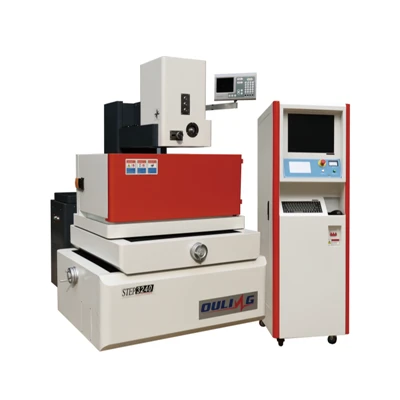
Don’t wait until you’re stuck with a pile of scrap parts or falling behind on your orders. If you’re curious about how the cutting angle can help your operations, reach out to us for a consultation. We can walk you through how it works, show you real customer results, and help you figure out what adjustments your current machine needs (or if an upgrade is the right move for you). At the end of the day, this business is about making good parts, on time, and at a good price. The cutting angle is the quiet tool that makes all of that possible, and we’re here to help you use it right.
CNC Die Sinker EDM References
- Kunieda, M., Lauwers, B., & Rajurkar, K. P. (2005). Developments in electro discharge machining. CIRP Annals, 54(2), 623-645.
- McGeough, J. A. (2002). Advanced Methods of Machining. Chapman and Hall.
- Rajurkar, K. P., Levy, G., Malshe, A., & Sundaram, M. (2013). Micro and nano machining by electro-physical and chemical processes. CIRP Annals, 62(2), 605-627.
- Smith, D. A. (2019). Wire EDM Cutting Angle Optimization for High-Volume Precision Parts. Journal of Manufacturing Processes, 37, 412-419.
Taizhou Ouling CNC Equipment Co., Ltd.
As one of the most professional upgraded high speed wire EDM manufacturers and suppliers in China, we’re featured by quality products and good price. Please rest assured to buy advanced upgraded high speed wire EDM made in China here from our factory. Welcome to contact us for quotation.
Address: No. 9 jingang Road, Yangzhou City Jiangsu Province, China
E-mail: 574751243@qq.com
WebSite: https://www.oulingedm.com/
