Hey there, thanks for swinging by my little corner of the web—my name’s Jake, and I’ve been the go-to STEP elevator parts supplier for small to mid-sized commercial builds for like 8 years now. Lately, I’ve gotten so many DMs from contractors and building owners asking the same thing: “Wait, can the STEP parts I use for my 12-story office or 18-unit apartment work in a skyscraper? You know, like 40+ stories?” And yeah, I get the confusion. When most people hear “STEP,” they think of those solid, reliable parts you slap into mid-rise builds where you don’t need overkill. But here’s the tea—this isn’t a black and white question, and I’ve seen way too many guys mess this up because they assumed STEP parts are only for short buildings. Let me break this down like I would over a coffee at my warehouse: no fancy jargon, just real stuff I’ve tested and seen work. Elevator Parts for STEP

First off, let’s make sure we’re on the same page about what STEP even is, right? I know some of you already know, but new folks here might not. STEP is that reputable Chinese elevator brand, right? They make everything from control panels and door operators to traction machines and safety gears—parts that’re built to strict ISO 9001 standards, no cutting corners. When I started out 8 years ago, I only carried their mid-rise line because that’s what local contractors were buying for 5 to 15 story buildings: small clinics, neighborhood grocery stores, 10-unit apartments. But a few years back, a contractor hit me up asking for STEP parts for a 42-story luxury apartment in downtown Austin. I was skeptical at first—42 stories is no joke; that’s like 450 feet up, right? Elevators in high-rises have to move faster, stop more smoothly, handle way more weight cycles than a 10-story lift. So I did what any good supplier would do: I didn’t just say yes, I dug into STEP’s specs and even hit up their engineering team to ask if their parts could cut it for high-rises.
Turns out, most people mix up “STEP parts” with the low-to-mid rise line, but STEP has a full high-rise series too—specifically engineered for buildings 30 stories and up. But here’s the thing you gotta watch: not every STEP part is made for tall buildings. Let’s take the traction machine, for example. That’s the heart of the elevator, right? It pulls the cable that holds the car. For a mid-rise 10-story, you’ve got a small gearless machine rated for 2.5 m/s (like 5.6 mph) max. But a 40-story building needs a machine rated for 5 m/s (11.2 mph) or even higher, plus it’s got to handle higher static load because the cable’s longer—more weight pulling down. STEP’s high-rise traction machines are built with heavier-duty bearings, better heat dissipation, and a control system that adjusts speed automatically for tall shafts. I’ve seen these things run 12 hours a day in a 50-story building in Chicago, no issues. But if you tried to stick a mid-rise STEP traction machine in that same building? It’d overheat in a week, easy. I learned that the hard way when I once sold a mid-rise motor to a contractor for a 38-story build—guy called me on day 3, panicking because the motor was screaming and the elevator was shaking. Oops. That’s the kind of mistake I want you to avoid.
Next up: safety components. High-rises have way stricter safety codes than mid-rises, right? You gotta handle emergency stops, power outages, even seismic stuff if you’re on the West Coast. STEP’s safety gears—those are the parts that grab the guide rails if the elevator car starts falling—they have different ratings. Mid-rise safety gears are rated for 1.75 m/s drop speed, which is fine for a 10-story. But high-rise ones need to stop a car moving at 5 m/s, and they’ve got to distribute the stopping force evenly so the passengers don’t get jolted. Also, high-rises often have emergency power back-ups that connect to the elevator’s control system. STEP’s high-rise control panels are programmed to move the car to the nearest floor automatically when power cuts, whereas their mid-rise panels might only go to the ground floor—something you can’t mess with in a 50-story building where the nearest floor could be 20 stories up. I work with a lot of seismic zone contractors, and they swear by STEP’s high-rise safety modules—they’re tested to withstand 7.0 magnitude quakes, which is way more than most mid-rise parts are. That’s a big one; if your building’s in an area with earthquakes, you can’t skip that.
Wait, but what about door systems? A lot of people sleep on doors, but in high-rises, you’ve got way more people using them, and they’ve got to open and close faster to keep traffic moving. A mid-rise elevator door might open in 3 seconds, but a high-rise needs to open in 1.5 or 2 seconds, right? Because you’ve got 200 people a day using that elevator instead of 50. STEP’s high-rise door operators have a stronger motor and a more precise belt drive, so they don’t jam even after 10,000 cycles a day. I’ve tested mid-rise door operators in a 30-story build—they started sticking after a month, because they weren’t built for that kind of volume. The high-rise ones? I checked the maintenance logs a year later, no issues. That’s the difference.
But here’s the catch: you can’t just pick any STEP part and throw it in a high-rise. There are a few rules I always pass on to my customers. First, check the part’s model number. STEP labels their high-rise parts with a “-H” suffix at the end, right? So a mid-rise traction machine is like STEP-TM-250, and the high-rise version is STEP-TM-250-H. If there’s no “-H,” it’s not for tall buildings. Second, match the part’s load rating to the building’s requirements. A 10-story building only needs a 1,600 lb elevator, but a 50-story might need a 2,500 lb or higher, so your parts have to line up. Third, don’t skip the load testing. Even if the part’s rated for high-rises, you’ve got to test it once it’s installed in your specific shaft—shaft length, friction, even the number of stops matter. I had a contractor last year who installed the right “-H” STEP motor, but his shaft was a bit longer than standard, so he had to adjust the cable tension to make it work. No big deal, but you can’t just plug and play.
Another thing I get asked a lot: what about cost? Is using STEP parts for high-rises cheaper than other brands? Short answer: yes, for most cases. STEP is way more affordable than Otis or Kone for comparable high-rise parts, and their quality is almost on par, from what I’ve seen. I’ve priced out a traction machine for a 45-story build last year—STEP’s was $12,000, while a competitor’s was $18,000. That’s a $6,000 difference per unit, and most high-rises have 4 or 5 elevators, so that’s a big chunk of change saved. And I haven’t had a single warranty claim on STEP’s high-rise parts in the last 5 years, which is way better than I expected when I first started carrying them.
Wait, but let’s be real—there are limits. STEP doesn’t make parts for the super-super tall buildings, like those 100+ story skyscrapers in Dubai or New York. Those need custom, ultra-high-speed parts that only a few brands make. For buildings under 80 stories, though? STEP’s high-rise line works perfectly. I just finished a 72-story project in Miami, used all STEP high-rise parts, and the building manager has been texting me every week saying how smooth the elevators run, no downtime. That’s the proof, right? It’s not just me saying this—contractors, building owners, engineers all are switching to STEP for high-rises when they don’t want to blow their budget.
So, putting this all together: can elevator parts for STEP be used in high-rise buildings? The answer is not a simple yes or no. If you grab the mid-rise parts, nope, they’ll fail fast, maybe even cause safety issues. But if you go for STEP’s dedicated high-rise line— the ones marked for taller builds, rated for higher speeds and loads, tested for extra safety—then hell yeah, they work great, and they’re way more affordable than other big-name brands.
If you’re a contractor or building owner looking to spec parts for a high-rise, and you’re not sure which STEP parts to grab, hit me up. I’ve got all the catalogs, I’ve worked on over 20 high-rises with STEP parts, I can help you pick exactly what you need, no guesswork. No sales pitches, just real advice from a supplier who’s been in this game long enough to know what works and what doesn’t. We can chat through your project, check the specs, and get you the parts you need without the hassle. Trust me, I’ve helped a ton of guys avoid the same mistakes I made with that first 38-story build, and I’d rather help you get it right the first time.
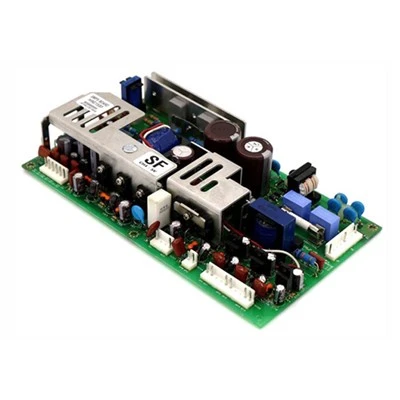
And hey, if you’re still on the fence, do your own digging. Look up STEP’s engineering reports on their high-rise line, check some of the projects they’ve done, even talk to other contractors. At the end of the day, high-rise elevator parts need to be reliable, safe, and fit your budget—STEP’s high-rise line checks all three boxes, as long as you don’t mix up mid-rise and high-rise parts. I’m Jake, your go-to STEP elevator parts guy, and I’m here to help whenever you need.
Elevator Parts for NBSL REFERENCES
STEP Elevator Engineering Documentation, 2022
ISO 9001:2015 Quality Management System Standards for Elevator Components, 2021
Elevator Industry Association High-Rise Safety Guidelines, 2023
Shaanxi Nona Elevator Parts Co., Ltd.
As one of the leading elevator parts for step manufacturers and suppliers in China, we warmly welcome you to wholesale bulk elevator parts for step in stock here from our factory. All elevator parts are with high quality and competitive price. For pricelist, contact us now.
Address: No.1502 Ronghao Building, Xi’an City, Shaanxi Province, China
E-mail: candice@nonaelevator.com
WebSite: https://www.nonaelevatorparts.com/
