If you’ve ever worked in construction, industrial equipment assembly, or structural fabrication, you know that heavy hex bolts are more than just fasteners—they’re the unsung heroes holding critical infrastructure together. For nearly a decade, I’ve supplied heavy hex bolts to fabricators, contractors, and maintenance teams across North America, and one question comes up again and again: “What is the real surface finish of a heavy hex bolt, and why does it matter so much more than just a shiny look?” Let’s break this down, not with textbook jargon, but with the practical, field-proven answers I’ve learned after thousands of bolt shipments and on-site troubleshooting calls. Heavy Hex Bolts
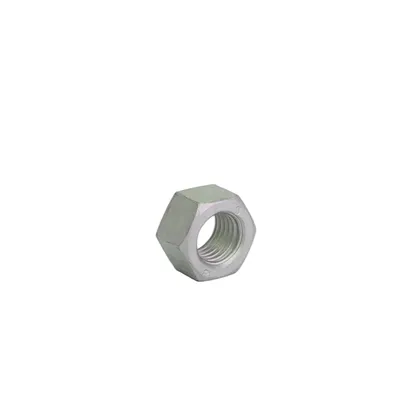
First, let’s get clear on what a surface finish actually means for a heavy hex bolt, as opposed to the smooth, decorative finishes you might see on a household door hinge. For industrial fasteners like these, surface finish refers to two key things: the texture of the bolt’s exterior (measured in microinches, a unit you’ll hear about constantly in this industry) and the presence of any coating that protects the steel beneath it. Heavy hex bolts are almost always made from carbon steel, alloy steel, or sometimes stainless steel—materials that are strong, but prone to rust, corrosion, and galling (that’s the frustrating seizing of two metal surfaces when you’re tightening a bolt, something every tradesperson hates). So the surface finish isn’t just aesthetic; it’s a direct link to performance, durability, and safety.
Let’s start with the uncoated, raw heavy hex bolt surface, because that’s the baseline every coating builds on. When a bolt is machined from a steel bar, it goes through a series of forging, threading, and cooling steps. The texture here is measured in Ra (roughness average), a standard that quantifies the height of microscopic peaks and valleys on the metal’s surface. For raw, uncoated heavy hex bolts used in applications where corrosion isn’t a big concern—like temporary structural holds in dry, indoor construction—Ra values typically range from 125 to 250 microinches. That’s not “rough” to the touch, but if you looked at it under a microscope, you’d see tiny ridges left from the threading die and forging process. This texture isn’t random: it helps coatings adhere better later, but too much roughness can trap dirt and moisture, accelerating rust. Too smooth, and a coating might chip or flake off during shipping or installation.
Now, the most common surface finish you’ll see on heavy hex bolts, and the one our team recommends for 90% of our standard orders, is hot-dip galvanized (HDG). Wait, I know what you’re thinking—you’ve ordered HDG bolts before, and you’ve probably noticed they have that matte, silver-gray finish, not the shiny chrome look some suppliers push. That’s a myth: chrome plating is for decorative parts, not heavy hex bolts, because it’s thin, easy to scratch, and doesn’t stand up to harsh environments. Hot-dip galvanizing is a process where bolts are dipped into molten zinc (around 850 degrees Fahrenheit) after being cleaned to remove oil, rust, and mill scale. The result is a metallurgical bond between the zinc and the steel, not just a paint-like coat. The surface finish here isn’t uniform, either. Because the zinc alloy reacts with the steel at different rates across the bolt’s threads and head, you’ll see a slightly uneven, spangled pattern—sometimes called a “zinc spangle.” That’s normal, and it’s a sign of a properly done HDG finish. The Ra value for HDG heavy hex bolts is a bit higher than raw, usually around 150 to 300 microinches, because the zinc coats fill in small imperfections but adds a thin, slightly bumpy layer.
But wait, HDG isn’t right for every job. I once had a customer in the offshore wind industry call us in a panic—his team had used standard HDG heavy hex bolts to secure a platform’s base, and within 18 months, the bolts had pitted badly from saltwater. The problem? While HDG is great for mild outdoor environments (like bridge railings in a rainy city), it’s not resistant to the harsh salt and chemicals in marine or industrial chemical plants. For those applications, we supply bolts with a different surface finish: epoxy powder coating. Epoxy coatings are applied electrostatically, then baked on, creating a thick, uniform layer that can withstand 1,000+ hours of salt spray (a standard test for corrosion resistance) without chipping. The surface finish here is much smoother than HDG, with Ra values around 50 to 100 microinches. But here’s a catch: if you’re using heavy hex bolts in high-torque applications—like securing a crane boom or a bridge girder—too smooth a surface can cause galling when you’re tightening the nut. So our epoxy-coated bolts have a slight texture added during the coating process to balance corrosion protection and ease of installation.
Another finish we’re often asked about is zinc-nickel plating, which is a step up from standard zinc plating. Unlike HDG, which is for bulk bolts, zinc-nickel is usually a thin, precision-applied coat for heavy hex bolts used in automotive manufacturing or heavy machinery, where strength and corrosion resistance are critical. The surface finish here is consistent, with Ra values around 60 to 100 microinches, and it offers better resistance to salt and chemicals than standard HDG. We only supply zinc-nickel for customers who specify it, because it’s more expensive, and overkill for most construction applications.
Now, let’s talk about a common mistake I see as a supplier: confusing surface finish with thread fit. A lot of customers will ask for a “smooth finish” to make threading easier, but a smooth surface can actually make it harder to get a consistent torque when tightening a heavy hex bolt. The peaks and valleys on the surface (the Ra value) affect how much friction there is between the bolt’s threads and the nut’s threads. If the surface is too smooth, friction drops, and you might over-tighten the bolt, breaking the thread or the bolt itself. If it’s too rough, friction is too high, and you might under-tighten it, leading to a loose joint. That’s why our team works closely with every customer to match the surface finish not just to the environment, but to the application. For example, for a customer building a warehouse in a dry, mild climate, we’ll supply raw heavy hex bolts with Ra 125-150, because they’re easy to install and don’t need extra corrosion protection. For a customer building a water treatment plant in a humid area, we’ll send HDG bolts, because the slight roughness helps the HDG resist chipping during transportation. For a customer working on a coastal project, we’ll suggest epoxy-coated heavy hex bolts, even if it costs a bit more, because we’ve seen firsthand what happens when a bolt fails in saltwater.
I also want to address the myth that “all heavy hex bolts have the same surface finish.” A few years ago, a customer bought a batch of cheap heavy hex bolts from a non-specialized supplier, and when he tested them, he found that their surface finish was inconsistent: some bolts had thick, uneven zinc coats, while others had almost none, especially on the threads. That’s a red flag. A quality surface finish on a heavy hex bolt should be uniform across the entire bolt—head, shank, and threads—no bare spots, no thick clumps of coating. When we inspect every batch of bolts we ship, we check for that uniformity, because even one bolt with a bad finish can compromise an entire structure. We also test the surface thickness: for HDG bolts, the zinc coat should be at least 3 mils thick (that’s 0.003 inches), per ASTM A153 standards, to ensure it provides enough corrosion protection. A lot of cheap suppliers cut corners here, with coats thinner than 2 mils, which will wear off in a year or two.
Another thing that’s often overlooked is the surface finish’s role in lubrication. When you’re tightening a heavy hex bolt, you usually use a lubricant—like anti-seize compound—to reduce friction and prevent galling. The surface texture (Ra value) affects how well the lubricant sticks. A slightly rough surface, with Ra 150-250, holds lubricant better than a smooth surface, so you get a more even torque. That’s why we always recommend that our customers use anti-seize with raw or HDG heavy hex bolts, because the surface texture helps the lubricant work properly. For epoxy-coated bolts, since they’re smoother, you don’t need as much lubricant, because the epoxy itself reduces friction, but we still suggest a light coat to make installation easier.
Over the years, I’ve learned that the best surface finish for a heavy hex bolt isn’t the shiniest or the most expensive—it’s the one that matches the job. I once had a customer call me after installing a set of epoxy-coated heavy hex bolts on a bridge in Michigan. He said he’d paid extra for the epoxy, and a year later, when he checked the bolts, there was no rust, no pitting, even though the bridge was exposed to road salt all winter. That’s the payoff: a good surface finish isn’t just a spec on a paper; it’s what keeps a bridge standing, a crane working, and a factory running.

At the end of the day, as a supplier who’s been in this business for almost a decade, I’ve seen the difference that a good surface finish makes. Cheap, inconsistent finishes lead to failures, delays, and safety risks. Quality, application-specific finishes lead to long-lasting, reliable joints. If you’re working on a project and you’re not sure what surface finish your heavy hex bolts need, don’t guess. Reach out to our team, and we’ll walk you through the options based on your environment, torque requirements, and budget. We don’t push the most expensive finish—we give you the right one, because that’s how we’ve built our reputation over the years. If you want to talk through your project’s needs, let’s connect to find the perfect heavy hex bolts for your application.
Heavy Hex Bolts References:
ASTM A153/A153M-19, Standard Specification for Zinc Coating (Hot-Dip) on Iron and Steel Hardware
ASTM A325/A325M-23, Standard Specification for Structural Bolts, Steel, Heat Treated, 120/105 ksi Minimum Tensile Strength
ASTM B117-19, Standard Practice for Operating Salt Spray (Fog) Apparatus
Machinery’s Handbook: Fasteners, Tools, and Other Machine Parts, 31st Edition
Heavy Hex Bolt Manufacturing Practices, Fastener Technology Association, 2022 Industry Report
Jiaxing Jinling Hardware Technolgy Joint Stock Co., Ltd.
As one of the most experienced heavy hex bolts manufacturers and suppliers in China, we also support customized service. Please feel free to buy bulk high-grade heavy hex bolts made in China here from our factory. For quotation and price list, contact us now.
Address: No.32, Shenjiadai, Xuyouche Village, Qinshan Subdistrict, Haiyan County, Zhejiang Province, China
E-mail: jlzxl@jinlingfstn.com
WebSite: https://www.china-nut-factory.com/
