Hey everyone, it’s Mia from your go-to deep groove ball bearing supplier — and let’s cut to the chase, because I get this question all the time: Can deep groove ball bearings actually hold up in dusty environments? If you’re working in construction, agriculture, mining, or even just a workshop with a lot of sawdust or debris, you’ve probably stared at a failed bearing before, wondering if it was just bad luck or if you picked the wrong part. Spoiler: It’s rarely bad luck. Most of the time, it’s a simple mismatch between your bearing and its environment. Let’s break this down like we would over a coffee (or a hard hat break, let’s be real) — no stuffy jargon, just the real deal. Deep Groove Ball Bearings
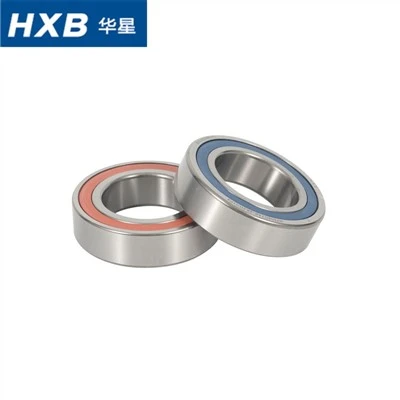
First, let’s remember what a deep groove ball bearing is, for anyone new here. It’s the workhorse of the bearing world — tiny metal balls rolling between two rings, designed to handle both radial loads (think the weight of a conveyor belt pulling down) and some axial loads (sideways push, like a wheel turning). They’re cheap, easy to install, and used in everything from electric motors to farm equipment. But here’s the thing: their basic design leaves a tiny gap between the inner and outer ring — that’s how the balls spin smoothly — and that gap is where dust comes in. If even a speck of dust gets between those balls and the rings, it’s like having sand in your engine. The hard, abrasive particles scratch the raceways, cause friction, and before you know it, the bearing seizes up or starts making that awful grinding noise. So yeah, standard deep groove bearings can fail fast in dusty environments — but that doesn’t mean they’re useless here.
Let’s talk about why dust is such a big deal. Dusty environments aren’t just “a little dirt” — we’re talking about silica dust from concrete, coal dust from mines, grain dust from farms, sawdust from wood shops. A lot of these particles are sharp, like tiny shards of glass, and they’re microscopic enough to slip through almost any seal if it’s not properly designed. I once had a customer with a grain elevator who swore his bearings were garbage because they lasted only 3 months. Turns out, he was using off-the-shelf open bearings (no cover at all) — grain dust was pouring in every time the conveyor ran, and the balls were just grinding against it. We swapped in sealed bearings, and those same bearings are still going strong 2 years later. That’s the key right there: seals.
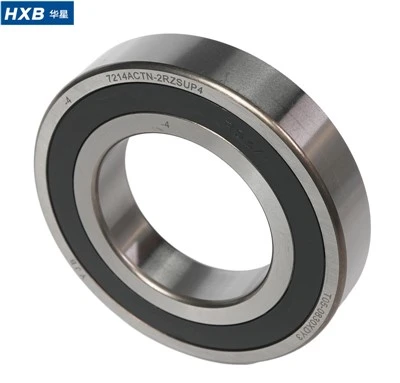
Wait, not all seals are created equal, though. There are two main types for deep groove ball bearings: rubber seals (usually labeled 2RS) and metal shields (ZZ). Let’s compare them, because this is where a lot of people get confused. ZZ shields are metal, bent over the edge of the bearing to block debris. They’re great for keeping grease in and general gunk out, but they’re not perfect for super dusty environments. Because metal is rigid, there’s a tiny gap between the shield and the inner ring — dust can sneak through that gap if the particles are small enough. 2RS seals are rubber, so they press lightly against the inner ring. That rubber creates a almost hermetic seal — way better at keeping dust out. But wait, there’s a catch: rubber seals can’t handle as high of a speed as metal shields, and if you’re running a bearing at 10,000 RPM, a 2RS might overheat. So it’s a trade-off. For dusty environments where speed isn’t crazy (like conveyor belts, agricultural equipment, construction hoists), 2RS is the way to go. For high-speed applications with moderate dust, ZZ can work — but you still need to keep the area around the bearing as clean as possible, and maybe add a external housing seal too.
Then there’s the grease. You can have the best seal in the world, but if the grease is old or not rated for dusty conditions, dust will still win. Standard grease is just oil and thickener, but for dusty environments, you want a grease with extreme pressure (EP) additives. These additives create a protective layer between the balls and raceways, so even if a tiny dust particle does get past the seal, it doesn’t scratch the metal. I always tell customers: if you’re in a dusty spot, don’t use the cheap grease that comes with the bearing. Replace it with an EP grease — it costs a few bucks more, but it doubles or triples the bearing’s life. Another thing: relubrication. Deep groove bearings aren’t “set it and forget it,” especially in dusty environments. You need to regrease them regularly, according to the manufacturer’s specs. Too little grease and dust gets in; too much grease causes heat. Find that middle ground, and your bearings will thank you.
What if you’re in a really dusty place — like a mine or a cement plant where dust is everywhere all the time? Even 2RS bearings might not be enough. That’s when you need to look into modified deep groove ball bearings. We can make custom ones with extra-thick seals, labyrinth seals (which are like a tiny maze that dust has to get through, super effective), or even bearings made from harder metals, like stainless steel, instead of standard chrome steel. Stainless steel bearings are more expensive, but they’re corrosion-resistant and can handle abrasive particles way better. We had a mining customer last year who was going through 5 bearings a month — we swapped in stainless steel deep groove bearings with labyrinth seals, and now he goes 18 months between replacements. That’s a huge cost savings for him.
Wait, let’s address a common myth: some people think that open bearings (no seals) are better for dusty environments because they can vent heat. Yeah, they do vent heat, but they also vent all the grease and let every dust particle in. If you’re using an open bearing in a dusty spot, you’re basically asking for it to fail. I’ve seen this too many times — a guy will buy an open bearing because it’s $2 cheaper, and 6 weeks later he’s back buying a replacement, plus paying for downtime when his machine breaks. Downtime is way more expensive than a slightly more expensive sealed bearing. That’s the thing no one tells you: the cost of the bearing is nothing compared to the cost of a construction crew waiting for a replacement part, or a farm harvester sitting idle during harvest season.
So let’s wrap this up with a quick, actionable guide for anyone dealing with dusty environments:
- Skip open bearings — always go with sealed (2RS for low-speed, high-dust; ZZ for high-speed, moderate dust).
- Ditch the stock grease — use EP grease rated for abrasive conditions.
- Relubricate regularly, based on your equipment’s usage.
- For extreme dust, go with modified bearings (stainless steel, labyrinth seals, extra-thick shields).
At the end of the day, deep groove ball bearings can work in dusty environments — you just can’t use the same off-the-shelf bearing you’d use in a clean electric motor. It’s all about matching the bearing and its features to your specific environment. If you’re not sure which one is right for your machine, don’t guess — reach out. We’ve helped hundreds of customers figure this out, no pressure, no confusing technical jargon, just straight advice that saves you money and downtime.
If you’re dealing with frequent bearing failures in dusty spots, or you just want to upgrade your current setup, we’re here to help. Shoot us a message to chat about your needs, and we’ll point you to the right deep groove ball bearing for your application. No sales pitches, no hidden fees — just honest input from people who’ve been in this industry for years, and know what works.
Household Appliances Bearings References
- SKF. (2022). Bearing Selection for Contaminated Environments. SKF Group Technical Publication.
- NTN Bearing Corporation. (2021). Sealing Technologies for Deep Groove Ball Bearings in Abrasive Applications. NTN Engineering Bulletin.
- American Society of Mechanical Engineers (ASME). (2020). Design Guidelines for Rolling Element Bearings in Industrial Environments. ASME International.
- International Organization for Standardization (ISO). (2019). ISO 1206: Rolling bearings — Deep groove ball bearings — Dimensions, tolerances and load ratings. ISO Standards.
- The Institute of Industrial Engineers (IIE). (2022). Cost Analysis of Bearing Failure in Manufacturing and Agricultural Operations. IIE Journal of Manufacturing Systems.
Hangzhou Huaxing Kechuang Holding Group Co., Ltd.
Hangzhou Huaxing Kechuang Holding Group Co., Ltd. is one of the leading manufacturers and suppliers of deep groove ball bearings in China, featured by quality products and good service. Please rest assured to buy bulk durable deep groove ball bearings from our factory. Welcome to view our website for more information.
Address: No.553 Yingbin Road, Linping, Hangzhou, 311100, China
E-mail: wmb@huaxingbearing.com
WebSite: https://www.hxbbearing.com/
