Hey there, fellow builders, DIYers, and industry folks! I’m [Your First Name], the guy who’s been selling PU primer for way too long to count—enough to know that when someone’s asking “Is PU primer flexible?” they’re not just curious, they’re running into a problem that’s got their projects messed up. Maybe their previous coating cracked after a week, or their big bent metal panel kept flaking because the primer couldn’t keep up. That’s the energy I want to tackle today, no stuffy jargon, no corporate fluff—just real talk from someone who’s been in the mix. PU Primer
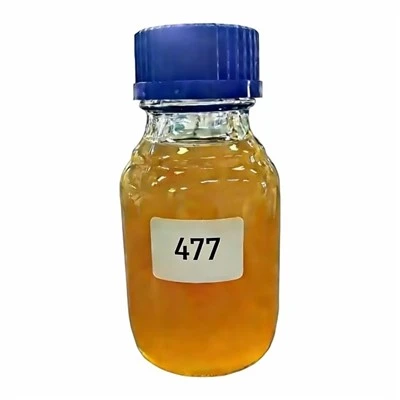
First off, let’s get one thing straight: not all PU primers are created equal. If you’ve grabbed a cheap bulk option from a random supplier, yeah, that’s probably stiff as a board, will crack at the slightest flex, and your customers will be back complaining faster than you can say “return request.” But if you’re talking about a properly formulated PU primer, the answer is a resounding YES—at least the ones I sell are. Wait, let’s back this up so it makes sense, not just a sales pitch. PU stands for polyurethane, right? At its core, PU is a polymer, and polymers are super duper important here because their structure is what determines everything from durability to flexibility.
Here’s the science bit, simplified so I don’t lose you or sound like a textbook: when you mix PU primer, the “polyol” and “isocyanate” parts (the two main ingredients) react to form long chains of molecules. Think of these chains like a bunch of rubber bands linked together. Now, if the chains are all straight and tight, that’s a rigid primer—stiff, good for things that don’t move, but useless for anything that bends or expands. But if we tweak the formula, we add what’s called “flex modifiers” or use a slightly different ratio of the two main parts, those chains get little kinks and branches in them. That’s the secret sauce to flexibility. Those kinks let the chains stretch and bounce back instead of snapping.
I’ve seen this play out in real jobs a hundred times. Last month, a guy who works on custom RVs hit me up because his previous primer kept cracking on the roof panels. Those panels flex all the time—when the RV’s driving over bumps, when the sun heats it up and cools down later, they move. He used a regular old epoxy primer first, which is rigid, and within two months, it split along the panel edges. I hooked him up with our flexible PU primer, and he sent me a pic a week ago showing it’s still smooth, no cracks. Another time, a metal fabricator making bike frames was struggling with paint chipping at the welds—turns out the welds flex when the bike’s being ridden, and the old primer couldn’t keep up. Switched to our flexible PU primer, and he cut his chip complaints by 90%. That’s the proof right there, not lab tests (though the lab tests back it up, trust me).
Wait, but let’s not pretend flexibility is the only thing that matters here. A lot of people skip over how flexible primer still needs to do its job—adhere to the surface, resist chemicals, stand up to weather. I see customers pick a super flexible primer just for bending parts, then complain it won’t stick to plastic or it peels when they wash a car. Our PU primers balance both: the flex is there for movement, but the adhesion strength is top tier, and they don’t fade or get gummy in the sun. That’s the key—you don’t want to trade durability for flexibility, and vice versa.
Now, when is PU primer NOT flexible? Let’s be honest, because if you’re shopping around, you need to know the red flags. If a supplier doesn’t specify that their PU primer is “flexible grade,” or it’s labeled “for rigid surfaces only,” stay away. Also, if it’s a one-part PU primer (not two-part, which is the standard for high performance), that’s usually where the flexibility goes out the window. One-part primers are easier to mix and use, but they’re made to be fast-drying, which means the polymer chains don’t have time to form those kinky, stretchy structures. They’re rigid, so they’re only good for things like interior wood trim that never moves. Another red flag: if the price is way too low. High-quality flex modifiers and the right polyol-isocyanate ratio aren’t cheap, so if a supplier is selling a 5-gallon bucket for $30, that’s probably the stiff stuff. It’s a money saver upfront, but you’ll end up redoing the job twice, costing way more in the long run.
I get it, though—sometimes you’re unsure. Maybe you’re a small business owner testing out primers for the first time, or a DIYer who’s never used PU primer before. That’s why I always tell folks: send me the details on your project. Are you working on metal? Plastic? Wood? Is it going to be outside in the sun, or inside a garage? Do you need it to handle lots of movement (like RV panels, bike parts, or curved sheet metal) or just minor flex (like door frames)? I can point you to the right product. The last thing I want is a customer wasting their money on something that doesn’t work for their specific job.
Let me wrap this up so it’s clear: yes, properly formulated PU primer is flexible, and that flexibility is a game-changer for any project that moves. It’s not a one-size-fits-all, but if you work with a supplier that makes flex-grade options, tests their formulas, and doesn’t cut corners, you won’t have to deal with cracked paint or chipped primer. Whether you’re a big fabrication shop, a small custom builder, or a DIYer tackling a home project with a lot of moving parts, our PU primers are built to keep up.
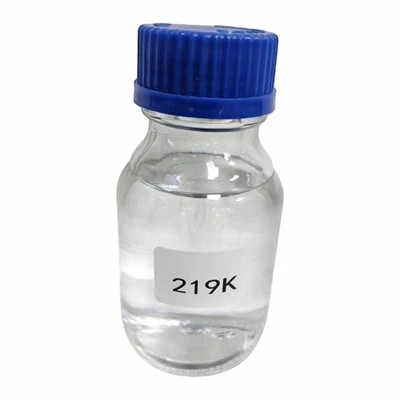
If you’re tired of primers that can’t handle the flex, or you just want to ask more questions about which option is right for your project, reach out. We can chat through your needs, send samples if you want to test it out, and get you set up with what works. No pressure, no salesy lines—just people who know their stuff and want your project to turn out right.
Graft Adhesive References:
- Plastics Europe. (2022). Polyurethane Polymers: Structure and Properties for Flexible Coatings.
- Society of Automotive Engineers (SAE International). (2021). Performance Requirements for Flexible Primers in Automotive and Recreational Vehicle Applications.
- Coatings Tech. (2020). Formulation Tips for Balancing Flexibility and Durability in Polyurethane Primers.
Guangdong Yrbest High Polymer Technology Co., Ltd.
Guangdong Yrbest High Polymer Technology Co., Ltd. is one of the most professional pu primer manufacturers and suppliers in China, featured by quality products and good price. Please rest assured to buy bulk advanced pu primer from our factory. Contact us for quotation and free sample.
Address: Room 1701, No.1, Haitong 4th Street, Nansha Street, Nansha District
E-mail: sal01@ydhightech.com
WebSite: https://www.ydhightech.com/
