If you’ve ever browsed a curated product shelf—whether it’s artisanal chocolate, premium skincare, or hand-poured candles—chances are you’ve spotted a tuck end box with a subtle, raised design that makes the package feel special before you even open it. As a tuck end boxes supplier who’s spent a decade walking customers through every detail of custom packaging, one question I get asked more than any other is: “Can tuck end boxes be customized with embossing?” Tuck End Boxes

The short answer is yes—embossing on tuck end boxes isn’t just possible, it’s one of the most versatile, high-impact customizations we offer. But to give you the full picture, I need to break down what embossing actually is, how it works with tuck end box structure, why it’s worth the investment, and the small details that make or break a finished embossed box. I’ve seen projects that turned generic product shipping into shelf-stopping retail displays, and I’ve walked customers away from bad embossing jobs that felt rushed or poorly executed, so let’s get into the real-world stuff, not just the textbook definitions.
First, let’s recap what a tuck end box is, because embossing doesn’t work the same on every box. Tuck end boxes are the classic, no-glue-required style: two top and two bottom flaps that tuck into the main body of the box to close it, no staples, adhesive strips, or extra hardware needed. They’re popular across almost every industry because they’re cost-effective, easy to assemble, and lightweight enough to ship in bulk without adding extra weight to orders. The standard structures you probably recognize from retail are the reverse tuck (where the top flap is longer than the bottom, for extra security), the full tuck, and the partial tuck—all of which work with embossing, as long as we plan for the embossed areas when designing.
Embossing itself is a manufacturing process where a raised design is pressed into the surface of the box (and no, it’s not just “stamping with a hot stamp,” that’s foil stamping—more on that later). The process uses two custom metal dies: a male die that pushes up from below the box surface, and a female die that presses down from above, matching the male die’s shape to create a precise, raised impression. Debossing, the opposite, creates a recessed design, but embossing is what most people mean when they ask for that “touchable, premium” detail on packaging.
Now, here’s the part most customers don’t know: embossing works best on certain types of box stock, and that ties directly into being a tuck end boxes supplier. Thin box stock—like 12pt or 14pt cardboard used for disposable mailers or basic product boxes—can’t hold a deep emboss without cracking or warping. We recommend a minimum of 16pt stock for embossed tuck end boxes, and for really intricate designs (like fine lines or small logos), 18pt stock is ideal. Thicker stock (20pt+) is too rigid for clean embossing, and you’ll end up with uneven edges or a design that doesn’t sit flush with the rest of the box. I once had a small business owner come to me with a sample of a basic tuck end box they’d tried embossing themselves with a home machine, and the design looked like crumpled paper because they used 10pt stock—we fixed it by reprinting on 16pt cardboard, and the difference was night and day.
Another key factor for tuck end boxes specifically: where you place the embossed design. Tuck end boxes have functional areas—like the tuck flaps and the top seam—where embossing can cause problems. If you emboss a tuck flap, that raised area makes the flap harder to tuck into the box body, especially if it’s a deep emboss. We always advise customers to place embossed designs on the main panel of the box (the front, back, or sides that aren’t flaps) unless they’re okay with a shallower emboss on flaps for a subtle detail. I had a candle brand client a couple years ago who wanted their logo embossed on both the front panel and the top tuck flap of their tuck end boxes. We suggested a 1.5mm deep emboss on the front panel, which was bold and easy to feel, and a 0.75mm shallow emboss on the flap, which was subtle enough that it didn’t get in the way of tucking the flap closed. They loved it, and told me later that customers often commented on how “thoughtful” the small detail felt.
What makes embossing even more flexible for tuck end boxes is that you can pair it with other customizations for a layered, premium look, without overcomplicating the design. For example, a lot of our retail clients combine embossing with matte finish lamination on the entire box, and add foil stamping to a small detail inside the embossed logo. Wait, no—embossing is usually done before lamination, right? Let me clarify that to avoid confusion. The embossing process happens first, before any lamination or coating is applied to the box stock. If you laminate the box first, the plastic coating on the surface prevents the die from pressing into the cardboard properly, so the emboss will look faint or uneven. But once the emboss is done, you can add any other finishes: matte, gloss, or even a soft-touch coating. That soft-touch coating combined with a raised emboss creates a tactile experience that’s way more memorable than a flat printed design.
One common misconception I hear from new customers is that embossing is only for luxury, high-end products. That’s not true. While embossing does cost a bit more than basic digital or flexographic printing (usually a small per-unit fee for the custom dies, plus a slight per-piece charge for the embossing process), it’s cost-effective enough for small runs and mid-range products. For example, a handmade jewelry brand using tuck end boxes for small orders doesn’t need to spend on foil or fancy coatings—just a 10mm embossed logo on the front panel makes their box look intentional and professional, without breaking the bank. I’ve also worked with food brands that use tuck end boxes for small-batch cookies and teas, and embossing their product name or a small floral design makes the box stand out on farmers’ market shelves next to generic plastic-wrapped treats. The key is designing an embossed detail that’s meaningful, not just decorative. The best embossing is subtle enough that it feels natural, not over-the-top.
Of course, like any custom packaging, embossed tuck end boxes have a few limitations, and it’s my job as a supplier to be transparent about them, because I don’t want customers to be disappointed with the final product. First, intricate designs have limits. Fine lines (thinner than 1mm) will get lost in the embossing process, because the dies can’t press small details cleanly. That means if your logo has tiny text or a thin outline, we might suggest slightly thickening those lines, or pairing the emboss with a small foil accent to make the detail pop. Second, color doesn’t affect embossing, but it’s worth noting that embossing works best with high-contrast box stock. A light emboss on a dark box will be more visible than a light emboss on a white box, so we usually suggest using a medium or dark stock if your embossed design is subtle. Third, custom dies for embossing do have a setup cost, which is why embossed boxes are usually more affordable for runs of 500 units or more. If you only need 100 small tuck end boxes, embossing might not be the most cost-effective option, but we have alternatives (like raised ink printing) that give a similar look for smaller runs. I always talk through that tradeoff with customers—no hard sell, just honest advice about what will work best for their budget and order size.
Another thing I love about working with embossed tuck end boxes is that they’re versatile enough for both retail and shipping use. Wait, shipping boxes? Let me explain. A lot of e-commerce brands use tuck end boxes for shipping products, because they’re sturdy enough to hold items without extra packaging. Embossing on a shipping box isn’t just for show—it makes the box easy to identify among a pile of generic shipping boxes, and it adds a small “unboxing” moment for customers. I worked with a sustainable apparel brand last year that uses uncoated, recycled tuck end boxes for shipping their t-shirts. They embossed their logo on the front panel, and used no extra coatings, so the emboss is subtle and matches their brand’s eco-friendly mission. Customers would post photos of the boxes on Instagram, saying it made unboxing feel like a special moment, not just receiving a package. That’s the power of a small embossed detail—it turns a functional shipping box into a brand touchpoint.
Let me also clear up the difference between embossing and similar processes, because I get this question all the time. As I mentioned earlier, foil stamping is a separate process where metallic foil is pressed onto the box surface, usually with a die, but it’s flat, not raised. Debossing is a recessed design, like someone pressed a logo into the box, which can look cool but is more prone to getting scuffed during shipping if it’s deep. Raised ink printing is when thick ink is applied to the surface of the box to create a raised effect, which is cheaper than embossing for small runs, but it’s not as durable, and it can fade over time. Embossing, when done correctly, is permanent, tactile, and adds a level of quality that no flat printing can match. I always show customers sample boxes with all three processes so they can feel the difference for themselves—once you run your finger over a clean embossed logo, it’s hard to go back to flat printed designs.
Now, if you’re thinking about ordering embossed tuck end boxes, there are a few steps we take to make the process smooth, and I’ll walk you through them like I would a new customer. First, we start with a design consultation. I ask about your product, your brand aesthetic, your order size, and your budget. For example, if you’re selling organic skincare, I might suggest a 16pt white or kraft stock with a subtle embossed logo and no extra coatings to match your brand’s minimalist, eco-friendly vibe. If you’re selling premium wine gift sets, I might suggest 18pt black stock with a bold embossed design on the front, paired with a soft-touch coating for a luxurious feel.
Next, we create a custom digital proof of your box, with the embossed design marked so you can see exactly where it will sit on the tuck end box. This is where we work out any kinks—like adjusting the emboss depth if it’s going to interfere with the tuck flaps, or thickening fine lines in your logo. Once you approve the proof, we cut the custom metal dies (that’s a standard step for embossing, and it’s why the setup cost exists) and run a sample production run of 10-20 boxes for you to test. I always recommend getting a sample, because what looks good on a digital proof might not translate in real life. I’ve had a client approve a design online, only to realize when they held the physical box that the emboss was too shallow to feel, so we adjusted the die for their final order. It’s much easier to fix that at the sample stage than after 1,000 boxes are printed.
Wait, let me share a story that shows how important that sample step is. A few years back, a pet treat brand came to me for tuck end boxes with embossed paw prints. They sent me a logo with tiny paw prints, no larger than a nickel, and insisted they wanted the emboss that small. When we ran the sample, the paw prints were so small that the die couldn’t press the edges cleanly—they looked blurry, not like sharp paw prints. We suggested making the paws 12mm wide, which still fit their small box size, and thickening the lines a bit. They loved the adjusted design, and the final boxes were a hit at their local pet store, with customers commenting on how cute and detailed the embossed paws were. If we hadn’t sent the sample, they would have gotten boxes with blurry, unrecognizable paw prints, and that would have been a waste of their time and money. That’s why I never skip the sample step—even if a customer is in a hurry, I make sure they have a physical box to check before production starts.
So, to wrap this up: yes, tuck end boxes can absolutely be customized with embossing, and it’s a great option for brands looking to add a tactile, premium touch to their packaging. It works for small and large runs, retail and shipping use, and almost every industry—you just need to plan for the right box stock, place the embossed design in functional areas, and get a sample before full production.
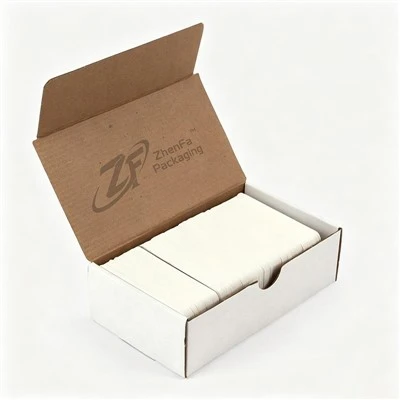
If you’re ready to talk through your custom embossed tuck end boxes, I’m here to help. Whether you’re a small business owner looking for 500 boxes for your new product line, or a larger brand needing 10,000 units for a retail launch, we can walk through all the options, answer any questions you have, and make sure your packaging turns out exactly how you imagined. No hidden fees, no confusing jargon, just honest advice and quality custom boxes that work for your brand.
Corrugated Food Boxes References
- Soroka, W. (2019). Fundamentals of Packaging Technology (5th ed.). Institute of Packaging Professionals.
- Tuck End Box Structure and Customization Guidelines. Packaging World, 2022.
- Tactile Packaging: Consumer Perceptions of Embossed Custom Packaging. Journal of Packaging Science and Technology, 2021, Vol. 35, No. 4, 217-232.
- Box Stock Selection for Embossing. The Packaging Association, 2020.
- Sustainable Packaging Trends for E-Commerce: Tuck End Boxes. Green Packaging Journal, 2023.
Wenzhou Zhenfa Packaging Co., Ltd.
As one of the most professional tuck end boxes manufacturers and suppliers in China, we have world-leading production equipment and strong manufacturing capabilities. Please feel free to wholesale bulk advanced tuck end boxes in stock here from our factory. Also, quotation is available.
Address: Room 105, Building 10, Century Science and Technology Entrepreneurship Park, Longgang City, Wenzhou City, Zhejiang Province
E-mail: ZhenfaPackaging@outlook.com
WebSite: https://www.cnzhenfa.com/
