Alright, let’s cut to the chase: if you’re sourcing metal control boxes and working in an explosive environment, you’ve probably asked this exact question a dozen times, right? I’m the owner of a small metal control box supplier, and I get calls every week from guys in oil and gas, chemical plants, grain silos—places where one tiny spark could turn a regular workday into a disaster. Let’s break this down like we’re sitting in my workshop with a cold drink, no jargon, no fluff. Metal Control Box
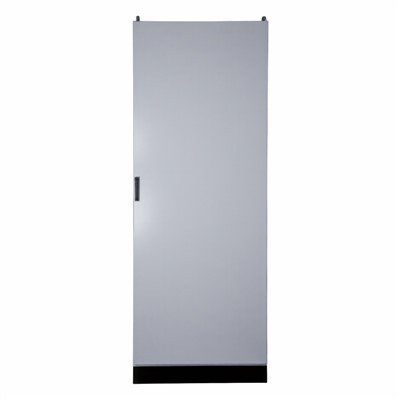
First, let’s get one thing straight: not all metal control boxes are made the same. If you grab a cheap, off-the-shelf steel box from a hardware store and plop it in a place where flammable gases, dust, or vapors hang around? That’s a big, flashing “NO” sign. But before you start writing metal off entirely, hear me out—the right metal control boxes? They’re not just fine for explosive environments—they’re often the safest, most reliable option out there. I’ve been in this game for 12 years, and I’ve seen enough mistakes to know the difference between a box that keeps people safe and one that’s just a metal can.
Let’s start with why sparks happen in these environments, because that’s the whole risk. Explosive atmospheres aren’t just fire—they’re specific combinations: think methane in a refinery, grain dust floating in a silo, propane near a delivery bay, or even chemical fumes from a manufacturing plant. For a spark to ignite this mix, you need three things: fuel (the flammable stuff), oxygen (which is basically everywhere), and an ignition source. Ignition sources can be electrical arcs from faulty wiring, static electricity, or even friction between two metal parts that spark when they rub together. That’s where metal control boxes come in—if they’re engineered right, they stop those sparks from getting out into the atmosphere, and they don’t generate dangerous sparks themselves.
Wait, but what about friction sparks? I know that’s the first thing skeptics bring up. Steel vs. aluminum—can’t they spark if they hit each other? Yeah, if you use the wrong metals. That’s why we don’t sell raw aluminum boxes for explosive environments, and we spec our steel boxes with coatings or special alloys that eliminate friction sparks. Or, better yet, we design the internal components so there’s zero contact between moving metal parts that could rub. Last year, we did a batch for a grain processing plant—they were tired of plastic boxes cracking under heavy dust loads, and we worked with their safety team to build steel boxes with rounded internal edges, so no dust gets trapped (trapped dust can build up static, too) and no metal parts rub together. That’s the kind of detail that makes the difference between a safe box and a hazard.
Now, let’s talk about electrical safety, because that’s the big one people focus on. Most control boxes hold circuit breakers, relays, wiring—all stuff that can arc if it’s exposed. In explosive environments, those arcs are basically a match. So metal control boxes for these zones have to be explosion-proof, right? Wait, let’s clarify that term, because a lot of people mix up “explosion-proof” and “dust-tight” or “waterproof.” Explosion-proof means the box is built to contain an internal explosion—if something inside sparks, the box won’t break open, and it’ll cool the gases fast enough that they can’t ignite the outside atmosphere. That’s done with heavy, thick metal walls—usually 1/8 inch or more of carbon steel—tight, precision-machined gaskets (not just foam, rubber that’s rated for chemical exposure), and every threaded joint is sealed so no flammable gases get in. We don’t cut corners here—we test every prototype ourselves before sending it out, because I’d rather have a box fail a pressure test in my workshop than at a client’s plant.
But wait, what if the environment has dust instead of gases? Like that grain silo I mentioned earlier. Dust is trickier because it’s everywhere, and it can seep into tiny gaps. So for those environments, we make boxes that are dust-ignition-proof—usually with a tighter seal, and often with a powder-coated finish that’s non-conductive, so static doesn’t build up on the box surface. Static is another big ignition source, by the way—if a plastic box builds up static and discharges, that’s a spark, too. Metal boxes dissipate static naturally, which is why they’re better than plastic in a lot of these cases. That’s a key point I wish more people knew: metal isn’t the problem when it comes to static—it’s actually the solution, if it’s grounded right.
Speaking of grounding, that’s non-negotiable for metal control boxes in explosive environments. A box that’s just sitting on a shelf won’t do much—you have to run a dedicated grounding wire to the box, so any static or stray electricity flows safely to the ground instead of building up. We include grounding terminals on every box we sell for these applications, and we make sure to label them clearly—our clients don’t have to guess where to connect that wire, which reduces mistakes. I once heard a story about a client who skipped grounding a box and almost had a static spark ignite a propane leak—they called me the next week to order 5 more boxes, and we walked their electrician through the grounding step over the phone. That’s the kind of support I’m here for, not just shipping a box and forgetting about it.
Now, let’s address the elephant in the room: are there any cases where metal control boxes shouldn’t be used? Yeah, but they’re super specific. For example, if the explosive environment has extremely sensitive, low-flammable mixes—wait, no, even then, a properly rated metal box is usually better. Wait, actually, the only time we recommend non-metal boxes is if the environment has extremely high corrosion that would eat through steel in a month, but even then, we’ll spec a special alloy like 316 stainless steel, not plastic. Plastic boxes are a hard pass for most explosive environments, actually—they can crack, trap static, and aren’t built to contain pressure if something does ignite inside. I had a client a few years ago who tried to save money with plastic boxes in a chemical plant; one of them cracked when a pipe leaked, and the box couldn’t stop the spark from getting out. They replaced all of them with our steel boxes, and they still use them 7 years later, no issues.
Another thing to consider is compliance. You can’t just build a box and say it’s safe—there are industry standards for this stuff. In the US, that’s NEC (National Electrical Code) Article 500, and in many other countries, it’s ATEX or IECEx. A good metal control box supplier will build their boxes to these standards, and they’ll have test reports to prove it. We don’t cut corners on testing—we work with a third-party lab to get our boxes certified for Class I, Div 1 and 2 (gas environments) and Class II, Div 1 and 2 (dust environments). That certification isn’t just a piece of paper—it’s proof that the box has been tested to hold an explosion, stop dust from getting in, and not generate sparks. If a supplier can’t show you those test reports, walk away. Simple as that.
Let’s get real for a second—cost is a factor, I get it. A properly rated metal control box for explosive environments isn’t cheap. It’s way more expensive than a cheap hardware store box, or even a generic industrial box. But think about what you’re paying for: not just a box, but safety for your workers, compliance with regulations that can fine you tens of thousands of dollars if you’re not up to code, and a box that’ll last 20+ years, not 2. The cheap plastic box I mentioned earlier? Cost them $200 each, and they had to replace them all for $1,500, plus they faced OSHA fines for non-compliance. Our metal boxes? They’re $800 each, but that’s a one-time cost, and we stand behind them. I’d rather sell one box that lasts and keeps people safe than 10 cheap ones that cause problems.
Wait, let’s talk about customizations, because that’s where a good supplier makes all the difference. Every explosive environment is different—one refinery might have high temperatures, another might have corrosive chemicals, a grain silo might need extra-large holes for wiring. We don’t sell one-size-fits-all metal boxes. We work with clients to design boxes that fit their exact needs—whether that’s adding a specific switch, drilling holes for their wiring, coating the box to resist a certain chemical, or making it smaller to fit in tight spaces. Last year, we did a custom box for a small chemical plant that needed a control box for a pump near a chlorine tank—we used 316 stainless steel (way more corrosion-resistant than regular steel), coated it with a special anti-corrosive finish, and added a sealed window so workers could check the pump’s status without opening the box. That’s the kind of tailored solution that works for these environments.
Let me clear up another common misconception: people think metal boxes are heavy and hard to install. Yeah, they’re heavier than plastic, but most explosive environment installations are done by experienced electricians who are used to handling heavy equipment. We also design our boxes with mounting holes that fit standard brackets, so installation is as easy as possible. And we include all the hardware you need—mounting brackets, gaskets, grounding terminals—so you don’t have to run around buying extra parts. For our clients who are in remote areas, we even offer installation guides with step-by-step photos, and we’re always on call if they run into issues.
Now, let’s wrap this up so you have a clear answer: yes, metal control boxes can absolutely be used in explosive environments—but only if they’re the right kind. They need to be built from the right metal (carbon steel for most, stainless steel for corrosive areas), rated for the specific class of explosive environment (gas vs. dust), certified to NEC/ATEX/IECEx standards, grounded properly, and tailored to your exact application. Cheap, unrated metal boxes? No way. But a properly engineered, certified metal control box? It’s often the safest, most durable choice for explosive atmospheres.
If you’re looking for a reliable metal control box that fits all these criteria—no hidden surprises, certified, tested, and built to last—reach out to us. We can walk you through your specific environment, help you pick the right box, or design a custom one just for your needs. No sales pitch, no pressure—just real talk about keeping your workplace safe. We can provide all the test reports and certifications you need for compliance, too.
Before I go, let’s make sure you have the right info to do your own research, if you want to look into this more. That’s always a good idea. The key standards for explosive environment equipment are NEC Article 500 (US), ATEX Directive 2014/34/EU (EU), and IECEx (international). If you’re buying a box, always ask for certification to one of these—any reputable supplier will be happy to share that. Also, when designing an installation, always consult a certified electrical engineer who specializes in explosive environments—they can make sure the box is installed correctly, because even the best box is useless if it’s grounded wrong or mounted improperly.
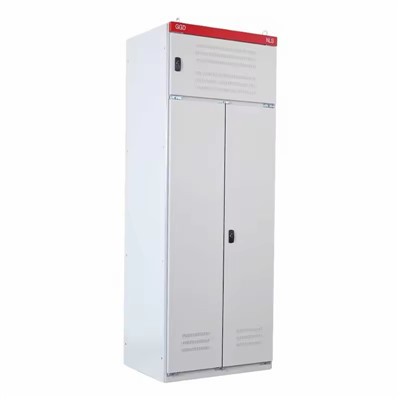
I’ve been in this industry long enough to know that safety isn’t something you cut corners on. Every metal control box we leave our workshop is built with that in mind. So if you’re ready to talk about your next project, or have questions about whether a metal control box is right for your explosive environment, get in touch. We’re here to help.
XL-21 Cabinet References:
National Fire Protection Association. (2023). National Electrical Code (NEC) Article 500: Hazardous (Classified) Locations. NFPA.
International Electrotechnical Commission. (2022). IECEx System for Certification of Equipment for Explosive Atmospheres. IEC.
European Committee for Standardization. (2019). ATEX Directive 2014/34/EU: Equipment and Protective Systems Intended for Use in Potentially Explosive Atmospheres. CEN.
Occupational Safety and Health Administration. (2021). Hazardous (Classified) Locations: Electrical Safety. OSHA.
Shandong Qinghua Yike Electric Co., Ltd.
As one of the most experienced metal control box manufacturers in China, we also support customized service. We warmly welcome you to buy durable metal control box for sale here from our factory. If you have any enquiry about cooperation, please feel free to email us.
Address: No. 378 Taozhuang Village, Zaoyuan Town, Lanshan District, Linyi City, Shandong Province
E-mail: admin@sd-qhyk.com
WebSite: https://www.qhecobox.com/
