Hey there, if you’re out hunting for specific PP woven bags that actually deliver on what they promise, you’re in the right spot. I’ve been supplying these things for over a decade, so I’ve seen every trick in the book—from the super cheap ones that tear after one use to the high-quality picks that’ll last you years. A lot of folks reach out to me saying they don’t know how to tell the good ones apart from the junk, and honestly? It’s not as complicated as some make it sound. No need to be a plastic expert, just pay attention to these little details, and you’ll skip the headaches later. Specific PP Woven Bags
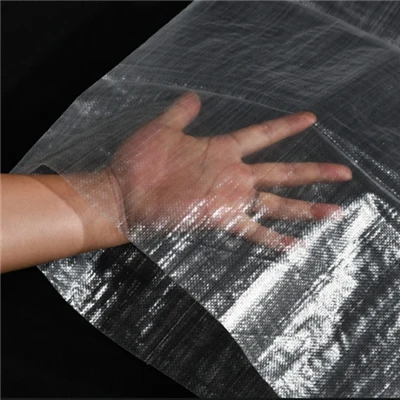
First off, let’s cut through the fluff: PP woven bags are made from polypropylene, duh—but not all PP is created equal. A lot of budget suppliers cut corners by using what’s called “recycled PP” that’s been ground down and melted multiple times. Sounds eco? Wait, no—too much recycling weakens the polymer chains, so the bag can’t hold much weight without splitting. When I test a roll of bag material, I give it a quick visual check first. Hold a few up to natural light. The good stuff won’t look murky or greyish. It’ll be crisp—clear white, or the exact shade it’s supposed to be (like bright blue or green for your brand) with no weird streaks or cloudy patches. If I see that foggy tint? That’s a red flag.
Next, the weight (and thickness, but let’s keep it simple). I always tell customers to grab a single bag and weigh it in their hand. Quality specific PP woven bags feel solid, not flimsy. A standard 50kg bag for agriculture or construction should feel substantial—like it’s got some heft to it, not like a piece of tissue paper. But don’t just go by feel alone—rip it a little (I know, it sounds rough, but hear me out). Grab both ends and tug as hard as you can. The good ones won’t tear right away. If it splits the second you pull? That’s recycled PP for you, or they used way too thin a gauge. I only work with suppliers that use virgin PP mixed with a small percentage of food-grade recycled PP (if it’s food contact, that is) because it balances durability and sustainability without sacrificing strength.
Wait, speaking of food-grade—this is non-negotiable if you’re packing things like rice, flour, or animal feed. A lot of cheap bags have chemical residues from being made with low-quality additives that can leach into food. How do you check? If the bag is supposed to touch consumables, ask for a COA (Certificate of Analysis). That’s just a fancy term for a paper that proves it meets food safety standards. I make sure every bag I supply for food use has that on hand, no exceptions. No COA? Walk away. Simple as that.
Then there’s the weave, and this is a big one that people miss. PP woven bags aren’t just a sheet of plastic—they’re woven strips, like a tiny plastic tarp. Hold two bags side by side and compare the weave density. Count how many strips are in a 2-inch section on both the warp (the vertical strips) and weft (horizontal strips). High-quality ones will have consistent, tight weaving—no gaps between strips. Gaps mean moisture can get in, which is a nightmare if you’re packing grain or anything that rots when wet. I once had a customer come to me with a batch that had such big gaps, rain soaked through and ruined their entire crop of seed corn. They switched to my bags after that, and I swear I still see them at the local farmers’ market. Consistency is key too—no lumpy or uneven weaving spots. Those lumps are weak points that will break when you load heavy stuff.
Let’s talk about additives, too. The best specific PP woven bags have UV stabilizers if they’re going to be used outdoors—like for construction materials, firewood, or garden supplies. If a bag is made for outdoor storage and doesn’t have UV protection, it’ll turn brittle and crumble after a few weeks in the sun. How to test that? Leave a sample in direct sunlight for a week. If it’s still flexible? Good. If it gets chalky or cracks? No UV stabilizer, run. I always include UV additives for any bag meant for outdoor use, no extra charge because I know how important that is for my customers’ bottom line.
Oh, and the stitching! Don’t forget the stitching along the seams. A bag is only as strong as its weakest seam. High-quality PP woven bags use heavy-duty polyester thread, not regular cotton or cheap nylon. Run your finger along the seam— it should feel smooth, no loose threads or skipped stitches. Tug on the seam a little, not just the bag itself. If the seam pulls apart? That’s bad stitching, and that’ll cause the bag to split open when you load it. I’ve seen suppliers use thin thread that breaks after half a dozen loads, so I use 20-pound thread minimum for all my bags, and I double-stitched the top and bottom for extra reinforcement. It adds a tiny bit to the cost, but my customers save so much money on replacements and damaged goods that it’s worth every penny.
Wait, let’s address the price thing, because everyone wants a deal. I get it—no one wants to overspend. But if a supplier is selling specific PP woven bags for 20% less than everyone else, something’s off. They’re cutting corners somewhere—maybe thin material, bad stitching, or toxic additives. I used to work with a guy who undercut everyone, and his customers kept coming back because the bags lasted a month, not a year. Now I make sure my prices are fair—enough to use good materials, pay my staff, and keep my business running without gouging anyone. A little extra up front saves you a ton in the long run.
Another test I do is the fold test. Grab a bag and fold it a few times. The good ones won’t crease or crack when you fold them. If it leaves a sharp crease and feels brittle? That’s recycled PP breaking down, even before you use it. I had a customer once who ordered a bunch online from someone overseas, and when they unloaded the shipment, half the bags were already cracked from being folded in the container. No way to use them, total waste. I always ship my bags flat, not folded tight in a box, to prevent that, and I test every batch for fold resistance.
Wait, what about printing? A lot of customers want their logo or info printed on their PP woven bags, so that’s part of the quality too. Cheap printing will fade after a few washes or a week in the sun. I use high-quality water-based inks that adhere to the PP without smudging, and I do both flexo and gravure printing depending on the order size. If the printing is blurry, smudged, or flaks off when you rub it? That’s a sign the supplier is cutting corners on ink or printing equipment. I make sure every print job matches exactly what the customer wants, no errors, no faded text.
Let’s also think about the actual “specific” part of specific PP woven bags—wait, right, you need the right gauge and size for your use. A 50kg bag for dog food is different from a 50kg bag for cement. You can’t use a flimsy bag for cement that uses recycled PP, because cement is heavy and abrasive. When I talk to a new customer, I always ask what they’re packing, how much weight, if it’s indoor or outdoor use, and if it’s food contact, so I can recommend the exact PP woven bag they need, not just a one-size-fits-all. A lot of suppliers just push whatever they have in stock, but that’s not good for the customer. I take the time to get it right.
I’ll be honest, I’ve had my fair share of bad batches come through my doors too. Last year, a new supplier I was testing sent a roll of material that looked good at first glance, but when I tested its tensile strength (that’s the technical term for how much it can pull before breaking), it was 30% lower than my standard. I sent it back immediately, because I’d rather lose a small order than have a customer come back with a mess. That’s why I test every batch I get—no exceptions. Tensile strength, tear resistance, seam strength, all of it. I don’t cut corners on testing, and I think that’s why my customers have been with me for 5, 10, even 15 years.

If you’re out there shopping for specific PP woven bags, don’t just go by the supplier’s sales pitch. Do these little tests yourself: hold it up to light, tug it, fold it, check the weave, ask for a COA if you need it. And if you’re tired of dealing with flimsy, low-quality bags that let you down, hit me up to chat. I’m always happy to answer questions, send samples, or help you figure out exactly what you need for your business. No pressure, just real talk from someone who’s been in this game for years. You don’t have to stress about ordering the wrong bags anymore.
Special Process PP Woven Bags References:
ASTM D412, Standard Test Methods for Vulcanized Rubber and Thermoplastic Elastomers—Tension
ASTM D638, Standard Test Method for Tensile Properties of Plastics
ASTM D570, Standard Test Method for Water Absorption of Plastics
ISO 10-B, Determination of UV Resistance of Polyethylene and Polypropylene Products Exposed to Natural Weathering
Linyi Dongyi Import&Export Co., Ltd.
As one of the most professional specific pp woven bags manufacturers and suppliers in China, we offer a wide range of products with superior quality. We warmly welcome you to wholesale bulk customized specific pp woven bags from our factory. If you have any enquiry about quotation, please feel free to email us.
Address: 4 F, Zone A, Zhangjia Zhuxu Village, Lanshan District, Linyi City.
E-mail: donglai01972@gmail.com
WebSite: https://www.donglaipack.com/
