If you’ve ever spent a shift on an electric scissor lift, you know that the platform is more than just a place to stand—it’s where your tools, parts, and small supplies go when you’re 20, 30, or even 40 feet in the air. I’ve been in the electric scissor lift game for over 12 years, first on the service side fixing lifts like the ones we sell now, then as a supplier working side-by-side with contractors, painters, electricians, and window washers. I still see it all: the guy who tucks a screwdriver into his overalls pocket only to drop it on a crew member below, the roll of tape that rolls off the platform mid-job, or the wrench that clatters onto a roof below, damaging tiles and putting a safety officer on your back. Storing tools on an electric scissor lift platform isn’t just about staying organized—it’s about safety, efficiency, and keeping your job moving. And over the years, I’ve picked up a bunch of rules that work, tested by real jobsites, not just product brochures. Electric Scissor Lift

First, let’s get one thing straight: your scissor lift platform isn’t a toolbox. I see so many operators dragging full-size rolling toolboxes onto the platform like it’s a work truck bed, but that’s a mistake. Electric scissor lifts have weight limits—we list ours right on the compliance plate, usually between 1,000 and 2,500 pounds for most common models—and every extra pound you add puts you over that limit. A full set of hand tools plus a gallon of paint can push you over without you noticing. My advice? Match the storage to the job. If you’re doing a small ceiling repair, you only need three screwdrivers, a tape measure, and a utility knife. Don’t bring your entire tool chest. If it’s a big electrical installation, bring only the tools for that shift, not every wire nut or spade bit you own. That’s step one: prioritize what you actually need that day.
Next, the only tools allowed on the platform are the ones you use. I learned this the hard way early on, when a contractor I worked with brought half a dozen extra extension cords “just in case” and a portable radio that he set on the edge of the platform. Halfway through the job, the radio slipped, bounced off a scaffold, and hit a painter on the ground, resulting in a workers’ comp claim that shut his jobsite down for a week. Loose items are the biggest risk on scissor lift platforms. Even a 10-ounce wrench dropped from 30 feet can cause serious injury or death. So no loose tools. No loose parts. No extra supplies that aren’t being used for the job at hand. If you need something, either lower the lift to get it, or assign a ground crew member to bring it up on a hoist. That way, you only have what you need within arm’s reach.
Now, the right storage solutions for the platform. Not all storage is created equal, and I’ve tested cheap canvas bags that tear after a week and metal bins that scratch the platform’s non-slip surface. The best options are ones designed specifically for scissor lifts, because they take the platform’s limited space and safety rules into account. For small, frequent-use tools—screwdrivers, wrenches, utility knives—look for a tool roll that straps down or a magnetic strip that mounts to the platform’s guardrail. Magnetic strips are perfect because they hold metal tools securely, no need for pockets or loops, and they’re low-profile so they don’t get in the way. Just make sure to get a heavy-duty magnetic strip, not the cheap ones for hanging fridge magnets—those will slip and your tools will fall. I’ve had good luck with strips that have a rubber backing to protect both the tools and the guardrail finish.
For larger items, like tape measures, levelers, or small paint cans, use a deep, lidded bin that clips or straps to the platform’s side or the corner. Avoid open-top bins at all costs. I’ve seen a half-used can of drywall mud slosh out of an open bin when the lift moved unevenly, ruining a sheet of drywall below and making a huge mess on the ground. Lidded bins keep supplies contained, and clips make sure the lid doesn’t pop open if you bump it. If you’re working with liquids—paint, sealant, cleaning solutions—never leave them in unsecure containers. Even a small spill on the platform’s non-slip surface is a slip hazard for you, and it can drip onto whatever you’re working on below. I recommend small, sealed plastic cans with handles that strap into the bin, not large buckets that take up too much space.
Another thing to think about: your body and how you move on the platform. A lot of operators will mount a big tool chest that’s right in their line of sight, so they have to twist awkwardly to grab a tool, or lean too far over the guardrail. Not only is that bad for your back after an 8-hour shift, it’s another fall hazard. The safest storage is at waist height, within arm’s reach of where you’re standing, and not blocking your access to the control panel or the guardrail. I had an electrician client a few years ago who mounted a tool bag on the back of his lift, and one day when he reached for a wire stripper, he lost his balance and fell against the guardrail—thankfully he wasn’t hurt, but it scared him enough that he changed his setup. The rule here is simple: store tools where you don’t have to stretch or lean to reach them. No overreaching, no twisting, no putting yourself at risk for a tool.
What about power tools? That’s another common question. If you’re bringing a drill, a circular saw, or a grinder onto the platform, you need a different kind of storage. Heavy power tools should be secured with a lanyard or a strap that anchors them to the platform, so if you drop them—even by accident—they don’t fall. I always recommend using a tool tether for any power tool over 5 pounds. The tethers are lightweight, don’t get in the way, and clip securely to the tool and a fixed point on the platform. Also, never set a power tool directly on the platform’s surface. Even a small grinder can scratch or dent the non-slip coating, and it’s easy to knock over if you’re working. A small, rubberized mat or a dedicated power tool tray that straps down is perfect. It keeps the tool off the surface, gives it a secure spot, and prevents accidental movement when you’re cutting or drilling.
One mistake I see all the time: not securing everything before you move the lift. This might seem obvious, but I’ve watched operators load up their tools, hop in the platform, and start moving the lift right away without checking. Even a slow moving scissor lift can shift a loose bin or a bag of tools on a rough jobsite. Always take 10 seconds before you raise or move the lift: close the bin lids, make sure all tools are on the magnetic strip or tethered, check that nothing is hanging over the edge of the platform. I keep a small mental checklist: tools? secured. bins? closed. lids? latched. That 10 seconds can prevent a huge mess, a damaged tool, or an injury.
What about when you’re done for the day? Storing tools properly at the end of a shift is almost as important as storing them during the job. Never leave tools on the platform overnight. I’ve seen screwdrivers rust on the platform’s surface after a night of dew, or a set of wrenches go missing because someone forgot to take them down. At the end of each shift, empty the platform’s storage: put small tools back in your truck, dispose of any trash, and wipe up any spills or debris. Not only does this keep your tools from getting damaged or stolen, it keeps the platform clean and ready for the next operator. I always tell my customers that the platform should look like no one used it when you’re done—you’ll thank yourself the next day when you don’t have to hunt for your favorite wrench that rolled under a bin.
Safety certifications are another big part of this. A lot of newer operators don’t realize that OSHA has rules about tool and equipment storage on aerial lifts. OSHA’s guidelines state that operators must ensure that tools and materials are secured to prevent them from falling, and that the platform’s load capacity is never exceeded. We build all our electric scissor lifts with these rules in mind, so the storage points on our platforms are designed to support the weight of tool bags, bins, and tethers without adding extra strain. If you’re using third-party storage, make sure it’s rated for aerial lift use, not just a regular tool bag. We’ve seen operators use regular gym bags on platforms, and those tear easily under the weight of heavy tools, leading to dropped items.
Let’s talk about a few specific jobsite scenarios, because different jobs need different setups. If you’re a painter working on a residential home, your tools are a tape measure, level, brush, roller, and small paint cans. For this, a small, lidded bin that clips to the platform’s corner works great, plus a magnetic strip on the guardrail for your brushes and paint can opener. No need for anything fancy here—keep it simple. If you’re an electrician doing commercial wiring, you might have larger tools: drills, fish tapes, wire strippers. For this, use a modular system: a power tool tray with tethers, a bin for wire nuts and small parts, and a magnetic strip for hand tools. This keeps everything organized and within reach without cluttering the platform. For window washers, their tools are squeegees, scrapers, cleaning solution, and towels. A slim, lidded bin that fits along the guardrail is perfect, plus a holder for squeegees that straps to the edge. The key here is to match the storage to the type of tools you’re using that day.
Another tip: label your storage points. If you have a regular set of tools that you bring to every job, label where each one goes on the platform. For example, mark the magnetic strip for screwdrivers, mark the bin for paint, so you don’t have to hunt for things mid-job. This cuts down on time spent searching for tools, which makes you more efficient. I had a contractor who worked with me for years, and he had a sticker on his platform that said “screwdrivers here, wrenches here, paint here.” He could get every tool he needed in 2 seconds, no bending over, no digging in a bag. That extra efficiency added up to hours saved on his jobs every month.
I also want to mention what not to store on the platform. No full tool chests, no large construction materials like boards or drywall sheets, no heavy equipment that pushes you over the weight limit. I once had a operator bring a 50-pound air compressor onto a small electric scissor lift, pushing the load over by 100 pounds. The lift’s alarm went off when he raised it 10 feet, and he had to lower it immediately, which delayed his job by 2 hours. Stick only to tools and small supplies that you use for that specific task, and never exceed the weight limit listed on your lift’s compliance plate. That’s non-negotiable for safety.
At the end of the day, storing tools on your scissor lift platform is all about balance: being organized, being safe, and staying efficient. It’s not complicated, but it does require paying attention to small details that make a big difference. Whether you’re a seasoned operator with 20 years on the job or a new operator still learning the ropes, taking the time to set up your platform correctly will keep you safe, keep your job on track, and prevent the kind of accidents that shut down jobsites or lead to injuries.
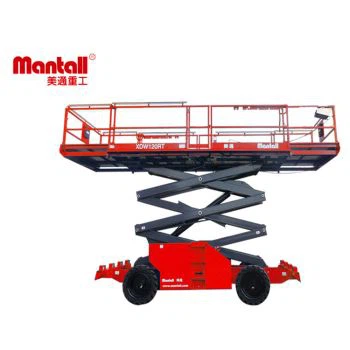
If you’re looking for an electric scissor lift that’s built with operator safety and practicality in mind, or if you have questions about the right storage solutions for your work, our team is here to help. We work with contractors, painters, electricians, and crews of all sizes, and we can help you find the right lift and setup for your specific jobs. Reach out to us to discuss your needs, and we’ll connect you with our experts to walk through all the options.
Diesel Articulated Boom Lift References
OSHA Standard 1926.451, Safety Requirements for Aerial Lifts and Work Surfaces
ANSI/SAIA A92.20, American National Standard for Aerial Work Vehicles – Design, Calculations, Requirements, and Test Methods
Electric Scissor Lift Manufacturer Safety Guidelines, 2023
National Safety Council, Aerial Lift Safety Best Practices, 2022
Mantall Heavy Industry Co., Ltd.
Mantall Heavy Industry Co., Ltd. is well-known as one of the leading electric scissor lift manufacturers and suppliers in China, featured by quality products and good service. Welcome to buy discount electric scissor lift made in China here from our factory. For pricelist and quotation, contact us now.
Address: NO.62, Binhai Avenue, Binhai Industrial Park, Qidong City, Jiangsu Province, China
E-mail: Gloria@mantall.com
WebSite: https://www.mantallawp.com/
