Hey there, let’s cut to the chase for a sec – I’m the guy who runs that All Pneumatic Accessories supply spot, and one question I get all the time from shops ranging from small machine repair garages to massive auto manufacturing plants is this: “Can every last pneumatic accessory out there actually work in an industrial setting?” All Pneumatic Accessories

It’s not a dumb question, either. I’ve seen guys grab a random quick-disconnect or filter from the local hardware store, think it’ll handle 120 PSI running their punch press, and end up with a broken line that shut their whole factory down for 3 hours. Total nightmare. Pneumatic tech is everywhere in industry – think conveyor belt actuators, spray painting guns, material handling hoists, even the little air tools that line workers use all shift – and every single accessory in that system is a tiny (or not-so-tiny) make-or-break part. Let’s break this down real, no-robot-jargon style.
First, let’s define what we’re actually talking about here. Pneumatic accessories aren’t just the random air fittings you twist on your backyard tire. Industrial-grade stuff includes air filters, regulators, lubricators (the FRL units, we call ’em), quick-disconnect couplings, solenoid valves, mufflers, pressure gauges, tube fittings, even the little safety lockout/tagout plugs that keep lines from accidentally firing up during maintenance. All of these have to hold up to a lot more than just the occasional tire fill.
So why can’t just any accessory work in industrial settings? The short answer is: industrial environments are way harsher than your weekend workshop, and not every pneumatic part is built to handle that. Let’s start with pressure and temperature. A cheap hardware-store filter might be rated for 100 PSI and 70°F max. But a metal stamping plant? Their air lines run at 120 to 150 PSI, and the air blowing off hot metal makes lines sit at 100°F, sometimes more in the summer if a line’s routed near a furnace. That cheap filter’s plastic casing will warp in 6 months, or crack mid-shift, sending compressed air everywhere and messing up the entire system. We’ve seen this so many times – a plant saved $10 on a filter, and lost $12k in downtime when a press had to shut down because their air supply dropped.
Then there’s vibration and contamination. Factories are shaking 24/7. Assembly lines, pump motors, conveyor motors – everything vibrates. A flimsy plastic tube fitting from the hardware store will work fine for your garage nail gun, but bolt it to a vibrating packaging line, and it’ll loosen in a week, leading to air leaks that waste energy (and money, since compressed air isn’t free – it takes electricity to make) and cause misaligned parts. Contamination is another big one. Industrial air isn’t clean. It has oil mist from compressors, metal shavings, dust from woodworking or textile plants, even small bits of debris from pipe scale that breaks loose over time. A cheap quick-disconnect’s inner seals might tear in a month from that crud, but an industrial-grade one we supply at All Pneumatic Accessories is built with stainless steel internals and Buna-N seals that resist that kind of gunk for years.
Wait, but hold on – are there any pneumatic accessories that can work anywhere? Sure, but only if they meet industrial standards. The key here is knowing what those standards are, because not all “industrial-rated” parts are actually for real industrial settings. Let’s take an example: a pressure gauge. Hardware store gauges might have a plastic lens, while industrial ones have a shatter-resistant glass or acrylic lens, and are rated for vibration (that’s why you see “Viton” or “heavy duty” stamped on the side). Another example: mufflers. A hardware store muffler for your air compressor just quiets the noise coming out of the tank. An industrial muffler has to handle high flow rates, resist corrosion, and even suppress noise enough to meet OSHA standards (since factories can’t have 90+ decibels all shift long). The right muffler isn’t just a convenience – it’s a safety rule in many places.
But here’s the thing: some pneumatic accessories are universal for light industrial settings. Like, if you’ve got a small woodworking shop that only runs small air tools, a mid-grade accessory from a hardware store might work for a while. But when that shop expands and adds a CNC router that needs 150 PSI, suddenly that old filter’s not cutting it. I had a client last year – a small sign-making shop – who thought they could save cash on all their parts by grabbing from Home Depot. Within 2 months, their router’s air cylinder started leaking because their tube fittings couldn’t handle the constant 120 PSI running 8 hours a day. They called me, swapped out the fittings, and haven’t had an issue since. That’s the difference between a part made for hobby use and one made for actual industrial duty.
Let’s talk about a common myth, too: “Stainless steel parts work for everything.” No, not exactly. Sure, stainless is great for food and beverage plants, where you can’t have oil or metal shavings getting into products. But a stainless steel solenoid valve is also overkill for a tiny lab air pump that only runs a few minutes a day. The right accessory is about matching the environment to the part’s rating, not just grabbing whatever’s shiny. At All Pneumatic Accessories, we always ask clients specific questions before they buy: what’s your PSI range? What’s the temp in your plant? Is there a lot of vibration or contamination? Do you need it for food, medical, or a dirty metal shop? That’s how we steer them to the right part, not the cheapest one.
Another angle: safety. Industrial settings have way more people working around air lines, which can move fast. A quick-disconnect that’s not safety-rated can pop apart under pressure, sending the line flying – that’s a OSHA violation, and can seriously hurt someone. I’ve seen videos (don’t worry, I’m not sharing graphic stuff here) of a cheap quick-disconnect coming loose and hitting a worker’s shoulder, sending them to the ER. Industrial quick-disconnects have a locking mechanism, so they don’t come apart accidentally. That’s not a “nice to have” – that’s non-negotiable in any industrial setting.
So where do people go wrong? A lot of times, they assume “pneumatic” is just pneumatic, no matter where you buy it. But there’s a huge range in quality. Hardware store parts are made for intermittent use, low pressure, clean air. Industrial parts are made for continuous use, high pressure, dirty or extreme environments. There’s even specialty pneumatic parts for things like medical labs or pharmaceutical manufacturing, where air has to be 100% oil-free – those parts are way different than what you’d use in a car body shop that deals with paint overspray.
Wait, let’s test this with a real example from our own work. Last quarter, we had a big automotive parts plant come to us. They’d been using their original FRL units (filter, regulator, lubricator) from a discount supply place, and were getting an average of 12 air leaks a month across their line, which was costing them around $8k a month in wasted electricity (compressed air costs about $0.25 per 1,000 cubic feet, and leaks add up fast). They swapped out all their FRLs for industrial-grade ones we stock, and that number dropped to 1 or 2 leaks a month. They saved over $70k in downtime and energy in just 3 months. That’s the difference between a part made for 24/7 industrial use and one that cuts corners.
But here’s the catch: it’s not just about buying “industrial” label accessories. A lot of no-name brands slap “industrial” on parts that still have cheap internals. You have to know who you’re buying from. At All Pneumatic Accessories, we only carry parts from manufacturers that test every component to ISO standards (that’s the international standard for pneumatic parts, by the way) and back their products with a warranty. If a part doesn’t have a clear pressure rating, temp rating, and says it’s built for continuous industrial use, it’s probably not worth the risk.
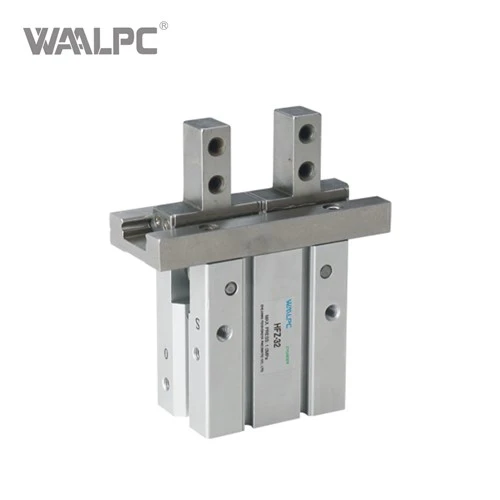
So to circle back to the original question: Can all pneumatic accessories be used in industrial settings? The answer is no – but that’s not because pneumatic parts are inherently bad, it’s because most mass-produced, low-cost pneumatic accessories are built for light, intermittent use, not the harsh, continuous demands of industrial environments. The ones that can work are the ones that are specifically rated, tested, and built to handle the pressure, temperature, vibration, contamination, and safety requirements of whatever industrial space they’re going into.
Pneumatic Actuators Now, if you’re running a shop, factory, or even a growing small business that uses pneumatic systems, and you’re not sure if the parts you’re using are up to snuff, or you’re looking to upgrade to cut downtime and energy costs, that’s what we’re here for at All Pneumatic Accessories. We don’t just sell parts – we help you figure out exactly what you need for your specific setup, no pushy sales stuff, no overcomplicating things. Hit us up to talk through your project, ask questions, or grab the right accessories that’ll keep your line running smooth, not shut down.
References
- OSHA Technical Manual, Section III: Chapter 6 – Compressed Gas Safety
- ISO 5598:2018, Fluid power systems and components – Vocabulary
- U.S. Department of Energy – Compressed Air System Best Practices Guide
- Parker Hannifin Industrial Pneumatic Product Specifications, 2024
- SMC Corporation – Guide to Industrial Pneumatic Component Selection, 2023
Hangzhou Evershine Pneumatic Import & Export Co., Ltd.
Hangzhou Evershine Pneumatic Import & Export Co., Ltd. is one of the most professional all pneumatic accessories manufacturers and suppliers in China, featured by high quality pneumatic components. Please rest assured to wholesale bulk durable all pneumatic accessories from our factory. Welcome to contact us for custom service and OEM service.
Address: Hengkun Smart Industrial Park, No.176, Golf Road, Yinhu Street, Fuyang District, Hangzhou City, Zhejiang Province, China 311400
E-mail: Felix@waalpc.com
WebSite: https://www.evspneu.com/
