If you’ve ever had to keep a plant running smoothly, you know how stressful it can be when a part on your instrument fails. The first thing most people do is hit up their parts supplier, and that’s when you’ll hear two terms thrown around a lot: compatible spare parts and equivalent spare parts. At first glance, they might sound like the same thing—after all, both are supposed to work like the original part, right? But trust me, there’s a huge gap between them, and choosing the wrong one can cost you way more time and money than you’d think. As someone who’s worked in the instrument spare parts game for over a decade, I’ve seen way too many folks mix these up and end up with headaches they didn’t need. Let me break it down straight, no fancy jargon. Instrument Spare Parts
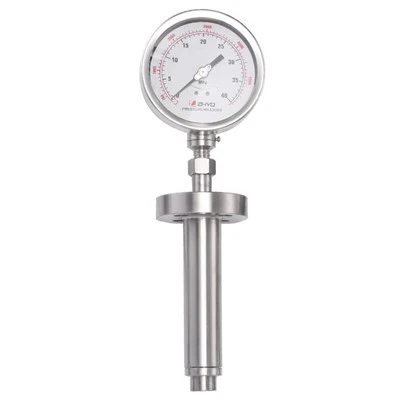
First, let’s start with compatible parts. A compatible part is basically a drop-in replacement. It’s built to physically fit into the exact same spot as your original part, connect to the same wires or tubing, and plug right in without modifying anything. But here’s the catch with compatible parts: they only have to match the physical and connection specs, not the performance or calibration specs. Let me give you a quick example. Say you have a Rosemount 3051 pressure transmitter that’s throwing a reading error. A compatible spare for that transmitter might come from a different manufacturer, use a slightly different sensor core, and even have a different housing size. It’ll screw right onto your existing pipework, fit the same terminal block, and connect to your control system without you having to rewire anything. But because it’s not built to the exact performance specs of the original, that reading error might still be there, or it might drift over time, or not handle the temperature and pressure range your process requires. A lot of suppliers push compatible parts because they’re cheaper and easier to source, and for some small, low-stakes jobs, they work fine. But if your process is anything where accuracy or reliability matters, compatible parts are a gamble.
Now, equivalent parts are a whole different ballgame. An equivalent spare part isn’t just about fitting—it’s built to meet or exceed the exact performance specifications of the original OEM (Original Equipment Manufacturer) part. That means it’s calibrated to the same accuracy, handles the same environmental conditions, has the same response time, and even uses the same materials for critical components. Let’s go back to that pressure transmitter example. An equivalent part for the Rosemount 3051 would have the same 0.075% accuracy rating, work in the same -40°C to 85°C temperature range, have the same 4-20 mA output, and even match the original’s pressure range (say, 0 to 100 PSI). It might not be made by Rosemount, but it’s tested to meet all the OEM’s performance standards, so it works just as well as the original. The downside? Equivalent parts are a bit pricier than compatible ones, and sometimes you might need a tiny bit of extra setup—like calibrating it to your specific process, or double-checking the wiring to make sure it matches the signal output. But the payoff is way bigger: fewer downtime events, more consistent readings, and no surprises when the part doesn’t perform as expected.
I’ve got a story that drives this difference home. A few years back, a client who ran a small chemical plant came to me in a panic. Their original level transmitter for a 5,000-gallon reactor had died, and they needed a replacement stat. They went with a cheap compatible part from another supplier—fits the spot, same wiring, all that. But a week later, the transmitter started reading 10% lower than the actual level. By the time they caught it, the reactor had overfilled, spilling a small amount of hazardous material and shutting down their production line for 12 hours. The cost? Over $50,000 in lost production, cleanup, and repairs. Later, when they switched to an equivalent transmitter that matched the original’s performance specs, they haven’t had an issue in three years. That’s the kind of thing that makes me harp on this difference—compatible parts aren’t “bad,” but they’re not the right fit for critical processes.
Wait, let’s clarify something else: the line between compatible and equivalent can get blurry sometimes, and that’s intentional by a lot of suppliers. Some will label a part “equivalent” when it’s really just compatible, or call it “OEM-quality” when it’s neither. The real way to tell is to check the specs. For compatible parts, the only specs that matter are mechanical fit and electrical/physical connections. For equivalent parts, you’re looking at performance specs: accuracy, repeatability, response time, environmental ratings, output signals, pressure/temperature ranges. Any supplier worth their salt will provide a full spec sheet for both, so don’t be shy to ask for it. If a supplier can’t give you a detailed spec breakdown, that’s a red flag.
Another point: lead times. A lot of compatible parts are mass-produced, so they’re easy to get quickly. Equivalent parts take a bit longer because they’re made to meet specific performance standards, not just fit a shape. But if you’re planning ahead, the extra wait is worth it to avoid downtime. I tell all my clients: if it’s a part that’s in a backup, or a low-risk process where a small error won’t cause big problems, compatible is fine. But if it’s a part in a critical path—like a safety instrumented system, a reactor control, or a flow meter for a high-volume product—go with equivalent. It’s an investment, not a cost.
Let’s also talk about common misconceptions. A lot of folks think equivalent parts are just as good as OEM parts, and that’s mostly true. OEM parts are made by the original manufacturer, so they’re the top-tier option, but they’re also the most expensive. Equivalent parts are third-party tested to match OEM specs, so they’re about 30-50% cheaper than OEM, but perform almost identically. Compatible parts are usually 50-70% cheaper than OEM, but with the performance risk I mentioned earlier. So it’s a three-way choice, not just two: OEM (best, priciest), equivalent (great, mid-range), compatible (cheap, risky).
I’ve heard another myth: “Compatible parts always work if you tweak the wiring a little.” Maybe, but why risk it? Tweaking wiring can introduce human error, which is a top cause of instrument failures. Equivalent parts are built to work with your existing setup, so you don’t have to modify anything. That saves you time on installation and calibration, which adds up when you’re dealing with multiple parts.
So how do you choose which one is right for you? First, do a risk assessment of the part’s location. If a failure would shut down production, cause safety hazards, or cost more than the part itself, equivalent is the way to go. If the part is in a non-critical spot, or you’re using it as a backup for an OEM part that’s on order, compatible might work. But always verify the specs. Don’t just take a supplier’s word for it—ask for a test report, or check if the part is calibrated to the relevant industry standards, like ISA or NIST. At the end of the day, the goal of spare parts is to keep your process running without surprises, right?
If you’re not sure which spare part you need, or you want help sorting through compatible vs. equivalent options, don’t hesitate to reach out. I’ve worked with all kinds of industries—pharmaceuticals, oil and gas, food and beverage, manufacturing—and I can help you pick the right part for your specific process, no sales pitch, just straight advice. Whether you’re in a pinch for a quick compatible part or looking for a long-term equivalent solution, I’m here to help you avoid the mistakes that can cost you big.
Differential Pressure Transmitter References
- ISA. (2020). ANSI/ISA-50.00-2018, Functional Safety: Management, Life Cycle, and Applicability for Industrial Automation and Control Systems. International Society of Automation.
- Smith, K. (2021). Instrument Spare Parts: Selection and Application for Process Industries. Instrumentation Technology Magazine, 45(3), 22-27.
- NIST. (2019). Handbook 133: Calibration Policy and Measurement Systems. National Institute of Standards and Technology.
Shanghai Zhaohui Pressure Apparatus Co., Ltd.
Shanghai Zhaohui Pressure Apparatus Co., Ltd. is one of the most professional instrument spare parts manufacturers and suppliers in China, featured by quality products and good service. Please rest assured to wholesale advanced instrument spare parts in stock here from our factory. Also, customized service and 1 year warranty are available.
Address: 2-6/F, Building 8, No.115, Lane 1276, Nanle Road, Shanghai, China
E-mail: sensorsales@zhyqsensor.com
WebSite: https://www.sinosensor.net/
