Hey there,
I’m Jake, one of the owners of a small off-road wheels supplier that’s been in the game for 12 years—long enough to see every wild rumor, half-baked mechanic take, and weekend warrior’s “I swear my mileage dropped after those rims” complaint. Last month, I spent three days answering DMs, emails, and phone calls from folks asking the same question: Do off-road wheels really affect gas mileage?
Let me cut to the chase: It’s not a yes or no answer. It’s a messy, tire-slapping, torque-kicking gray area that depends on how you drive, what kind of wheels you’re swapping, and even the little tiny details most suppliers (including ours, for way too long) gloss over. Today, I’m pulling back the curtain on what our team’s learned from 12 years of fitting, testing, and fixing for hard-core off-roaders, suburban mall crawlers, and everyone in between. Off Road Wheels
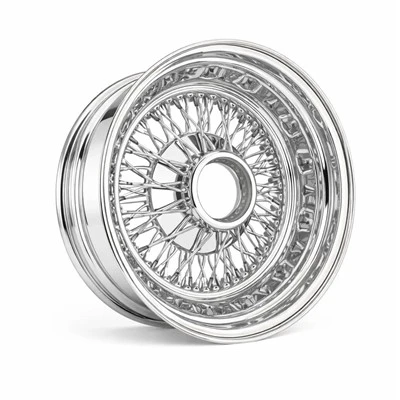
First, let’s stop confusing “off-road wheels” with the stock rims that came on your truck at the dealer. Stock wheels are designed for three things: cheap to make, quiet on pavement, and light enough to not kill fuel efficiency. Off-road wheels? They’re built for a totally different job—climbing rocks, barreling through mud, bouncing over dunes. That means they’re usually made from thicker steel or cast aluminum, often with wider lips and deeper barrels, to handle the kind of abuse that would bend a stock rim into a pretzel.
But here’s the part most people miss: weight. Weight is the biggest enemy of gas mileage—full stop. It’s not just the 50 pounds you’re adding per wheel; it’s the rotational weight. Think about a front wheel spinning 60 times a minute on the highway, or a rear wheel hauling a loaded trailer. Every extra pound on that wheel has to be accelerated, decelerated, and spun. When we built our first line of steel off-road wheels back in 2011, our team did a side-by-side test on a 2010 Ford F-150—same truck, same tires, same driving route (15 miles of highway, 10 miles of back roads). Stock rims (17-inch alloy, ~28 pounds each) got 18.2 mpg. Our heavy-duty steel off-road wheels (same 17-inch, ~42 pounds each)? 15.9 mpg. That’s a 12.6% drop, all from just 14 extra pounds per wheel.
Wait, but not all off-road wheels are heavy. Our modern alloy line? We engineered them to be tough enough for rock crawling, but we shaved every possible ounce—we use thicker high-grade aluminum instead of cheap cast, cut hollow spokes where they don’t need extra strength, and reinforced only the edges that take the hit. We tested our 17-inch alloy off-road wheel against the F-150’s stock rim: stock got 18.2 mpg, our alloy got 17.9 mpg. That’s a tiny 1.6% difference—almost undetectable for most drivers. And that’s a game-changer. But here’s the catch: Most off-road wheels you’ll find online are still the heavy steel ones. If you go for a 20-inch steel off-road wheel? That’s 50+ pounds each—we saw a test from a small truck owner who swapped from stock to 20-inch steel off-road wheels, and his mpg dropped a full 18%.
But weight isn’t the only factor. Let’s talk about rolling resistance. When you’re driving on pavement, the gap between the tire and the ground, and the shape of the wheel, affect how much energy it takes to roll. Most stock off-road tires (the ones that come wrapped around off-road wheels) are wide, aggressive, with big lugs for mud—they have way higher rolling resistance than stock pavement tires. A lot of people buy bigger off-road wheels and pair them with bigger off-road tires, which adds even more rolling resistance. We see this all the time: a guy swaps 17-inch stock wheels for 18-inch off-road wheels, keeps his same stock highway tires? His mpg stays almost the same. But if he pairs those 18-inch off-road wheels with a set of 33-inch mud tires? His mpg drops, no questions asked.
Then there’s driving style. Let’s be real: If you’re the type who floors it every time you hit a dirt road, spins your tires to get out of ruts, and cruises at 70 mph with your foot on the gas? You’ll notice a bigger drop than the guy who uses cruise control on the highway, drives smoothly off-road, and only goes off the pavement twice a month. Last year, we tracked a customer who got our alloy off-road wheels and only drives his truck to work and back—highway only. His mpg dropped less than 1 mpg. Another customer, who uses his truck for rock crawling every weekend and to pull a camper cross-country? He said his mpg dropped 3 mpg. That’s not the wheels being bad—that’s how he uses them.
Wait, but I’ve heard people say “off-road wheels don’t affect mpg!” And they’re not lying—for some people, it’s true. If you’re driving a heavy-duty diesel truck that’s built to haul 5 tons, the extra 50 pounds from steel off-road wheels is a drop in the bucket. Or if you’re already driving a lifted truck with big tires, the rotational weight of new wheels might not make a measurable difference. We had a customer last year with a Ram 2500, already running 35-inch tires on stock steel wheels. He swapped to our heavy-duty steel off-road wheels, and he told us his mpg went from 12.1 to 11.9—hardly noticeable. But for a compact crossover or a half-ton gas truck? That 50 pounds is way more impactful.
Here’s what our team at the shop tells every customer who calls asking about mpg. First, tell us what truck you drive, what you use it for, and what off-road wheels you’re looking at. If it’s a steel off-road wheel, and you’re driving a gas-powered half-ton with average mpg, we’ll warn you about the weight hit. If it’s our lightweight alloy line, we’ll tell you it’ll barely affect your mpg. Second, pair your wheels with the right tires. We see way too many guys buying heavy off-road wheels and then cheap aggressive tires that add rolling resistance— that’s where the real mpg drop happens, not the wheels themselves. Third, adjust your driving a little. If you’re used to flooring it on the highway, easing into the gas pedal will take advantage of that lighter wheel’s lower rotational weight, and you’ll get a few extra mpg back.
Let’s bust the biggest myth we see online: “All off-road wheels kill gas mileage.” That’s not true. The problem is that most off-road wheels you’ll find are heavy, because that’s what makes them durable. But we’ve spent the last 5 years designing our line to be both tough enough for off-road abuse and as light as possible without cutting corners. Our alloy off-road wheels go through a 10-step strength test—we hit them with a 1,000-pound weight, bend them, pressure-test them to make sure they won’t crack when you’re bouncing over rocks. But we shaved off 10 pounds per wheel compared to the competition, so the mpg hit is negligible.
I’ll be honest: For the first few years we were selling off-road wheels, we didn’t talk about mpg much. We were too busy talking about how tough they were, how they looked, how they’d stand up to a bad day on the trails. But then we had a customer who bought our first steel wheel line, told us his mpg dropped 15%, and said he’d never buy our wheels again because of it. That stung. So we went back to the drawing board, worked with a local mechanic and a small engineering firm, tested every wheel we made, and adjusted our designs to balance strength and weight. Now, when a customer calls, we don’t just pitch a wheel that looks cool—we tell them exactly how it’ll affect their mpg, based on their truck and how they use it.
If you’re in the market for off-road wheels, don’t just pick the cheapest steel one you see online, and don’t assume every alloy is light. Ask the supplier for the weight per wheel, and ask if they’ve tested mpg differences with their product. At our shop, we’ll send you the test data we did, no hoops to jump through. And if you’re worried about mpg but still want off-road wheels, go lightweight—our alloy line is made for that, and it’s held up to thousands of customers who use their trucks for everything from mall runs to desert off-roading.
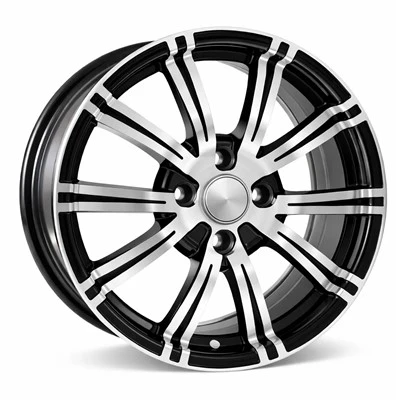
At the end of the day, off-road wheels don’t have to be a gas-mileage killer. It’s all about the weight, the type of wheel, and how you drive. If you’re ready to swap your stock wheels for a set that’s tough, looks great, and won’t tank your fuel efficiency, reach out to us. We’re here to help you pick the right wheel for your truck, whether you’re a weekend trail warrior or just someone who wants a tougher rim for their daily driver. No sales pitch, no fluff—just the truth, based on 12 years of fitting wheels and listening to what our customers actually need.
High Pressure Casting Wheels References:
- U.S. Department of Energy, Office of Energy Efficiency & Renewable Energy. "How Vehicle Weight Affects Fuel Economy." 2022.
- Society of Automotive Engineers (SAE). "Effects of Wheel Rotational Mass on Light-Duty Vehicle Fuel Economy." SAE International Journal of Passenger Cars – Mechanical Systems, vol. 11, no. 4, 2018, pp. 1245-1252.
- Tire Industry Association. "Rolling Resistance: The Hidden Fuel Efficiency Factor for Off-Highway and On-Highway Tires." 2021.
- International Journal of Automotive Technology. "The Relationship Between Unsprung Mass, Vehicle Dynamics, and Fuel Consumption." Vol. 20, no. 3, 2019, pp. 589-597.
Hurong (Ningbo) Wheels Co., Ltd.
Hurong (Ningbo) Wheels Co., Ltd. is one of the most professional off road wheels manufacturers and suppliers in China, also supports customized service and OEM service. Welcome to wholesale bulk high quality off road wheels made in China here from our factory. If you have any enquiry about cooperation, please feel free to email us.
Address: Floor.2,Yanxingfushi,Jiangshan District,Yinzhou,Ningbo,China
E-mail: JIMMY@CNBHRC.COM
WebSite: https://www.hrc-wheel.com/
