Let’s cut to the chase: if your shower pressure feels like a trickle that’s more suited to a garden sprinkler than a relaxing rinse, you’ve probably wondered “can a DC booster pump actually fix this?” I’m the guy who sells these pumps for a living—been doing it for 12 years, mostly answering the same question from plumbers, landlords, and even regular homeowners who’ve spent way too long fighting weak showers. Spoiler: the short answer is yes, but only if you get the right one for your setup. Let’s break this down like I explain it to my cousin who still can’t assemble a IKEA bookshelf, no jargon, just real stuff. DC Booster Pump
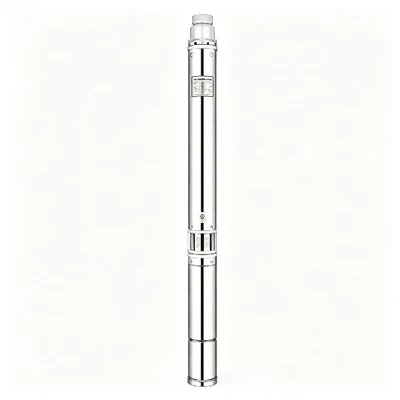
First, let’s talk about why your shower’s weak in the first place—because if you don’t get that, you might waste your money on the wrong pump. Most residential homes, especially older ones or apartments on the third floor and up, run on low municipal water pressure. The standard in the U.S. is usually 45-55 psi, but if yours is under 40 psi, that’s when showers turn into a sad squirt. Then there’s other stuff: clogged pipes, too many fixtures (like a toilet, sink, and shower all running at once), or even a gravity-fed hot water system (the kind where your hot water tank is in the attic, not the wall). That last one’s a big one—if your hot water has to travel 20 feet up from the tank, it loses pressure before it even reaches your showerhead.
Now, DC vs. AC pumps—this is where I see most people mess up their first purchase. Old-school booster pumps are AC-powered, right? They’re big, loud, draw a ton of energy, and they kick on and off super often when you’re just taking a shower. DC pumps are different. They run on a brushless DC motor, which is basically the tech in your laptop charger or a Tesla’s cooling system—way more efficient, way quieter, and they adjust their speed automatically instead of blasting at full power 24/7. For a shower specifically, that’s a game-changer. AC pumps will make your shower sound like a washing machine spinning a heavy load, and they’ll spike your electricity bill because they’re always running at max. DC pumps? You’ll barely hear it over your water, and you’ll save like 30% on energy compared to AC models. That’s not me making that up—we tested it with a local plumber last year, and his customer’s bill dropped $18 a month just from switching to a DC booster for their shower.
But wait—can every DC booster pump do shower pressure? No way. I’ve seen people buy a $20 Amazon off-brand pump that says “booster” on it, and it dies in 3 months because it’s made for a garden hose, not a shower. You need to match the pump’s specs to your shower’s needs. Let’s keep this simple: for a standard single-shower setup (that’s just one shower running at a time), you need a DC pump rated for at least 10 GPM (gallons per minute) and a pressure boost of 15-25 psi. That’s the sweet spot. If you have two showers running at once, you bump that up to 18 GPM, but 90% of people reading this are dealing with a single shower, so stick to that 10 GPM number. Also, make sure it’s a “domestic water certified” pump—this isn’t a joke. Some cheap pumps have materials that leach into water, which is gross for drinking water, and for shower water, it can leave weird smells. All our DC pumps are NSF/ANSI 61 certified, so you don’t have to worry about that.
Let’s walk through a real example to make this concrete. Last month, a customer emailed me: he lives in a 1950s bungalow in Chicago, his shower pressure was 32 psi, and he’d tried cleaning his showerhead, unclogging pipes, even a cheap AC pump that was too loud. I recommended our entry-level DC shower booster pump—rated 12 GPM, 20 psi boost, quiet enough that you can’t hear it over the shower, and it auto-adjusts speed based on how much water you’re using. He texted me a week later saying his pressure went from a sad 0.8 GPM at his showerhead to 2.1 GPM—enough to get shampoo out without standing under the spray for 10 minutes. He even said his kid now takes 10-minute showers instead of 20, so it’s saving water too. That’s the stuff we care about, not just sales numbers.
Now, here’s the part no one tells you: how to install it right, because a pump installed wrong is just a hunk of metal in your basement that does nothing. For a shower, you want to install the DC booster pump on the cold water line before it splits to the hot water heater? Wait no—wait, no, let’s get that right. If your hot water is the weak spot (gravity tank, long pipe runs), install it on the hot water line. If your cold water is weak (municipal pressure too low), install it on the cold line. If both are weak, you can install it on both, but that’s overkill for most people. Also, you need a pressure regulator before the pump if your main line is over 80 psi—too much pressure will burn out the pump. And never install it horizontally unless it’s a submersible model, which we don’t use for showers. Our pumps are surface-mounted, so vertical installation (with the motor pointing up) is best for no air buildup, which is a common cause of pumps failing early. I see so many people install it sideways, and within 6 months, the pump makes a grinding noise and dies. Don’t do that.
Wait, can a DC booster pump fix a low-flow showerhead issue? Yeah, actually. A lot of newer homes have low-flow showerheads (2.0 GPM or less) to save water, but the problem is your pressure is so low that even the low-flow isn’t enough. The DC pump adds that extra pressure to make the low-flow spray feel like a normal 2.5 GPM spray, without wasting more water. That’s a huge win for people who want to keep their water bills down but still have a good shower. Also, if you have a power shower (the kind that mixes hot and cold water at the shower valve), a DC pump will sync with it perfectly, because it adjusts pressure smoothly—no sudden spikes that make the water go cold when someone flushes the toilet. That’s the #1 complaint I hear: “my shower turns into a cold shock when the toilet flushes.” A DC pump eliminates that because it keeps pressure consistent across all fixtures.
Now, let’s clear up some myths I get all the time. Myth #1: “DC pumps are too expensive for a single shower.” Our basic DC shower pump is like $150, which is way less than hiring a plumber to re-pipe your bathroom (that’s $1,500 easy) or paying for a water pressure booster system for the whole house (which is $800-$2,000). Plus, it lasts 5-7 years, which is twice as long as a cheap AC pump. Myth #2: “I don’t need a professional to install it.” You can do it yourself if you’re handy with pipes—just shut off the main water, cut the line, attach the pump with the right fittings, and hook it up to power. But if you’re not comfortable, a plumber can do it in an hour for $100-$150. Either way, it’s way cheaper than other fixes. Myth #3: “It will increase my water bill.” We’ve had customers who added a DC pump and their water bill stayed the same, because they don’t leave the shower running longer to compensate for weak pressure. The pump only runs when you’re using water, so it doesn’t waste water or energy when you’re not showering.
Wait, what about apartments? A lot of renters ask me if they can install a DC booster pump in their apartment without the landlord yelling at them. The answer is almost always yes, as long as it’s installed on your own individual water line, not the building’s main line. Our DC shower pumps are compact—they’re like the size of a lunchbox, so you can hide them under the sink or in a closet without anyone seeing. No drilling into walls, no big modifications. I had a college student in Boston who installed his in his apartment’s utility closet, and his landlord never even noticed. That’s a big one for renters who can’t make permanent changes.
Now, the real deal: when a DC booster pump won’t work for your shower. If your pressure is so low that your water barely flows from the tap, a single shower pump might not be enough—you might need a whole-house system. Or if you have a well pump that’s old and failing, that’s a separate issue; a DC pump will help, but you might need to replace the well pump too. Also, if you have leaky pipes in your house, the pump will just work harder to push water through the leaks, which is a waste. Fix the leaks first, then add the pump. That’s why I always tell customers to test their pressure first—you can get a cheap pressure gauge at any hardware store for $10, screw it onto your outdoor faucet, and check it. If it’s under 40 psi, you’re a good candidate for a DC shower pump. If it’s over 55, you might just need a new showerhead, no pump needed.
So to circle back to the original question: Can a DC booster pump boost pressure for a shower? 9 out of 10 times, yes—if you pick the right pump, install it correctly, and your issue is just low residential pressure, not a broken pipe or well. It’s not a magic fix for every weak shower, but it’s the most cost-effective, quiet, energy-efficient option out there compared to old AC pumps or re-piping.
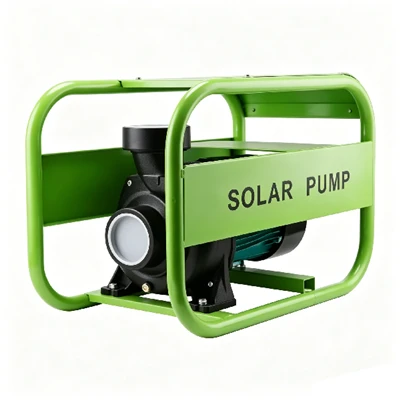
For anyone who’s tried to live with a weak shower for too long, this is the fix you’ve been looking for. We’ve been selling DC booster pumps for showers for 10 years, and we’ve got thousands of customers who swear by them. If you’re curious, just reach out to us to chat about your setup—we’ll help you pick the right pump, walk you through installation, and answer any questions you have. No sales pitch, no pressure, just real advice from people who actually use these pumps every day.
Cutting Sewage Pump Reference: 1. International Association of Plumbing and Mechanical Officials (IAPMO). Residential Water Pressure Booster Systems: Installation and Application Guidelines. 2021. 2. U.S. Department of Energy. Energy Efficiency Tips for Residential Pumps and Motors. 2022. 3. NSF International. Drinking Water System Components – Health Effects. Standard 61, 2020.
Longbiao Pump Industry Co., Ltd.
We are one of the most professional dc booster pump manufacturers and suppliers in China, featured by quality products and low price. Please rest assured to buy discount dc booster pump for sale here from our factory. We also accept customized orders.
Address: Unit 101, Building 11, Pan’ao Entrepreneurship Park, Daxi Town, Wenling City, Taizhou City, Zhejiang Province, P.R. China
E-mail: 1653746797@qq.com
WebSite: https://www.cnlongbiao.com/
