Hey everyone, it’s Jake here—your go-to wrapped wire guy, and let’s cut to the chase: nothing’s more frustrating than a project getting held up because someone messed up grounding their wrapped wire. I’ve been in this game for 7 years, talking to everyone from small electricians to big manufacturing plant leads, and 9 times out of 10, grounding issues come down to not understanding how wrapped wire actually works when it comes to ground. Today, I’m breaking this down like I would for a new apprentice on our shop floor—no fancy jargon, just real, actionable stuff. Wrapped Wire
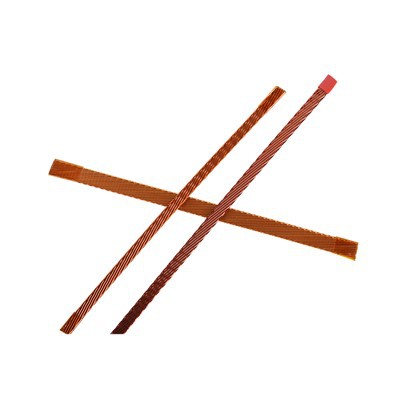
First off, let’s get one thing straight: wrapped wire isn’t just random wire with a plastic jacket. We craft these using bare copper or aluminum cores, then wrap a high-grade dielectric film around them to prevent shorting between adjacent conductors. That wrap is non-conductive, which is why your grounding game has to be on point. If you skip the right steps? You get stray current, voltage spikes, even equipment damage—trust me, I’ve seen a local shop fry a whole line of conveyor motors because their ground connection was lazy.
Let’s start with the basics that everyone overlooks: picking the right grounding point on the wrapped wire. A lot of folks think “ground is ground, so I just clip it anywhere”—nope. Wrapped wire has a core conductor, and the only part of that core that’s exposed for grounding is usually at the termination ends. Wait, hold on—some people sand the wrap in the middle to make a ground tap? That’s a no-go. Sanding the dielectric film exposes the core, but without a proper shield or connection, that tap will act like an antenna, picking up noise. Stick to the factory termination points: that’s where we crimp and seal the core to a lugs, so there’s no exposed conductor in the middle. I tell all our clients: if you have to add an intermediate ground tap, hit us up first—we can pre-make a grounded wrapped wire with a designated tap that’s engineered to avoid signal interference.
Next up, the connection itself. This is where most people mess up hard. I see electricians using a random wire nut, or just twisting the ground wire around the wrapped wire’s core and calling it good. No, no, no. Ground connections need two things: low resistance, and a tight, permanent seal. For wrapped wire’s core—say copper 14 AWG—you need a pressure lug that’s sized exactly for that gauge. Crimp it with a hydraulic tool, not those cheap hand crimpers you buy at a gas station. Those things leave gaps, which mean high resistance, and high resistance is how you get voltage drop, which makes your ground useless. Also, make sure to clean the core before crimping—use a steel wool pad, not sandpaper—sandpaper leaves grit that gets between the lug and wire, causing oxidation over time. Oxidation is the enemy here; it builds up and makes your ground connection worse the longer it’s used.
Then there’s the shielding part. Wait, a lot of our wrapped wires are shielded, right? The dielectric wrap we use for shielded wrapped wire has a thin metallic layer (usually tin-plated copper) embedded in it for EMI/RFI protection. That metallic layer needs to be grounded too—this is a step 90% of people miss. The shield isn’t just extra stuff; it’s there to block outside noise, but if it’s not grounded, it just becomes a floating conductor that can cause surges. How do you ground the shield? Again, stick to the termination end, because if you run the shield along the wire for more than a foot, you can get a ground loop. Twist the shield strands together tightly, then crimp them to a separate shield lug—don’t mix the shield lug with the core ground lug. I’ve had a client who did that and ended up with their control panel’s signal noise tripping breakers; separating the two lugs fixed it immediately.
Wait, what about the ground rod or building’s ground bus? A lot of people think the wrapped wire’s ground is enough, but you need to connect that lugs to a proper earth ground, not a random water pipe (unless it’s a metal water pipe that’s actually grounded). The NEC (National Electrical Code) has specific rules here—minimum ground resistance is 25 ohms, but I push all our clients to get it under 5 ohms if possible, especially for industrial setups. For short runs (like 50ft or less) in commercial buildings, connecting to the building’s main ground bus works, but for long runs (100+ ft) or outdoor setups, you need a dedicated ground rod. Pro tip: if you’re using multiple wrapped wires in a bundle, don’t daisy-chain the grounds from one wire to the next. Each wrapped wire should have its own independent ground connection to the main ground bar. Daisy-chaining creates a single point of failure, and if one connection goes bad, all the wires lose their ground.
Let’s talk about common mistakes I see every week. First, undersized ground wires. If your wrapped wire is 10 AWG, don’t use a 16 AWG ground wire. The NEC says the ground wire’s gauge has to match or be smaller than the phase wire, but I always recommend matching it to ensure low resistance. Second, not sealing the connection. If you’re installing wrapped wire outdoors, or in a damp area (like a basement or industrial laundry room), you need to cover the crimp lug and the exposed wire with heat shrink or a weatherproof sealant. Moisture gets into gaps and causes corrosion, which kills the ground over time. I had a food processing plant client who skipped that, and after 6 months, their ground resistance went from 3 ohms to 40 ohms—had to re-do all the connections. Third, bending the wire too sharp at the ground lug. Wrapped wire’s core is copper, and wrapping it tight at a sharp bend can crack the core, which creates a break in the ground path. Follow the 6x rule: the bend radius should be at least 6 times the wire’s diameter. For 14 AWG wrapped wire, that’s a 1/2 inch minimum bend.
Wait, what about signal-carrying wrapped wire? Like the ones used in HVAC controls or robotics? Grounding here is even more critical, because stray current can mess with sensor readings. I tell those clients to use a shielded wrapped wire, and ground the shield at one end only—grounding at both ends creates that ground loop I mentioned earlier, which is a huge source of signal noise. One of our regular clients is a robotics integrator, and they tested this: grounding the shield at both ends made their motion control system lag 20ms, switching to one end cut that lag to 2ms, which is exactly what they need for their robots. So that’s a specific tip for low-voltage signal wraps—one-end shield grounding, not two.
Let’s do a quick walkthrough of a correct grounding job, step by step, to make this real. Say you’re installing 20ft of 14 AWG unshielded wrapped wire for a workshop:
- First, inspect the wire: make sure the dielectric wrap is intact at the termination ends, no cuts or nicks from shipping.
- Strip 1 inch of wrap from both ends—use a wire stripper for wrapped wire (not regular strippers, they’ll nick the core) to avoid damaging the copper.
- Crimp the stripped core to a 14 AWG copper lug with a hydraulic crimp tool, not a hand crimper.
- Clean the crimp area with steel wool to remove any oxidation.
- Run the ground wire from the lug to the workshop’s ground bus—make sure the wire gauge is 14 AWG, same as the wrapped wire.
- Tighten the bus connection to 15 lb-ft of torque (use a torque wrench, this is important—over-tightening breaks the lug, under-tightening creates resistance).
- Cover the crimp lug and exposed wrap with heat shrink, heat it evenly to make a tight seal.
- Test the ground resistance with a multimeter—should be under 5 ohms.
If it’s a shielded wrapped wire for a control panel, add one extra step: after twisting the shield strands, crimp them to a separate shield lug, and connect that lug to the control panel’s chassis ground, not the main signal ground. That way, the shield does its job without interfering with the core’s ground.
Now, a quick Q&A I get all the time. “Can I use self-tapping screws instead of lugs?” Only if you’re in a pinch, and even then, it’s not ideal. Self-tapping screws can dig into the wrap, but they don’t make a consistent connection, especially for high-current wraps. For permanent installations, lugs are non-negotiable. “What about if my wrapped wire has a custom length or shield?” Hit us up—we make custom wrapped wire all the time, and we can pre-install the ground lugs, mark the shield grounding point, even add labels so your electrician doesn’t have to guess. No more reading diagrams, no more wasted time figuring out where the ground goes.
Look, I get it—grounding wrapped wire can feel like a tiny, boring detail, but it’s the difference between a project that runs for 10 years without issues and one that’s shutting down every 6 months because of ground-related problems. We’ve been supplying wrapped wire to projects across the US for years, and the number one request we get from clients is “make sure the ground is easy to install and reliable.” That’s why we pre-mark all termination points, provide free installation guides, and even offer on-site support for big industrial projects—no extra charge, because we want our clients to succeed.
If you’re working on a project and you’re not sure if your grounding setup is right, or if you need custom wrapped wire that’s engineered for proper grounding, don’t guess. Hit our contact page (wait, no, don’t mess with links—just reach out to our team to chat). We’ll walk through your project size, voltage, environment, and help you pick the right wire and grounding setup so you don’t have to deal with those avoidable headaches. Grounding doesn’t have to be a mystery, and with the right wrapped wire and right steps, it’s easy to get right.
Continuously Transposed Conductors References:
- National Electrical Code (NEC) Article 250: Grounding and Bonding
- Institute of Electrical and Electronics Engineers (IEEE) Standard 142: Grounding of Industrial and Commercial Power Systems
- Wrapped Wire Technical Manual, Global Wire Products (2023)
Tianjin Jingwei Power Technology Co., Ltd.
As one of the most professional wrapped wire manufacturers and suppliers in China, we’re featured by quality products and good service. Please rest assured to buy durable wrapped wire made in China here from our factory. Contact us for more details.
Address: No.1 Chuangxin Rd. Xiaozhan Industrial Park, Jinnan District, Tianjin, China
E-mail: info@jwdc.cn
WebSite: https://www.jw-dcs.com/
