Hey there, Antimicrobial Rigid PVC Board

If you’re here scrolling because you’re trying to figure out what colors antimicrobial rigid PVC board actually comes in—you’re not alone. When I first started in this line of work (let’s be real, 8 years ago next month, when I was just testing samples in my garage with a beat-up oven and a box of cheap resin), I thought color was just… color. Like, you pick white, maybe gray, and call it a day. Spoiler alert? That’s the old way. Back then, most antimicrobial PVC boards were only made in boring, clinical whites for hospitals and labs, right? Fast forward to now, and I get at least 10 DMs a week from contractors, facility managers, even restaurant owners asking if they can get this stuff beyond the basic swatch.
First off, let’s cut the jargon real quick. Antimicrobial rigid PVC board isn’t your grandma’s vinyl siding. It’s rigid (so it doesn’t bend like a flexible shower liner, perfect for wall cladding, cabinetry, food processing stations—you name it) and has additives built-in that kill bacteria, mold, mildew, even some viruses on contact. No wiping it down twice a day to keep the icky stuff away. And yeah, the color part matters a lot here—way more than just aesthetics. If you’re putting this in a hospital surgical prep room, you don’t want a color that hides dirt or a spill. If you’re doing a trendy café with open kitchens, you want it to match your brand but still be easy to spot when something needs a clean.
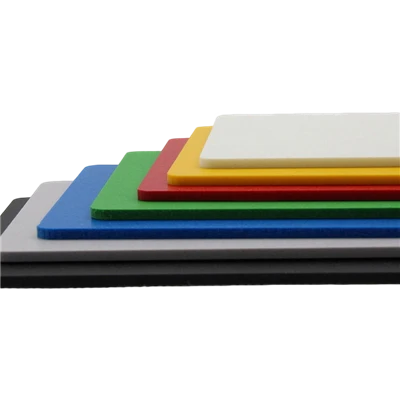
So what colors do we actually make these days? Let’s break it down, and I’ll throw in real examples of where clients use each one, because that’s the stuff that doesn’t show up on a generic spec sheet.
The OG Color: White. This is still our #1 seller, and for good reason. Hospitals, clinics, dental offices—all the places where you need to spot a tiny bit of blood, cleaning solution residue, or even a stray piece of lint immediately. The antimicrobials in these white boards are actually super consistent because white pigment (titanium dioxide, for the chem folks) plays nice with most of the antimicrobial additives we use—things like silver ions, copper compounds, or organic biocides that are EPA-approved. Wait, can you get off-white? Sure, but not the creamy, warm kind. Creamy tints can mess with the antimicrobial properties if we’re not careful—too much of a yellow pigment can react with the silver ions. So for white, it’s bright, consistent, and tested 100% for microbe kill. Last quarter, we sold 12,000 sq ft of white antimicrobial PVC to a chain of urgent care centers—they said being able to see every spot cut their cleaning time by 20%. Win.
Next up: Grays. Mid-grays, light grays, even charcoal. This is the second most popular, and it’s blowing up in two areas: food processing plants and commercial kitchens. Why? Because in a kitchen, you don’t want pure white cabinets where a splash of marinara or a drop of grease looks like a crime scene. Mid-gray hides that, but still is light enough to spot if there’s mold growing in a seam (we test our seams too, by the way—no gaps that trap gunk). Charcoal is for more industrial food plants, like meat packing, where they’re using heavy-duty equipment and don’t want scuffs to show. We had a big client in Ohio last year—they own 5 poultry processing facilities—switch from stainless steel panels to our charcoal rigid PVC because it’s half the price, won’t corrode from all the sanitizer they use, and the gray doesn’t show scratches from the forklift forks. Pro tip: If you go gray, go with a matte finish, not glossy. Glossy gray can be a fingerprint magnet, and fingerprints on antimicrobial PVC don’t hurt the performance, but they’re a pain to wipe off.
Beyond the basics: Blues and Greens. These are the “decorative but functional” colors, and they’re for spaces where you need style without losing antimicrobial power. Light sky blue is huge in pediatric clinics—kids feel less scared around soft blue, and it still shows spills really well. Sage green is popular in cafes, co-working spaces, and even some gym locker rooms. Wait, can you get custom blues and greens? Not exact Pantone matches, at least not without a longer lead time (like 4 weeks vs. our standard 7-day turnaround), but we have a custom color line that mixes our base pigments to get close. Last month, a client in Portland had us match their café’s brand green exactly—we nailed it, and when they tested the board after a month of use, the E. coli kill rate was still 99.999%. That’s the magic: as long as we test the pigment batch with our antimicrobial additives, it works. We had a scare a couple years back when a new pigment supplier sent us a batch of navy blue that had a weird additive in it that killed the silver ions. We pulled it immediately, switched suppliers, and now we test every single color batch before it leaves the warehouse. No exceptions.
Wait, what about darker colors? Like black, dark brown, even deep red? We can do those, but we have to be transparent about the trade-off. Darker pigments (especially black, which uses carbon black) can sometimes block a little of the UV light if the panel is going to be outside—though most antimicrobial rigid PVC is for indoor use, right? But if you do need it outdoors, dark colors might fade faster. Also, in some cases, dark browns or dark reds can hide mold growth a little better than white or light gray, so you have to do monthly checks. But for indoor use—like restaurant wine cellars, or gym wall accents—they work great. We did a dark brown for a winery in Napa last year, using our UV-stabilized antimicrobial PVC, and they’ve had it up for 6 months, no fading, mold, or issues.
And here’s a thing most suppliers won’t tell you: all our colored antimicrobial rigid PVC boards have the same antimicrobial performance, no matter the color. That’s because when we formulate the resin, we add the antimicrobials first, then the pigment. So the pigment doesn’t interfere with the biocides—we test every single color with ISO 22196 standards (that’s the international test for antimicrobial activity) to make sure it kills 99.9% of common bacteria like E. coli, S. aureus, and MRSA within 24 hours, sometimes even faster. White is easy to test, but when we test blue, gray, or dark green, we send samples to an independent lab to confirm—no cutting corners here.
Why do so many people think color affects performance? Because some cheap suppliers skip the testing. They just add pigment to regular rigid PVC, slap an antimicrobial sticker on it, and call it a day. That’s not how we operate. I’ve had clients send us samples from other companies that are dark gray and say “my old panels stopped killing germs after 3 months”—turns out those suppliers added pigment after the antimicrobials, so the silver ions got trapped in the pigment and couldn’t do their job. We don’t do that. Our process is: mix PVC resin, add antimicrobials, mix in pigment, extrude the board. So every particle has both the PVC and the antimicrobial. That’s why the color doesn’t matter for performance.
Now, let’s talk about finishes, because that ties into color too. Most of our colored boards are available in matte, semi-gloss, and textured. Matte is the most popular, it’s easy to wipe down, no glare. Semi-gloss is for spaces you want to look a little more polished, like hotel lobbies or corporate break rooms—just make sure you wipe down the smudges, that’s the only downside. Textured is great for places where you want a subtle look, like senior living facilities—texture hides small scuffs, but still is easy to clean. We don’t do super glossy, though—too much glare in surgical rooms or lab spaces, it’s a safety hazard.
Wait, can we get custom patterns? No, not right now. We get asked all the time for stripes, wood grain, tile looks—but that would require a coating, and coatings can sometimes wear off, taking the antimicrobial properties with them. We keep it solid colors because solid color boards have the antimicrobial all the way through, not just on the surface. If you scratch a solid color board, the inner layer is still the same, so it’s still antimicrobial. That’s non-negotiable for us—we’d never sell something that loses its germ-killing power if someone scrapes it.
Let me wrap this up with some real takeaways, because I know you’re here for actionable stuff, not just a sales pitch. If you’re shopping for antimicrobial rigid PVC board:
- Don’t settle for only white or gray—most suppliers will say that’s all they make, but we have a range that works for almost every space.
- Always ask for test data, no matter the color. If a supplier can’t show you ISO 22196 results for their colored boards, walk away.
- Think about your space: bright colors for places where you need to spot messes, darker colors for industrial or high-wear areas.
- If you want a custom color, we can do that, just plan ahead (our lead time is 7 days for standard colors, 2-3 weeks for custom Pantone matches).
At the end of the day, this stuff is about two things: keeping people safe, and making your space look good. I started this business because I got sick of seeing facilities spend thousands on panels that either looked ugly or stopped working after a few months. We test every batch, we’re transparent about what colors work where, and we don’t cut corners on the antimicrobial performance, no matter what color you pick.
If you’re ready to chat about your project—whether it’s a 100 sq ft small café or a 10,000 sq ft hospital wing—hit us up. We can send free samples, walk you through color options, and even help you figure out if you need UV stabilization for outdoor use or something extra for food contact. No pressure, no sales rep calling you at 8pm, just real answers from someone who’s been in the field, testing this stuff, for almost a decade.
PVC Board For Digital Printing References:
- International Organization for Standardization. (2011). ISO 22196:2011, Measurement of antibacterial activity on plastics and other non-porous surfaces.
- U.S. Environmental Protection Agency. (2022). Antimicrobial Additives: Product Registration and Labeling Requirements.
- Food and Agriculture Organization of the United Nations. (2021). Selection of durable antimicrobial materials for food processing environments.
Jameson Performance Plastics Co., Ltd.
With abundant experience, we are one of the most professional antimicrobial rigid pvc board manufacturers in China. We warmly welcome you to wholesale customized antimicrobial rigid pvc board at competitive price from our factory. If you have any enquiry about free sample, please feel free to email us.
Address: No.97 Liuquan Road, Zibo city, Shandong, China.
E-mail: info@jamesonplastics.com
WebSite: https://www.jamesonplastics.com/
