If you’ve ever worked in water and wastewater infrastructure, you know how critical Awwa flanges are to keeping systems running smoothly. These flanges, designed to meet the American Water Works Association standards, aren’t just generic hardware—they’re the backbone of connections in pipelines that carry clean water to cities and treat wastewater before it’s returned to natural sources. But let’s be honest: not every project fits a one-size-fits-all part. That’s a question I get every week from engineers, project managers, and fellow suppliers: “Can Awwa flanges be custom made?” As someone who’s been in the Awwa flange supply business for over 12 years, the short answer is yes—but there’s a lot that goes into making that happen, and it’s not as simple as modifying a standard part. Awwa Flange
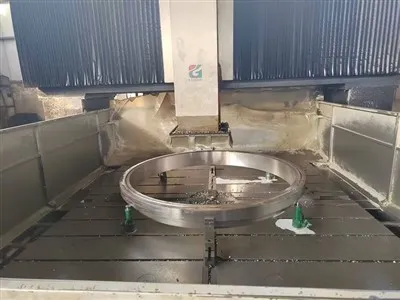
Let me start by setting the scene. Awwa flanges are built to strict guidelines, first formalized by the American Water Works Association in the 1920s to address the unique demands of water systems. Unlike industrial flanges for oil and gas, Awwa flanges have to resist corrosion from treated water, stand up to pressure fluctuations in municipal pipelines, and often handle underground installation where space is tight. Standard sizes cover most common applications: 12-inch, 16-inch, 24-inch diameters, with pressure ratings ranging from 150 PSI to 250 PSI, depending on the class. But when you’re working on a retrofit for a 70-year-old water main, or a remote rural project with non-standard pipe dimensions, or a specialized treatment plant that needs a flange to connect to a custom pump skid, those standard parts just won’t cut it. That’s where custom Awwa flanges come in, and over the years, we’ve learned how to balance adherence to Awwa specifications with the flexibility to meet project-specific needs.
First, let’s clarify what “custom made” actually means in the context of Awwa flanges. It’s not about throwing out the rulebook. Awwa has strict requirements for material composition—most flanges are ductile iron (ASTM A536 Grade 65-45-12) or carbon steel, with a zinc-rich epoxy coating for corrosion resistance. For potable water systems, even coating has to meet NSF/ANSI 61 standards to ensure no harmful substances leach into the water. When we make a custom Awwa flange, we still have to stick to these core standards because that’s what makes an Awwa flange, not just a random flange. What we can customize are dimensions: diameter, bolt circle size, number and size of bolt holes, face type (flat face, raised face, or male/female), and even the thickness of the flange body. Sometimes, projects have unique space constraints—for example, a tunnel installation where there’s only 2 inches of clearance between the pipe and the tunnel wall. A standard 16-inch Awwa flange might protrude 3 inches, making installation impossible. We can machine a custom flange that’s ¼ inch thinner on the body, while keeping all the bolt hole spacing and pressure ratings exactly to Awwa specs. That’s the sweet spot of custom work: adjusting what’s necessary without compromising the integrity the Awwa standard is designed to provide.
I remember a project a few years back that drove this home. A municipal water district in the Pacific Northwest was retrofitting a 1950s gravity pipeline that served a small mountain town. The existing pipe was cast iron, 18 inches in diameter, but when they tried to match it with standard Awwa flanges, the bolt holes didn’t line up. The old pipe had been installed with uneven bolt spacing, a quirk of 1950s construction, and the standard flange’s bolt circle was too large. The district’s engineer initially thought they’d have to replace a 50-foot section of pipe to use a standard flange, which would have cost an extra $250,000 and pushed the project back three months. Instead, we worked with their team to reverse-engineer the old pipe’s bolt holes, then milled a custom Awwa flange with a smaller bolt circle, matching the old pipe’s spacing exactly. We kept the material as ASTM A536 ductile iron, added the required NSF 61 epoxy coating, and tested it to 1.5 times the working pressure (a standard Awwa requirement) to make sure it wouldn’t fail. The whole custom flange cost less than 10% of the pipe replacement, and we delivered it in two weeks, meeting their tight timeline. That’s the value of custom Awwa flanges: solving problems that standard parts can’t.
But it’s not just old retrofits. New construction projects have custom needs too. A solar farm in Arizona needed a water supply line for its cooling system, and the engineering team specified a flange that could handle both the 200 PSI working pressure of the pipe and the high desert’s extreme temperatures (ranging from 20°F in winter to 115°F in summer). Standard Awwa flanges work in a range of temperatures, but this project required a special low-temperature impact test, something Awwa allows as an optional modification for specific applications. We worked with a third-party lab to test a custom flange’s material at -20°F, well below the region’s coldest recorded temperature, and certified that it met the extra requirement. The result? A flange that followed all core Awwa standards, with a custom property tailored to the project’s environment.
Of course, custom Awwa flanges aren’t right for every job. There are limits, and we’re transparent about that. For example, if a project asks for a flange with a pressure rating above 250 PSI, Awwa’s standard specs for ductile iron top out at 250, so we can’t make a custom version of that. We’ll work with the engineer to switch to a carbon steel flange, which can handle higher pressures, but that’s not an Awwa standard ductile iron flange anymore. We also won’t modify the material composition for potable water systems—no exceptions. If a project tried to cut costs by using a cheaper steel that doesn’t meet NSF 61, we’ll be upfront and say we can’t make that custom flange because it would violate the safety standards Awwa was created to uphold. That’s the trust part of the business: we don’t just take orders; we advise on what’s feasible, what’s safe, and what will last for the 50+ years an Awwa flange is designed to serve.
Another thing people don’t always realize about custom Awwa flanges is the lead time. Standard flanges are in stock at our warehouse, ready to ship in 48 hours. Custom flanges, on the other hand, require a few extra steps: engineering review to make sure the design meets Awwa specs, material ordering, machining, testing, and quality checks. Typically, lead time is 10 to 14 business days, sometimes a bit longer if the project has unique testing requirements. We’ve learned to build flexibility into our process, though—we prioritize custom projects for emergency repairs, like a water main break in a small town where a standard flange isn’t available, and we can often get a custom flange ready in 7 days if needed. For example, a town in rural Wyoming had a pipe failure during a January freeze, and their local hardware store didn’t have a 12-inch flange with the right bolt spacing. We made a custom flange overnight in our shop, delivered it via next-day truck, and they had the water line back up before the end of the day. That’s the kind of service that comes with working with a supplier that knows both Awwa standards and what projects actually need.
So, if you’re a project manager or engineer asking, “Can I get a custom Awwa flange?” the answer is almost always yes—if you work with a supplier who understands the balance between Awwa’s non-negotiables and project-specific needs. That said, there are a few things you should bring to the table when you reach out: the pipe diameter, working pressure, face type, and any unique dimensions or space constraints. If you have old drawings of the existing pipe or a sample of the old flange, that’s even better—it helps us reverse-engineer the custom part without guesswork. We’ll also ask for details about where the flange will be installed (potable water, wastewater, underground, above ground) to make sure we pick the right material and coating.
I’ve been in this business long enough to see projects go wrong because someone tried to use a non-standard part that didn’t meet Awwa specs. A few years back, a small construction company tried to save money by having a local machine shop make a custom flange without Awwa certification, and three years later, it failed on a water main, causing a 12-hour outage for 2,000 residents. The repair cost the city $500,000, way more than the cost of a custom Awwa flange from a reliable supplier. That’s why we’re so careful about what we do: it’s not just about making a part—it’s about making a part that will keep people’s water safe and systems running for decades.
If you’re working on a project where standard Awwa flanges just don’t fit, don’t assume that means you have to change your design or overspend on custom non-certified parts. As a supplier who’s specialized in Awwa flanges for years, we’ve seen every kind of custom need, from old pipe retrofits to specialized industrial water systems. We’ll walk you through the process, confirm that your custom design meets all Awwa standards, and deliver a part that fits exactly what your project requires.
If you have questions about custom Awwa flanges, want to share a project you’re working on, or need a quote, reach out to our team. We’re here to help you find the right flange, whether it’s a standard part in stock or a custom one tailored to your needs.
Din Flange References
American Water Works Association. (2020). AWWA C110: Flanges and Flanged Fittings for Cast-Iron Pipe and Tubing. American Water Works Association.
ASTM International. (2021). ASTM A536-21: Standard Specification for Ductile Iron Castings. ASTM International.
NSF International. (2022). NSF/ANSI 61: Drinking Water System Components – Health Effects. NSF International.
Shanxi Xinshunda Flange Manufacturing Co., Ltd.
As one of the most professional awwa flange manufacturers and suppliers in China, we also support customized service with competitive price. We warmly welcome you to wholesale high quality awwa flange for sale here from our factory. For quotation, contact us now.
Address: Zhunagli Industrial Zone,jinchang Town,dingxiang,shanxi,china
E-mail: sales01@xinflange.com
WebSite: https://www.xinflange.com/
