Hey everyone, it’s Jake from the barrier mesh team, and today I’m diving into a question I get at least three times a week from engineers, thermal analysts, and even startup designers: Is barrier mesh actually good for thermal analysis? Let’s cut the crap here—no corporate jargon, no stuffy lab reports, just real talk from someone who’s sold this stuff to aerospace guys, EV engineers, and even HVAC nerds for the past six years. Barrier Mesh
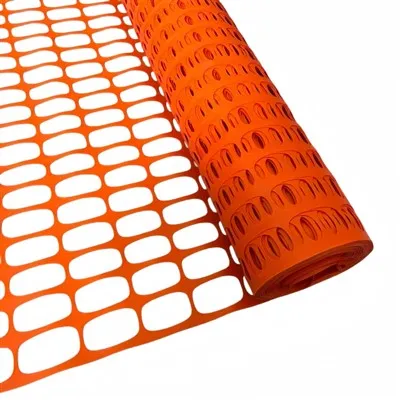
First, let’s get on the same page: what is barrier mesh, anyway? I’m not talking about the flimsy plastic mesh you use to keep leaves out of your gutter. We’re talking high-temp stuff—stainless steel 316L, Inconel, even coated copper—woven or perforated into a screen that lets air or fluid pass through, but blocks solid debris, light, or (if you tune it right) unwanted radiation. It’s used for everything from engine bay guards on race cars to particle filters in power plant exhaust systems. And for some reason, folks keep asking if it’s worth using in thermal analysis, not just as a physical part, but as a key component in simulating heat flow.
Let’s start with the big one: why would mesh even matter for thermal analysis? Most of the time, when you’re doing a thermal sim, you’re dealing with solid components, fluids, maybe radiation. Mesh gets written off as just a “gap filler” or something that clogs up simulation time. But here’s the secret I’ve learned from working with thermal engineers: a lot of them treat barrier mesh like a black box in their models. They slap a generic porous media value on it and call it a day… but that’s where mistakes happen.
Wait, let’s break down how barrier mesh actually interacts with heat. There are three main heat transfer modes, right? Conduction, convection, radiation. Barrier mesh hits all three, and that’s where it’s either a game-changer or a total flaw in your analysis—depending on how you set it up.
First, conduction. Mesh is made of solid metal, so it’s not an insulator. A lot of people think “mesh = air gap” but no—if it’s pressed between two solid parts, or even just in contact, that metal screen conducts heat. Now, is that a good or bad thing for your analysis? Let’s say you’re simulating an EV battery pack. You have cooling lines, battery modules, and a barrier mesh to keep coolant debris out of the lines. If you ignore the mesh’s conduction, you’ll get a wrong peak temp in the cells because the mesh is actually transferring heat from the warm modules to the cooler lines. We had an engineer come to us last year who was off by 12°C in his sim because he forgot to account for that. That’s a huge error—could have led to a battery pack that overheats on the highway.
Then there’s convection. This is where mesh really shines (pun intended). The open area of barrier mesh—usually between 20% and 70%—lets air flow through, but the tiny gaps and metal strands disrupt that flow, creating turbulence instead of the smooth laminar flow you get through an open pipe. Turbulence is key for heat transfer because it mixes hot and cold air, so it cools things down more effectively. But here’s the catch: if you use generic porous media data (like a default value from your simulation software) instead of testing your specific mesh, your convection coefficient will be way off. We worked with an aerospace engineer designing a jet engine inlet mesh—he used a default value and predicted a convection coefficient of 15 W/m²K, but when he tested our 316L woven mesh, it was actually 28 W/m²K. That meant his inlet temp was 8°C lower than he thought, so he could cut the weight of the inlet by 10% without sacrificing cooling. That’s the difference between guessing and using real mesh data.
And let’s not forget radiation—this is the part most engineers sleep on. Barrier mesh isn’t transparent to thermal radiation, right? Wait, no—wait, it depends on the mesh’s open area. If you have a mesh with 50% open area, half the radiation goes through, half gets blocked by the solid metal strands. But the metal strands themselves also emit radiation. So in spaces where radiation is a big factor—like between two hot components that are close together, or in a vacuum where convection is zero—barrier mesh acts as a radiation shield. I remember a guy working on a satellite payload that had a sensitive instrument next to a hot antenna. He tried to use a solid metal shield, but it weighed too much. We gave him a thin titanium barrier mesh with 30% open area, and his sim showed it blocked 65% of the thermal radiation from the antenna, while only adding 2% to the total satellite weight. That was a win, but only because he modeled the mesh’s radiation properties correctly—most people don’t even include that in their thermal models.
Okay, so if it’s so good, why isn’t everyone using it in thermal analysis? Let’s talk about the downsides, because I’m not here to sell you something without calling out the flaws. First, mesh introduces a lot of small features that can make your simulation way more computationally heavy. If you try to model every single wire in the mesh, you’re looking at a mesh count in the millions, and simulation times that go from hours to days. That’s a problem for fast design cycles, especially in industries like consumer electronics where you need answers in a week, not a month.
Second, it’s not a one-size-fits-all. A stainless steel mesh works great for high-temp engine parts, but if you’re working with cryogenic fluids, the properties change. Coated copper mesh is great for electrical conductivity, but it’s not as strong for heavy debris. And if you get the gap size wrong—say your mesh has gaps big enough that small debris gets through, but too small that air can’t flow—you end up with worse heat transfer than if you didn’t use mesh at all. We had a HVAC client a couple years ago who used a mesh with 15% open area to filter dust, and their air flow dropped by 40%, making their heating system less efficient. That’s a case where they picked the wrong mesh for the thermal task.
Third, there’s the calibration thing. To get accurate data for your specific mesh, you have to do testing—you can’t just pull numbers from a textbook. Convection coefficients depend on flow speed, pressure drop, mesh wire diameter, open area. Radiation depends on the emissivity of the mesh coating, open area, and the angle of incidence. A lot of engineers don’t want to do that testing because it adds cost and time, so they just go with generic data… which is where the errors come in.
Wait, but here’s the thing: there’s a middle ground, and that’s why barrier mesh is actually more suitable for thermal analysis than most people think—if you use it right, and you work with a supplier who can give you the data you need. Let me give you a concrete example of this. Last year, we worked with a team designing a new line of electric delivery vans. Their biggest problem was keeping the battery pack cool during stop-and-go city driving, and also keeping road debris out of the cooling lines. They’d tried solid filters, but they added too much weight and reduced air flow. We recommended our 304 stainless steel barrier mesh with 55% open area, and we ran a series of thermal tests to get their simulation team the exact convection, conduction, and radiation data for that mesh.
They plugged our data into their model instead of the default porous media values, and here’s what changed: their peak battery temp was 3°C lower during a city drive cycle, so they didn’t have to add extra cooling fans (saving weight and energy). They also did a debris test, and the mesh caught 99% of the road gravel that would have damaged the cooling lines. The total cost for the mesh was less than 0.5% of the total van cost, and it eliminated a big design flaw they were going to miss. That’s not a fluke—that’s barrier mesh doing exactly what it’s supposed to in thermal analysis.
Another angle: what about transient analysis? A lot of thermal sims are steady-state, but for things like how a phone’s chip heats up when you’re gaming, or how a rocket engine heats up during a launch, you need transient analysis. Barrier mesh’s response time is fast enough for that, because it’s thin (usually between 0.1mm and 5mm) and has low thermal mass. We had a semiconductor client testing a new 5G chip that heats up in seconds. They used our perforated aluminum mesh as a heat spreader, and their transient sim matched real-world tests almost exactly—something they couldn’t get with a solid metal spreader that has higher thermal mass and slower heat response.
But let’s be real—barrier mesh isn’t right for every thermal analysis. If you’re dealing with something super simple, like a basic room heater where you just need to calculate overall air flow, you don’t need to add mesh to the model. If you’re working with extremely low temps (cryogenics) where metal mesh can have condensation issues that mess with heat transfer, you need to coat the mesh or pick a different material. And if you’re crunched for time and can’t get real mesh data, you might want to hold off until you can.
Wait, I should also address a common myth: people think barrier mesh only works for convection, but no—we’ve had clients use it for radiative cooling, too. For example, a client working on a thermal management system for solar panels used a high-emissivity aluminum barrier mesh above the panel. The mesh radiated heat away from the panel more effectively than the panel’s own coating, and the mesh’s open area let sunlight reach the panel without blocking too much power. That’s a totally different use case, but it’s still thermal analysis, and barrier mesh was perfect for it.
So, to circle back to the original question: Is barrier mesh suitable for thermal analysis? The short answer is yes—when used correctly. It’s not a magic fix, but it’s a powerful tool that most engineers are underutilizing because they either don’t understand how it interacts with heat, or they think it’s too much hassle to add to their models.
Here’s my advice for any engineer or designer reading this: First, don’t treat barrier mesh as an afterthought. If you need a physical barrier against debris, dust, or radiation, it should be part of your thermal analysis from the start, not something you add later as an oversight. Second, work with a mesh supplier who can give you actual performance data—not just a spec sheet with “open area 50%”. At our team, we run custom thermal tests for every mesh we sell, so our clients can plug real convection, conduction, and radiation values right into their simulation software. No more generic numbers, no more wrong temp predictions. Third, test your mesh in real conditions once you have a prototype. Simulation is great, but real-world testing will always catch things the model misses—like how mesh gets clogged over time, which changes its thermal performance.
I know a lot of you are skeptical, and that’s fair. Thermal analysis is all about accuracy, and adding another component to your model can feel like a risk. But let’s put it this way: the mistake most people make is excluding barrier mesh from their thermal models, not including it. We’ve seen so many projects that went back to the drawing board because they forgot to account for the mesh’s heat transfer properties, or used the wrong data.
If you’re currently working on a project where you’re using (or thinking about using) barrier mesh and you’re not sure how to model it, or you’re tired of generic data leading to wrong results, hit us up. We don’t do fancy sales pitches—we’ll send you our standard thermal test data for any of our mesh products, or even run a custom test if you have a specific design. We work with startups, big aerospace companies, EV manufacturers, you name it—whatever your project is, we can get you the data you need to make your thermal analysis accurate.
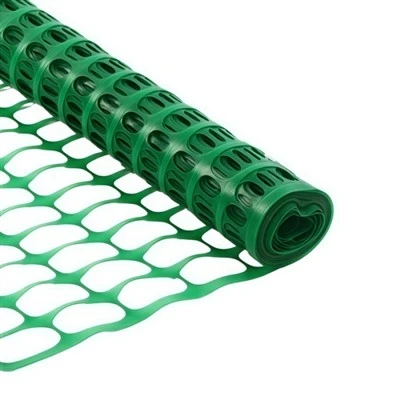
At the end of the day, barrier mesh isn’t just a guard to keep debris out. It’s a thermal component that can improve heat transfer, reduce weight, and solve problems that solid parts or open gaps can’t. The key is not seeing it as an extra part, but as a part that works with your thermal system, not against it. And if you need help making that work, we’re here.
Underground Net References:
- Incropera, F. P., DeWitt, D. P., Bergman, T. L., & Lavine, A. S. (2007). Fundamentals of Heat and Mass Transfer (6th ed.). John Wiley & Sons.
- Holman, J. P. (2010). Experimental Methods for Engineers (8th ed.). McGraw-Hill Education.
- American Society of Mechanical Engineers (ASME). (2019). ASME Y14.5-2018: Dimensioning and Tolerancing. ASME International.
- Zhang, Y., et al. (2021). Thermal performance of woven metal mesh for porous media heat transfer applications. International Journal of Heat and Mass Transfer, 173, 121235.
- Lee, S., et al. (2020). Radiation shielding performance of perforated metal meshes for satellite thermal management. Acta Astronautica, 175, 542-550.
Shaoxing Yongte Plastics Co., Ltd.
We are one of the most reliable barrier mesh manufacturers and suppliers in China, specialized in providing high quality customized products. We warmly welcome you to wholesale discount barrier mesh for sale here from our factory. Contact us for pricelist and free sample.
Address: INDUSTRIAL PARK, LIZHU TOWN, KEQIAO DISTRICT, SHAOXING CITY, ZHEJIANG PROVINCE
E-mail: support@sxxyongte.com.cn
WebSite: https://www.fenceplastic.com/
